
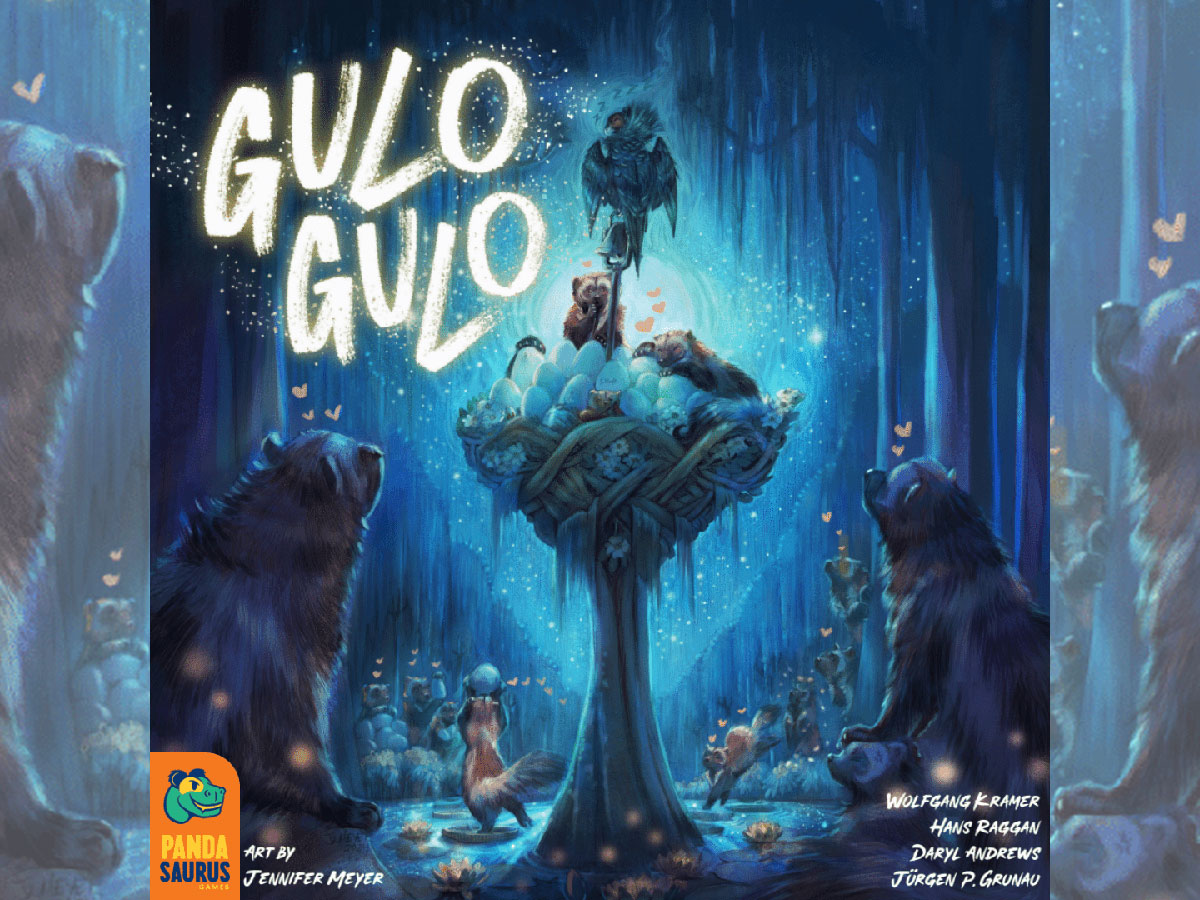
Rescue Gulo Junior from the swamp vulture nest, and collect some eggs along the way!
What Is Gulo Gulo?
Gulo Gulo is a dexterity game for 2 to 6 players, ages 5 and up, and takes about 20 to 30 minutes to play. It retails for $39.95 and is available now in stores and directly from Pandasaurus Games. This one is definitely kid-friendly, and in fact may be one where your kids have an advantage! The one thing to note is that it does include tiny wooden eggs, so it’s not for kids so young that they would try to eat them (or stuff one up a nostril).
Gulo Gulo was designed by Wolfgang Kramer, Hans Raggan, Daryl Andrews, and Jürgen P. Grunau and published by Pandasaurus Games, with illustrations by Jennifer Meyer. This is a remake of a game from 2003, originally published by Zoch Verlag.
Gulo Gulo Components
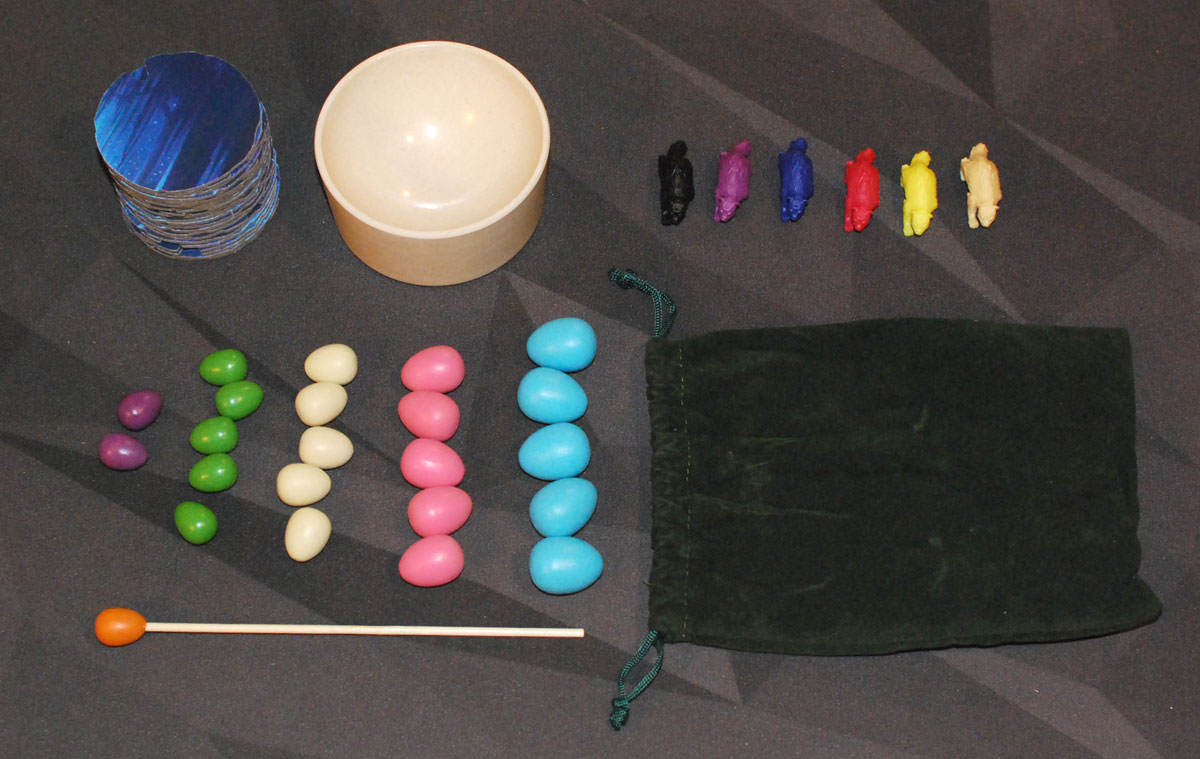
Here’s what comes in the box:
- 24 Yard tiles (5 blue, 6 green, 6 pink, 6 white, and 1 purple)
- 1 Nest bowl
- 6 Gulo figures
- 22 Eggs (2 purple, 5 green, 5 white, 5 pink, and 5 blue)
- Alarm pole
- Egg bag
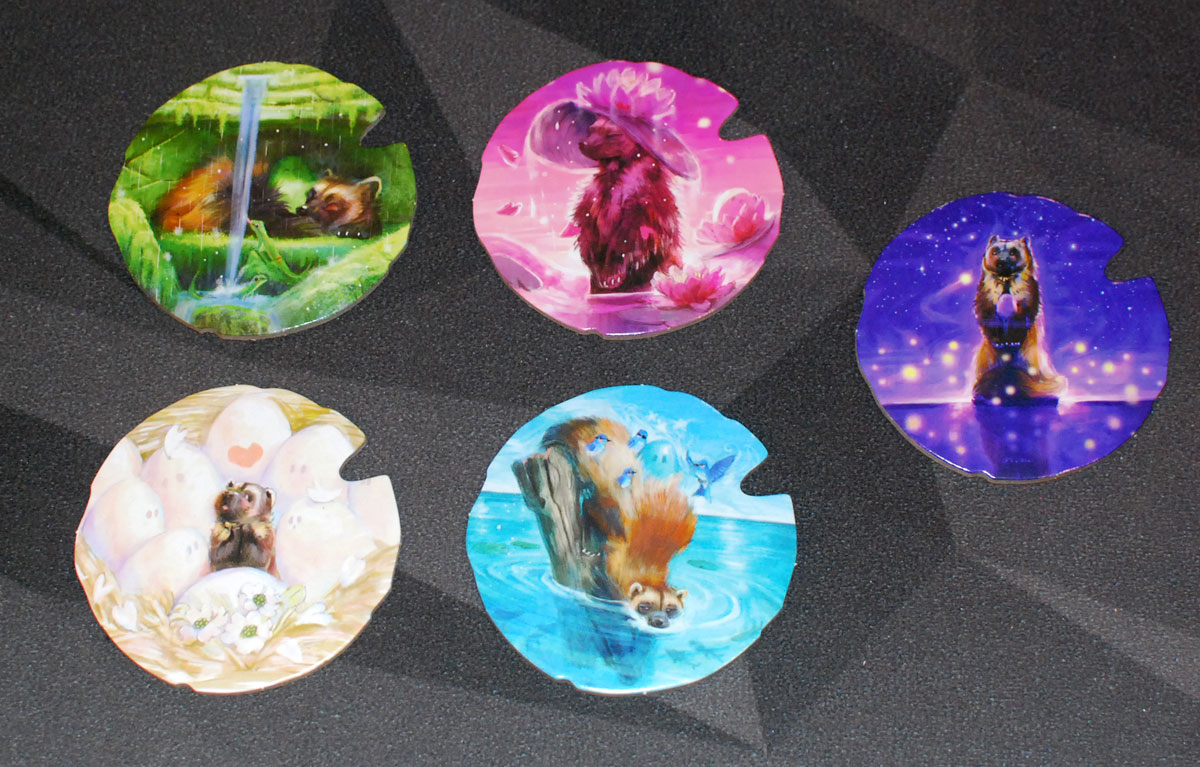
The tiles are sort of lily pad shaped, a bumpy circle with a little notch on one side, though the tile backs are a dark blue (it’s a bit of the background art from the box cover). Each one depicts a “gulo”—a wolverine—with an egg of that color. The illustrations are cute—sort of realistic-looking, though some with cartoony poses. There’s only one purple tile, which represents Gulo Junior, but there are several of each of the other colors.
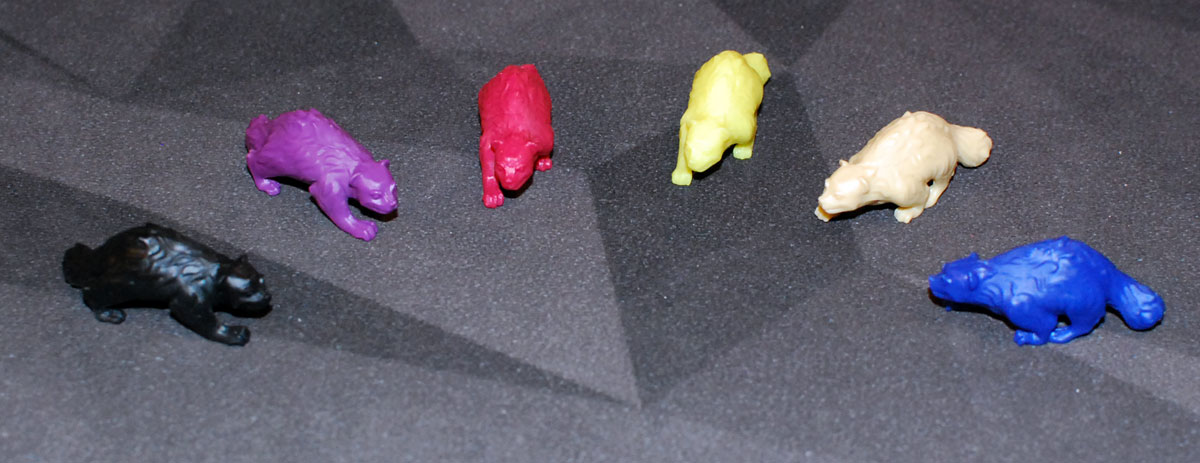
The gulo figures are plastic, and made to look like fairly realistic wolverines (but not in realistic wolverine colors!).
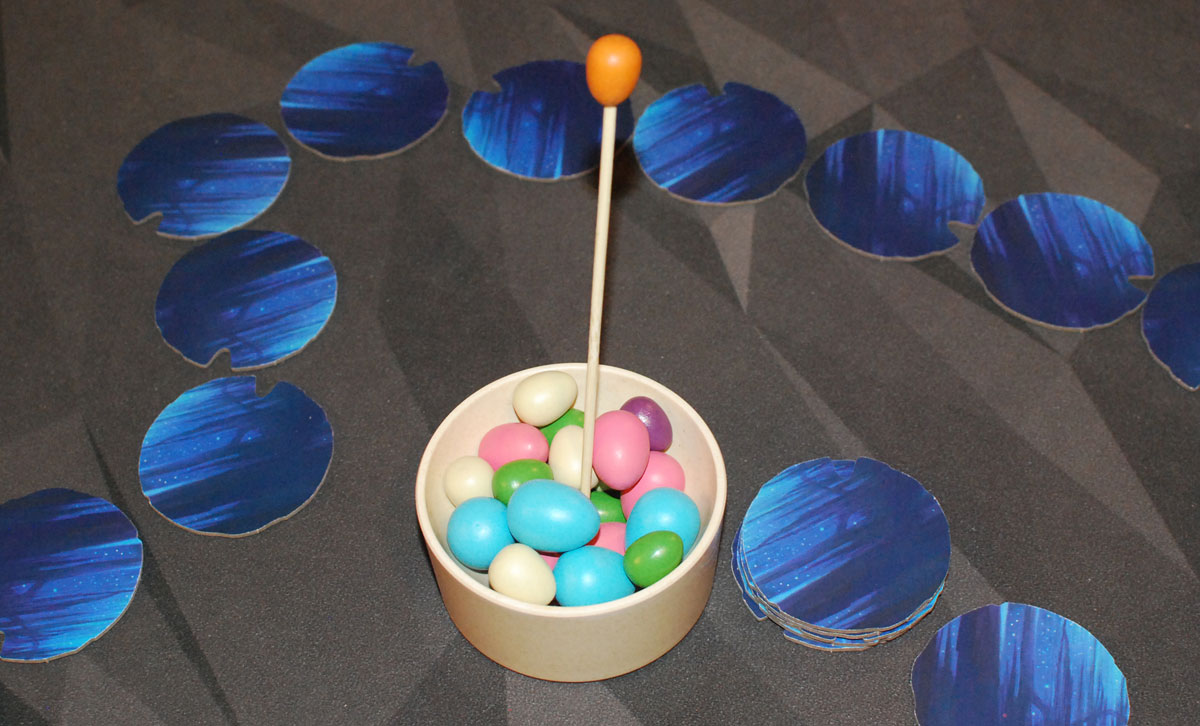
The egg bowl is a nice, heavy bowl that feels almost like ceramic. I’m guessing it might be Bakelite though I’m not certain. It also has a rubber ring embedded in the base to help prevent slipping. The wooden eggs are various sizes and look a bit like Easter candy, and the “alarm pole” is a long thin stick with a small wooden egg on the end. It’s meant to be inserted into the bowl of eggs, and it will often tip over to one side and rest on the edge of the bowl (which is okay for gameplay—it just doesn’t look as good when it does that).
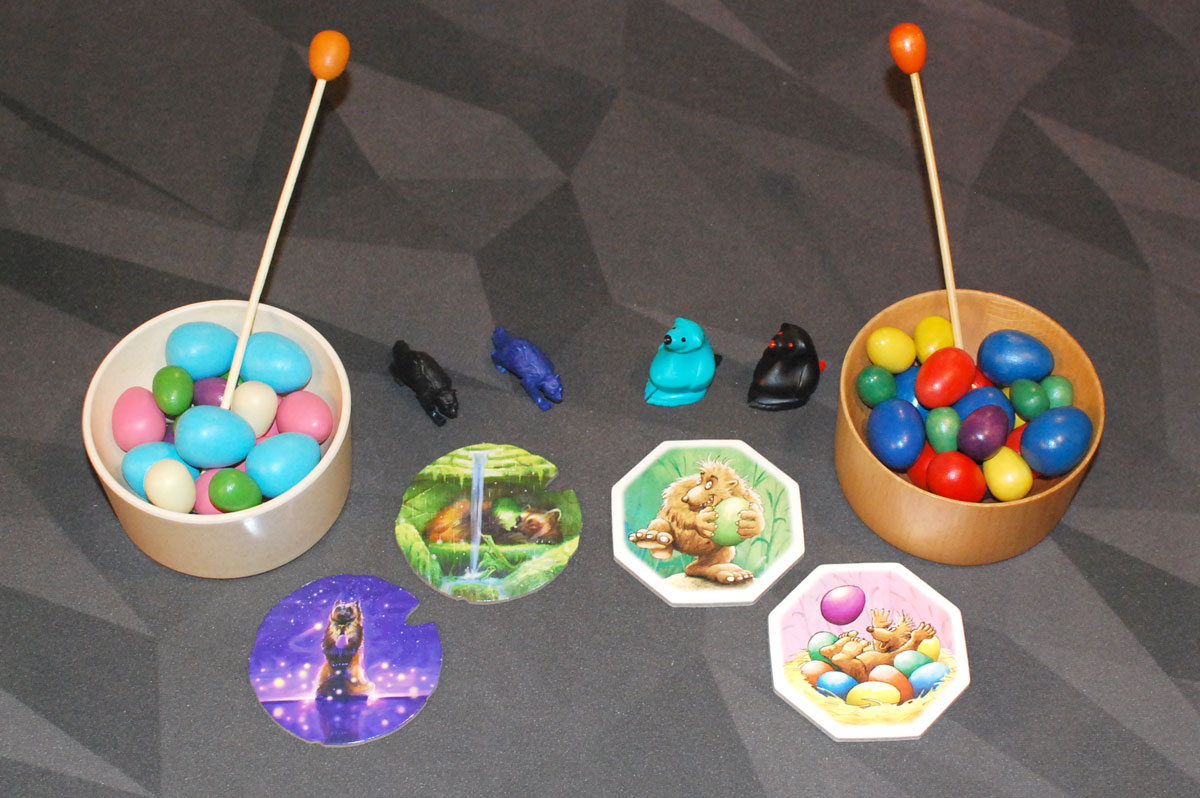
Gulo Gulo was originally published in 2003 by German publisher Zoch Verlag, and I still have my copy of that edition. The tiles were thicker and octagonal, with much more cartoony illustrations of the gulos. The figures were also chunkier and stylized. The eggs were more vibrantly colored. While I don’t have a strong preference for one illustration style over the other, I do kind of miss those goofy figures with their big bellies—and they also have some accent paint on them. The new bowl is definitely an improvement: the old one was wooden, lighter, and didn’t have the rubber base, which meant it often spun around or slid on the table when you were trying to get an egg out of it.
The one odd thing I noticed about the rulebook in the new edition is that it doesn’t look like they updated the component list, because it describes “octagonal” tiles and it includes the colors red and yellow, whereas the new edition is clearly round tiles with pink and white (or cream) colored eggs.
How to Play Gulo Gulo
The Goal
The goal of the game is to rescue Gulo Junior from the nest.
Setup
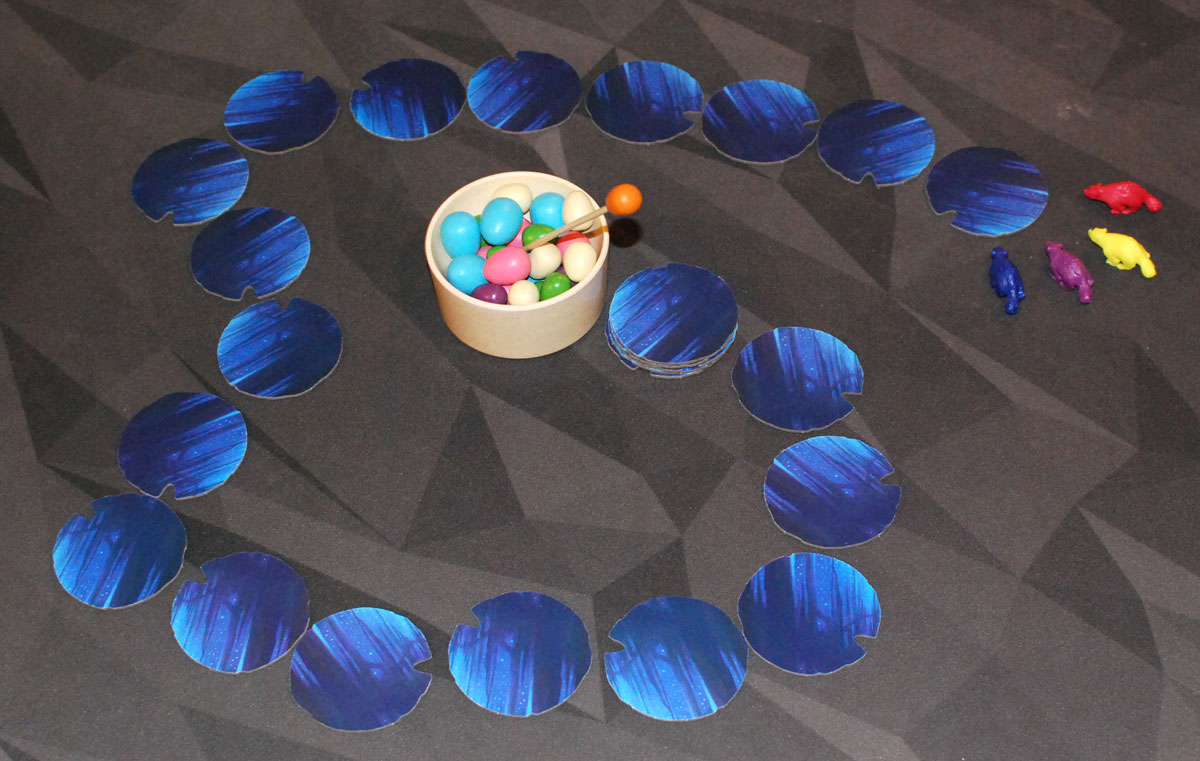
Fill the nest with the eggs, mix them up a bit, and then insert the alarm pole into the pile of eggs.
Shuffle the Gulo Junior tile with 4 random yard tiles, and make a face-down stack near the nest called the nest deck. Shuffle the rest of the tiles and then lay out a path starting from the nest.
Players choose a gulo figure and place it at the far end of the path. The hungriest player goes first!
Gameplay
On your turn, you will choose a tile on the path: You can choose any face-up tile ahead of you, or flip the first available face-down tile. The tile you choose determines the color of the egg you must try to steal.
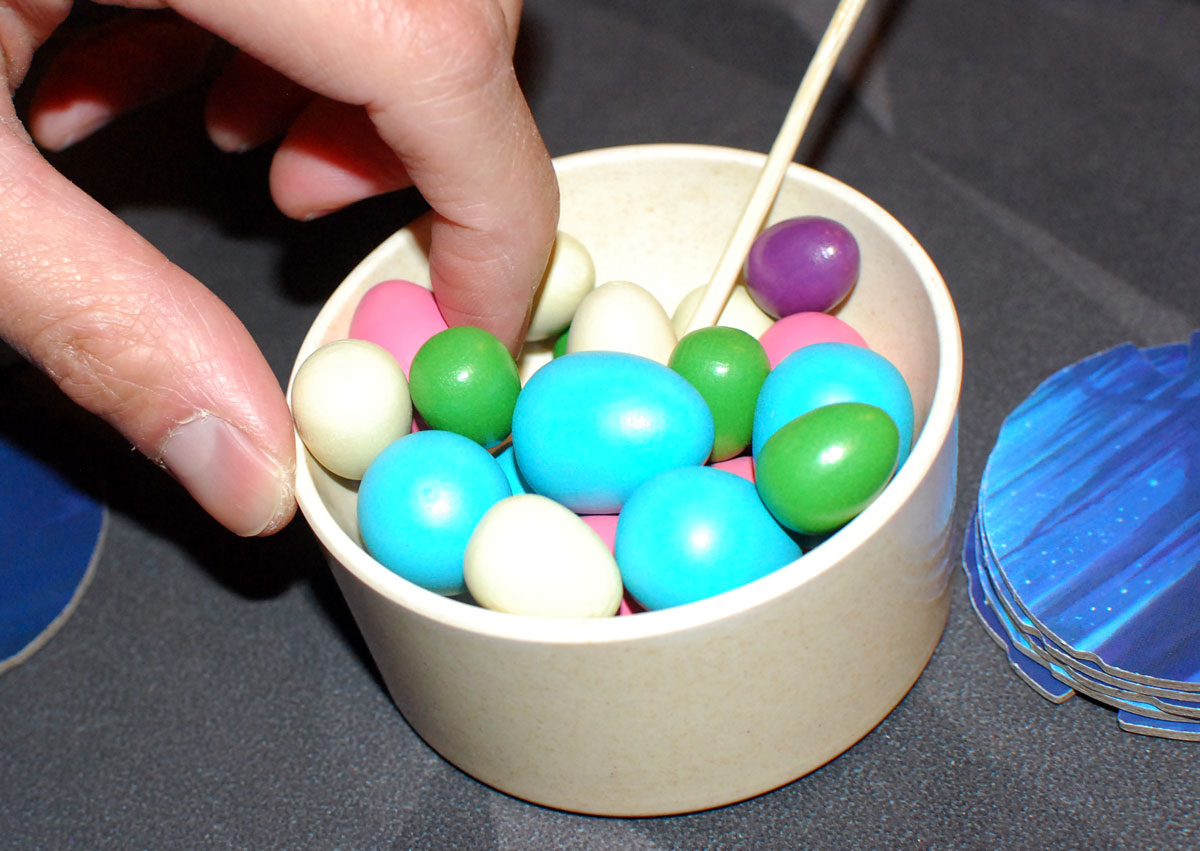
Try to steal an egg of that color from the nest. You have to choose the egg you’re going after, and you can’t change your mind later. You may only use one hand, and while you can touch the other eggs, you’re not allowed to hold them or shift them on purpose, just your target egg. If the alarm pole ever touches the table or an egg falls out of the nest, you’ve set off the alarm.

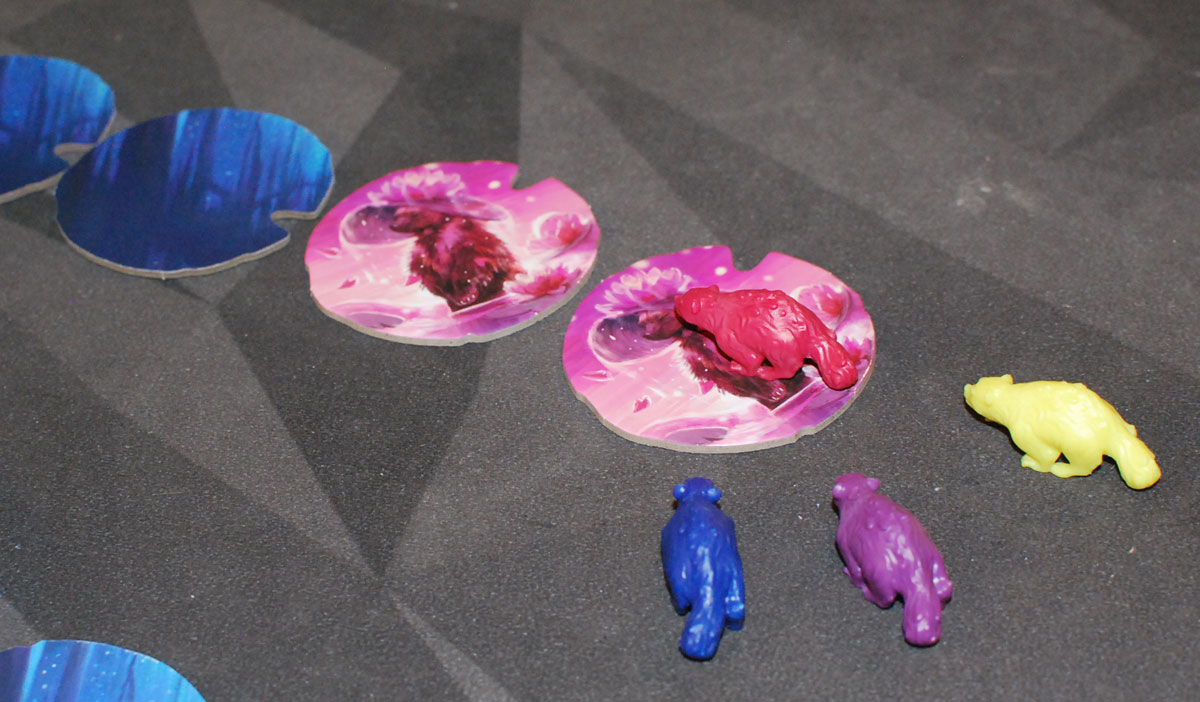
If you steal the egg, put it into the bag and then move your gulo: you move to the next available space of that color. (So in the photo above, the yellow player would only move to the first pink tile, even though they flipped the second tile over.) If it’s the last egg of that color, you get an extra turn! Put all the eggs back into the nest and reset the alarm pole before your extra turn.
If you set off the alarm, move back to the previous space of that color. (If there aren’t any, then go back to the beginning of the path.) Reset the nest by putting all the eggs back and placing the alarm pole.
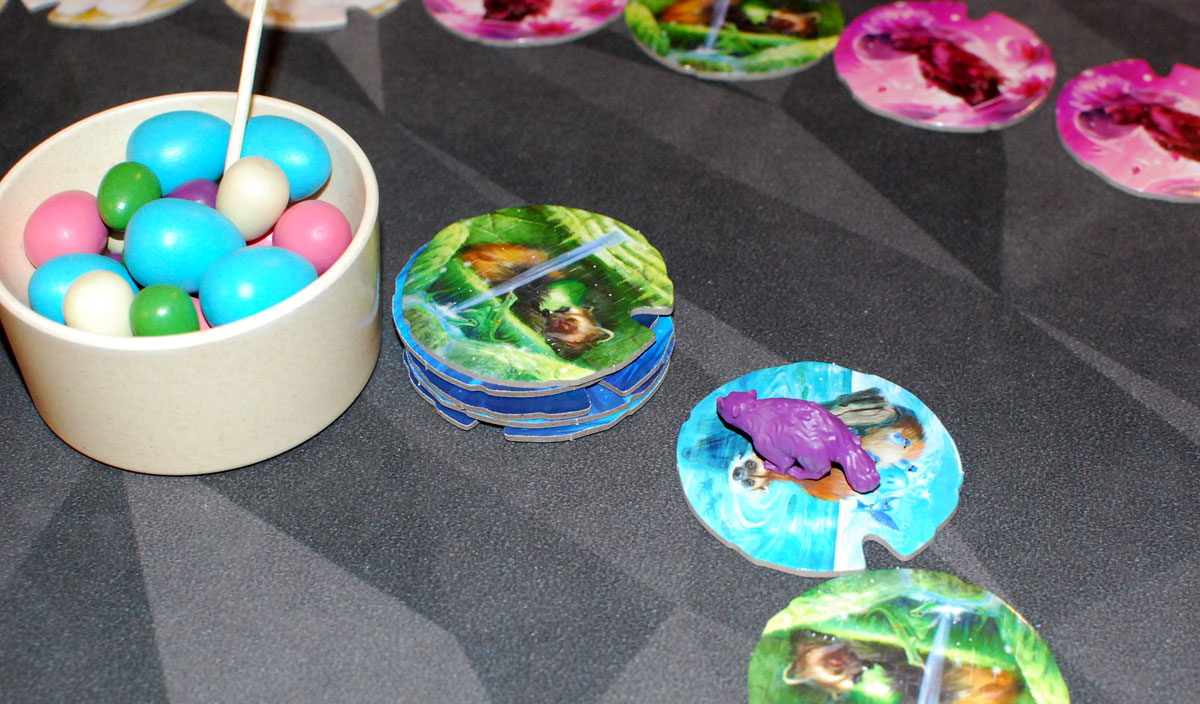
You may not flip over a tile in the nest deck until you get all the way to it. If you’re on the last path space before the deck, on your turn you flip the top tile to reveal it and try to steal an egg of that color. If you succeed, add that tile to the path and advance, and get another turn. If you fail, that tile goes to the bottom of the deck and you go backward as usual.
Game End
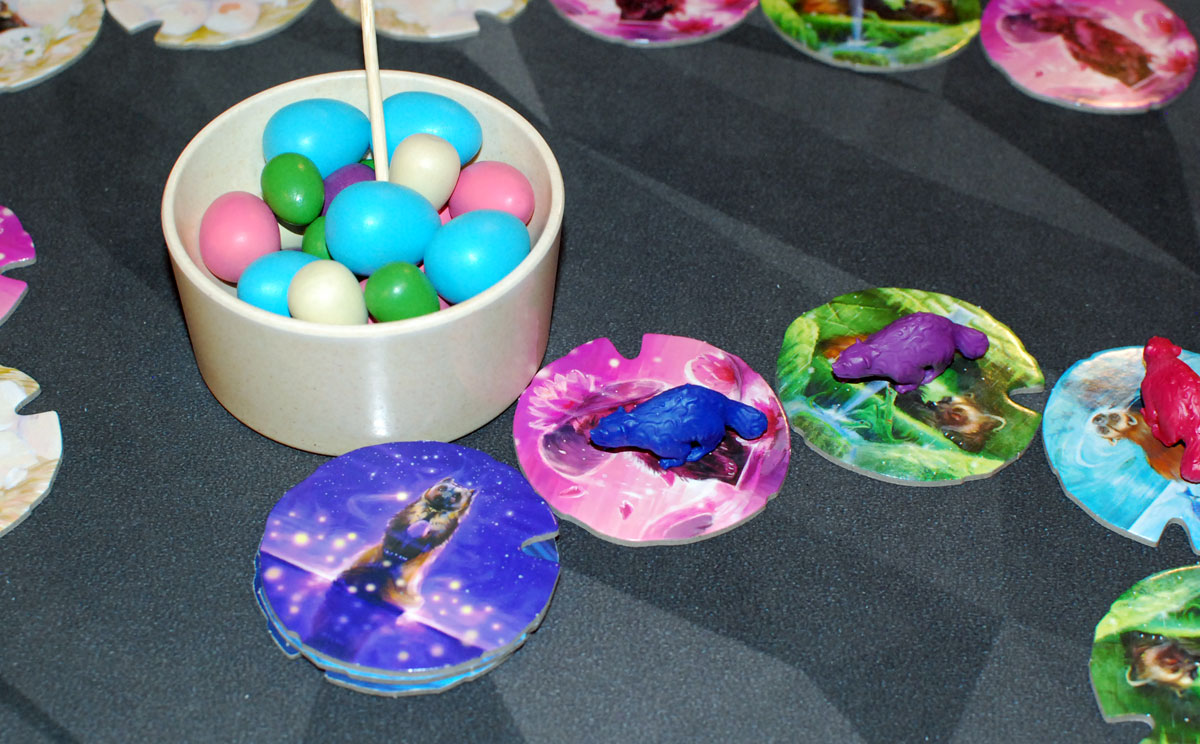
If you reveal the purple Gulo Junior tile and successfully steal a purple egg, then you’ve rescued Gulo Junior and you win! (Note that if you fail while rescuing Gulo Junior, you just move back one space, since there are no other purple tiles to back up to.)
Kid Gulo Variant
For younger kids or a shorter game, there is a variant.
When you get to the last space before the nest deck, you immediately take another turn and flip the top tile of the deck. If you successfully steal the egg from the nest deck, instead of adding it to the path, just put it on the bottom of the deck. If you reveal Gulo Junior, you win immediately (without having to get the purple egg).
Why You Should Play Gulo Gulo
The story of Gulo Gulo is that you’re all wolverines who love to eat swamp vulture eggs. Gulo Junior has gone off in search of eggs and fell into the nest, so you all set out to rescue him. The problem is, you also love eggs so you keep getting distracted along the way, trying to steal eggs even while on the rescue mission. Meanwhile, the swamp vultures have set up an alarm bell on the nest to try to catch you when you’re sneaking those eggs. Does this game actually need this story? The jury’s out, but it does give at least a little bit of framing for what’s going on.
Way back in 2009, Matt Blum wrote about Gulo Gulo and described it as a game that you won’t have to help your kids win. A lot of games for younger kids can be entirely luck-based (like Chutes & Ladders), and it can be hard to teach lessons about being a good sport—not to mention developing any sort of strategic thinking—when nothing you do actually impacts the game itself. And in games that involve strategy and meaningful choices, it can be hard for little kids to win if the adult is playing to their best ability, leading to the parental dilemma of “do I let my kid win?” Gulo Gulo is one of the rare games that involves a little bit of strategic thinking but also gives little kids and their tiny sticky fingers an advantage over adults.
I had my own copy that I played with my young kids, and I often recommended Gulo Gulo to parents looking for games to play with their young kids. The game doesn’t require reading—just recognizing color—so it’s suitable for kids who are at that Candyland stage, still learning to take turns and move along a board (again, as long as they’re not so young they’ll try to eat the eggs). But unlike Candyland, there is both some skill and some choice involved.
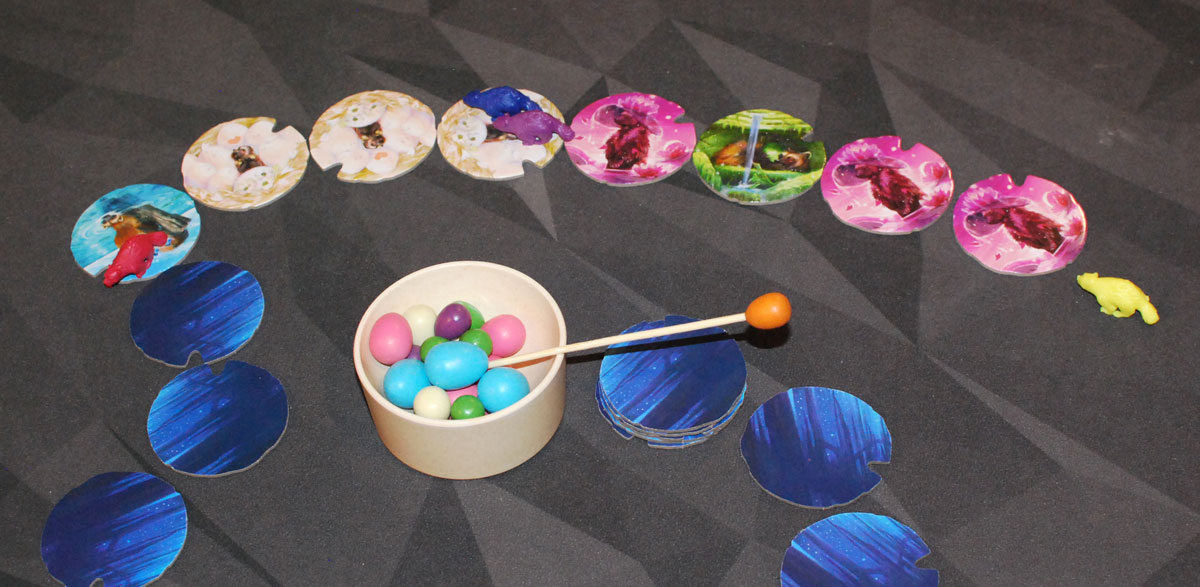
The strategic part of the game comes in choosing a tile, and knowing when it’s best to flip a new tile or choose a particular tile that you can see. The trick is that whatever color you choose (or flip), you can’t skip over spaces of that color when you travel. So, for instance, in the photo above, if the yellow player chooses pink or flips and reveals a pink tile, they will only move one space. But if they just choose the blue tile, they can basically jump to be tied for first. The randomness of the tiles means that you’ll often get this sort of rubber band effect—a player who’s up at the front of the explored path can only move forward one space, but somebody who’s behind may have the opportunity to skip a lot of tiles depending on the arrangement. This is the part of the strategy that will be a little harder for younger kids, because the appeal of flipping over and revealing a tile is pretty strong even when there’s a guaranteed good move without flipping.
The dexterity part, though—that’s where little kids tend to shine! Little fingers can often reach in and grab the eggs without disturbing as much. The shape of the bowl really makes the eggs just slide around: just a little pressure on top of the egg will just shove it further down into the bowl. Large eggs are generally easier to retrieve, but they can also be the ones holding down the end of the alarm pole, so you have to choose wisely which one to remove.
All in all, this new edition of Gulo Gulo is a nice blast from the past, and one that I had fun revisiting. My kids were excited to see the comeback, even though they’re older now and they all have bigger, clumsy fingers now. I’d still recommend it primarily for families who have younger kids, because it’s a great alternative to a lot of other options for kids who can’t necessarily read or count yet. Older players can still have fun with the dexterity portion for a silly challenge, but it’s not as satisfying for somebody who wants a strategy game.
For more info visit the Pandasaurus Games website!
Click here to see all our tabletop game reviews.
 To subscribe to GeekDad’s tabletop gaming coverage, please copy this link and add it to your RSS reader.
Disclosure: GeekDad received a copy of this game for review purposes.


Jonathan H. Liu

Jonathan H. Liu is a stay-at-home dad in Portland, Oregon, who loves to read, is always up for a board game, and has a bit of a Kickstarter habit. I can be reached at jonathan at geekdad dot com.


