

Nintendo—and, if we’re being honest, the entire video games industry in general—catches a lot of flak for reselling us the same titles over and over again. With that in mind, I have lately come to a conclusion that—again, if we’re being honest—I’m weirdly okay with it. Recent (re)releases like Kirby’s Return to Dream Land Deluxe and Metroid Prime Remastered represent some real gems from bygone eras that more than deserve a second moment in the spotlight.
Even the retro libraries available through the Nintendo Switch Online + Expansion Pack subscription service make it easy for me to enjoy games from older-generation systems without having to locate and maintain costly specialty gear or resort to less-than-legal means to do so.

As I mentioned in my preview coverage, I would’ve been more than satisfied with Advance Wars and its sequel simply getting the straight port treatment (like other GBA standouts The Legend of Zelda: The Minish Cap and Metroid Fusion), but, instead, Nintendo and WayForward elected to take all the characters, scenarios, and core mechanics of Advance Wars and Advance Wars 2: Black Hole Rising and give them a wonderfully modern sheen that looks and sounds spectacular on the Nintendo Switch OLED Edition.
For the uninitiated, the Advance Wars franchise puts a more modern military spin on the kind of deliberate, turn-based combat you’d expect from its strategic sibling, Fire Emblem. However, while Fire Emblem has evolved into a sprawling fantasy RPG over the ensuing decades, Advance Wars remains decidedly stripped down.

At its core is the Orange Star army and its three fresh-faced commanding officers, Andy, Max, and Sami. Under the tutelage of Nell, Orange Star’s field trainer, players can select (depending on the Mission) from among the available COs based on which is best suited to fulfill a specific objective.
While all COs perform the same basic tasks in the same way—these include capturing bases and cities, deploying new troops from bases using the funds generated from captured cities, and engaging in direct and indirect combat with enemy forces—each has a unique special ability that can be activated when their CO gauge is full. Andy’s CO Power, Hyper Repair, repairs damaged units while Sami’s Double Time increases the speed at which her Infantry and Mech divisions capture properties, and Max’s Max Force increases the effectiveness of his already formidable direct combat units (like Medium Tanks, Infantry, and Fighter jets).

Unsurprisingly, enemy COs also boast their own powers, and as you make your way across the continent of Cosmo Land, your rivals in the armies of the Blue Moon, Green Earth, and Yellow Comet make quite the impression.
The battle maps and unit animations are crisp and consistent but not overly flashy. Like the game’s varied soundtrack, they pack just the right amount of charming punch and save the big guns—no pun intended—for special cutscenes and CO Power animations. These each have an old-school late ‘70s/early ‘80s anime aesthetic that, as a child of the late ‘70s/early ‘80s, I found positively irresistible!
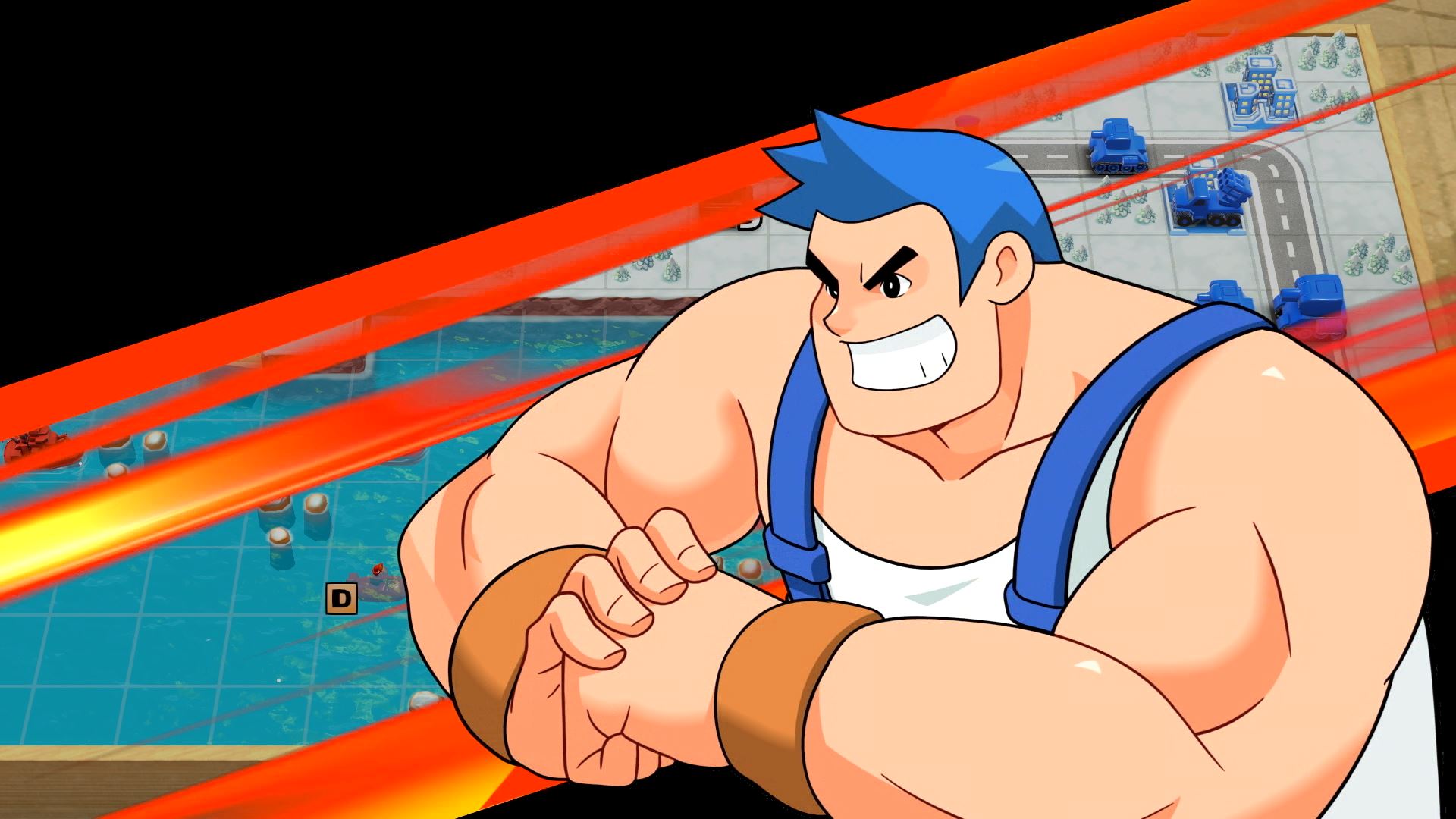
Still, don’t let Advance Wars’ unassuming presentation fool you; the game knows exactly when to ramp up the learning curve with iterative additions in the form of new mechanics. Things like cover and terrain advantage—not to mention the literal Fog of War that obscures some maps—reward deliberate, logical battle plans. Of course, there are also opportunities to flex your military might with a full-on direct assault… especially if Max is your CO of choice.
Re-Boot Camp wisely treats both Advance Wars and Advance Wars 2: Black Hole Rising as a single entity. Simply choose Campaign from the main menu and, once you’ve initially finished the narrative that is Advance Wars, Advance Wars 2 will appear in a forked story select screen. This allows you to quickly go back and try new paths/tactics in the original game or press on into the war with the Black Hole forces whenever you like.
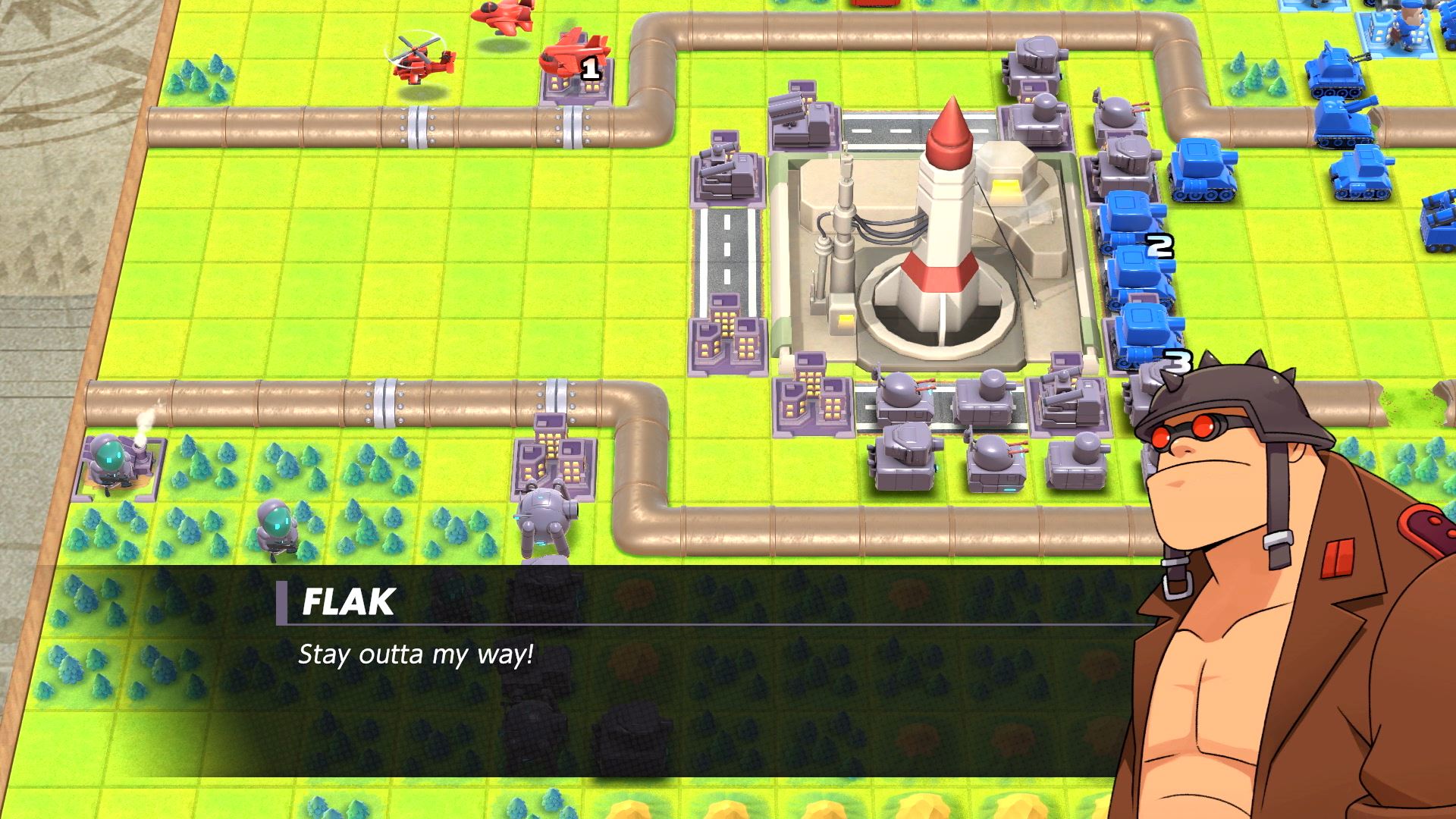
While the sound and visual presentation of Black Hole Rising are identical to those of the first title, its host of new maps, characters, and mechanics nicely supplement the core gameplay you’ve already begun to master. Taking us beyond Cosmo Land into the more expansive Macro Land, it provides both an expanded open mission structure (rather than the earlier game’s branching paths) and more directly puts players in the shoes of their new ally COs from Blue Moon, Green Earth, and Yellow Comet as they join forces to fight a larger existential threat.
A new unit type, the Neotank, is an even stronger variation of the previous Medium Tank cribbed from the Black Hole army’s designs, and that’s not their only new sinister machination. Giant structures fed by (thankfully weak) pipelines and even a massive cannon make an appearance, as do missile silos that can target large areas at once.
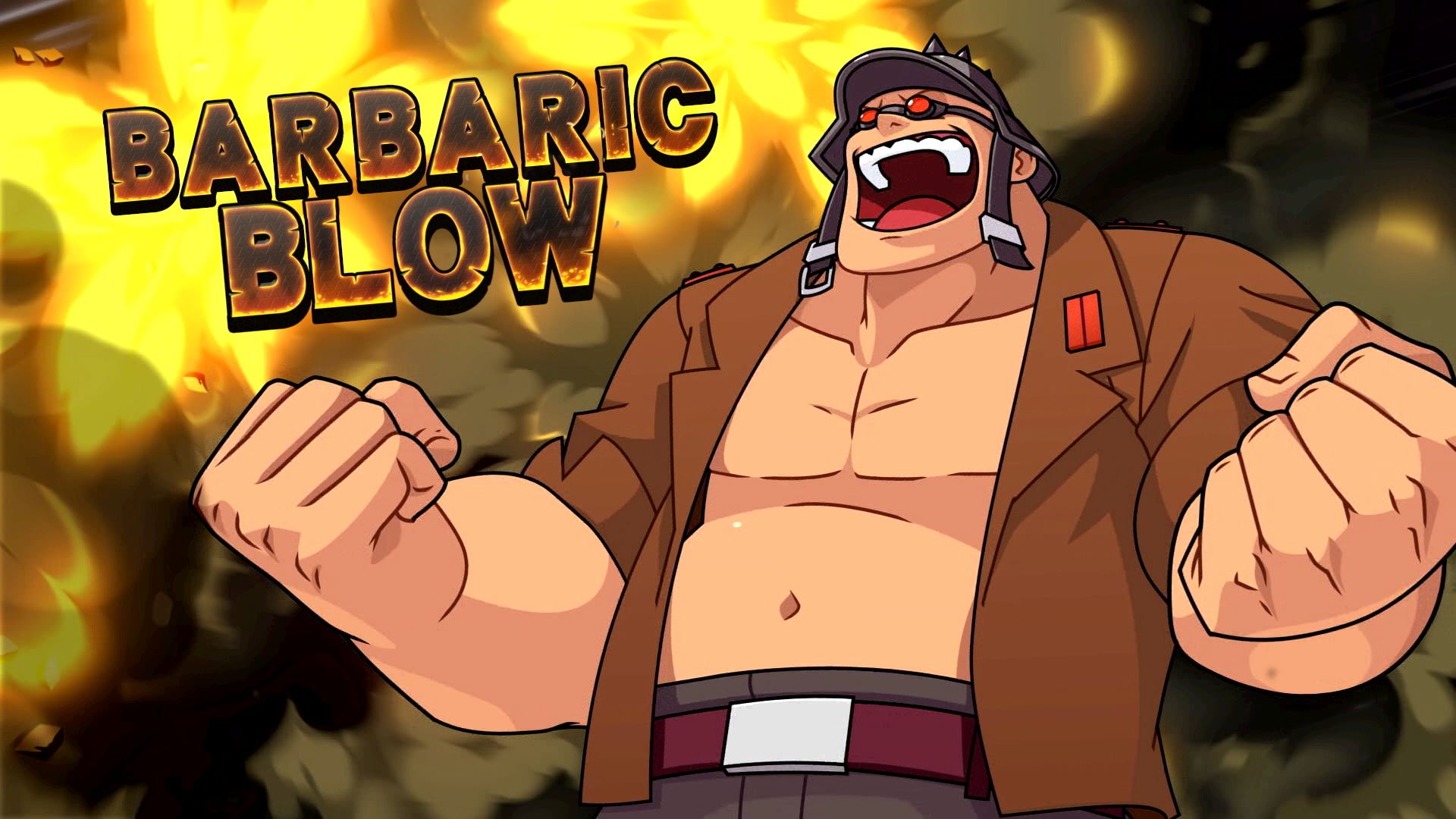
COs now also have access to even stronger Super CO Powers activated via a multi-part gauge. Commanders can choose to use their basic CO Powers early on or let that energy accumulate before busting out their even more powerful Super CO abilities. Like all the additions, it’s mostly just a variation on an existing theme, but it really goes a long way in making Advance Wars 2 feel like an experience all its own.
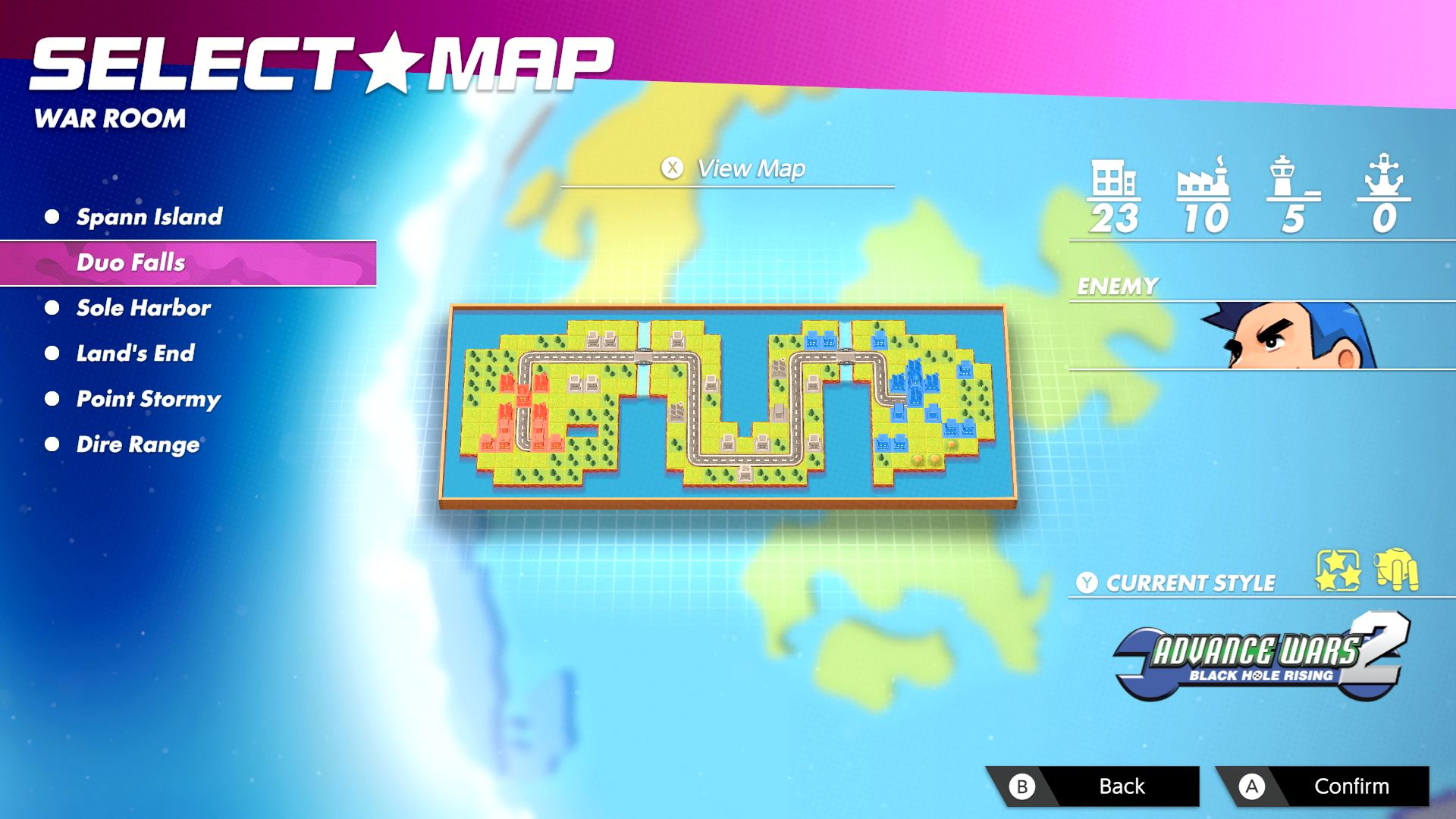
Outside of this two-part campaign, practically all of Re-Boot Camp’s supplementary content serves its multiplayer component. Sure, the War Room and Versus mode support CPU battles too, but the map-making Design Room and robust Online battle mode are all about bringing the pain to new frenemies near and far.
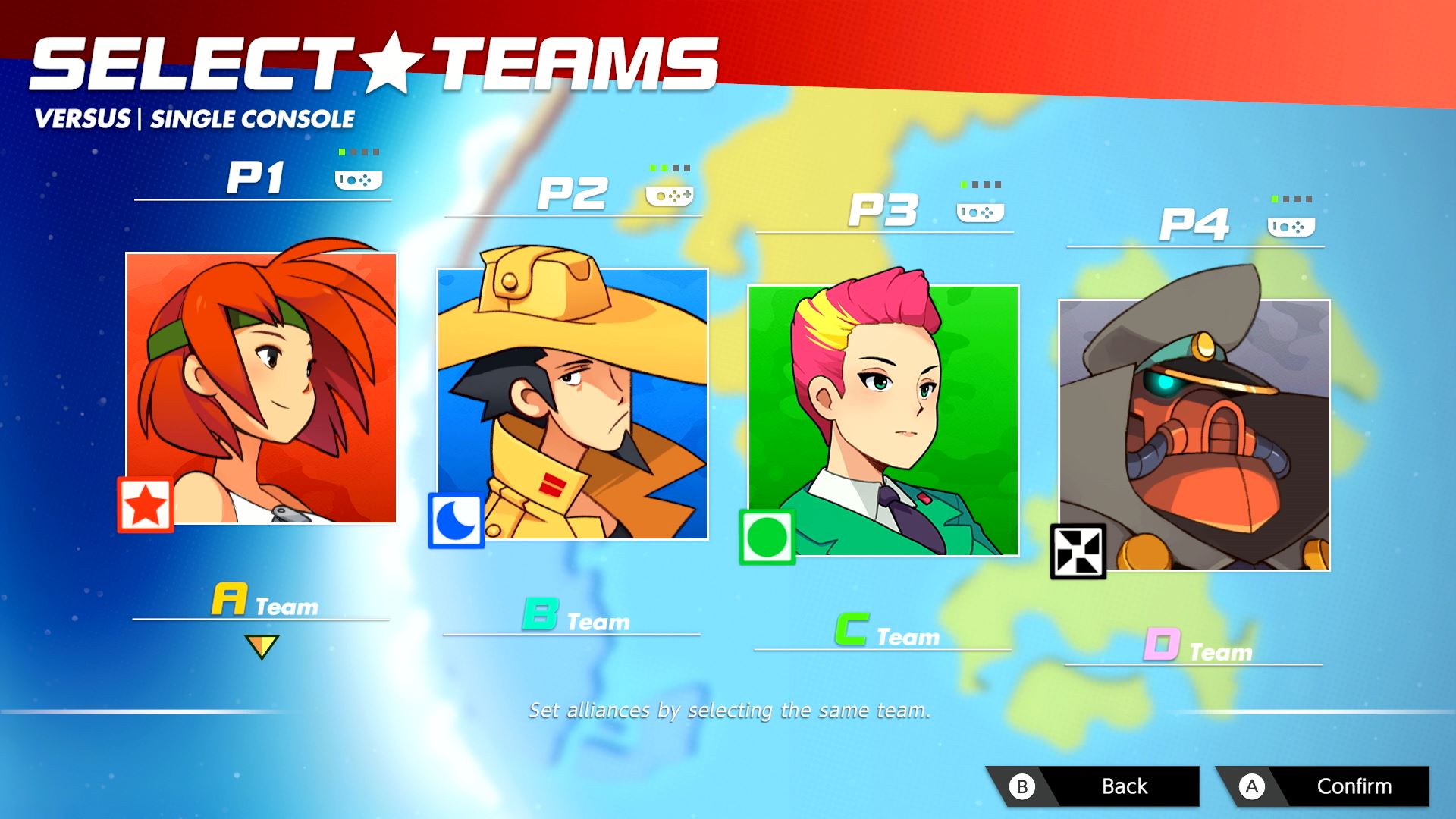
Even the bulk of the items available in the content hub, Hachi’s Shop—aside from music and character art collectibles—are tied to multiplayer. This includes tons of battle maps and access to playable enemy COs. That means that the points earned by completing missions in Campaign mode aren’t particularly useful in the Campaign itself, and while I would have loved a suite of new specialty buffs or tons of unlockable Campaign-friendly units/abilities, this does make for a nice trade-off between the single-player and multiplayer content.
In fact, my only real knock against Re-Boot Camp at all is the lack of a full-on rewind feature. While it’s easy enough to reset a turn from a Campaign mission’s battle map (available alongside all the other requisite items in a specialty Options menu), you can go back no further than the beginning of the current day. This means you can only address minor booboos from the most recent turn and your only broader option is a) yielding and restarting the map or b) exiting to the main menu and then discarding that mission’s autosave—both of which start you over from square one in the chosen mission.
While this certainly sticks close to the franchise’s old-school, hardcore roots, I do wish Advance Wars would take a page from Fire Emblem’s book and institute a for-real rewind option.
Obviously, Advance Wars 1+2: Re-Boot Camp may lack the broader appeal of more recently revisited fare (like the aforementioned Metroid), but it’s nigh perfect for what it is. And what it is is a love letter to the turn-based strategy games of old. It looks, sounds, and even controls like a modern Switch release, but underneath it all beats the same heart that made me fall in love with the genre all those decades ago.
Review materials provided by Nintendo of America. This post contains affiliate links. Somebody, please buy Drake a bigger shirt!


