
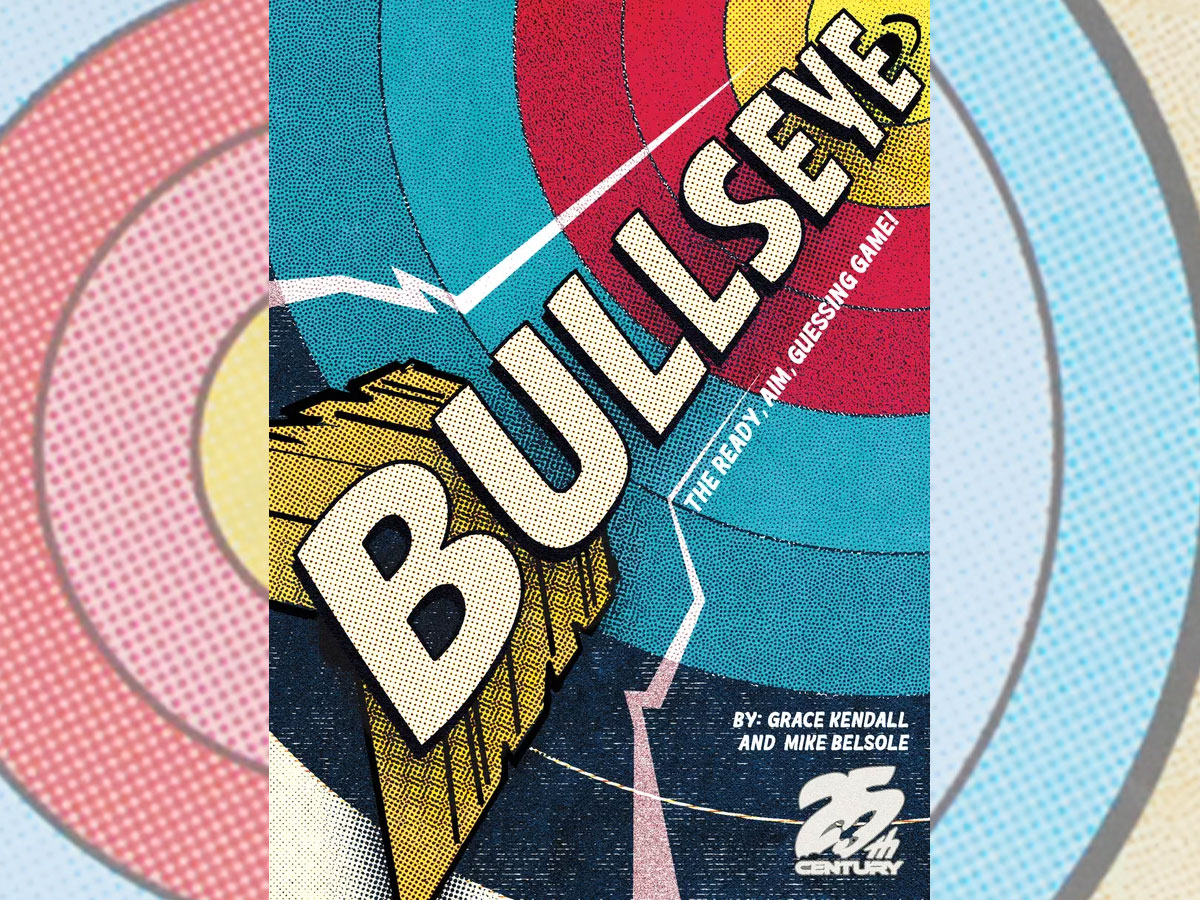
Ready, aim, guess!
What Is Bullseye?
Bullseye is a cooperative word-association game for 3 to 8 players, ages 10 and up, and takes about 25 minutes to play. It retails for $25 and is available in stores and directly from 25th Century Games.
Bullseye was designed by Grace Kendall and Mike Belsole and published by 25th Century Games, with art and graphic design by Matt Paquette & Co.
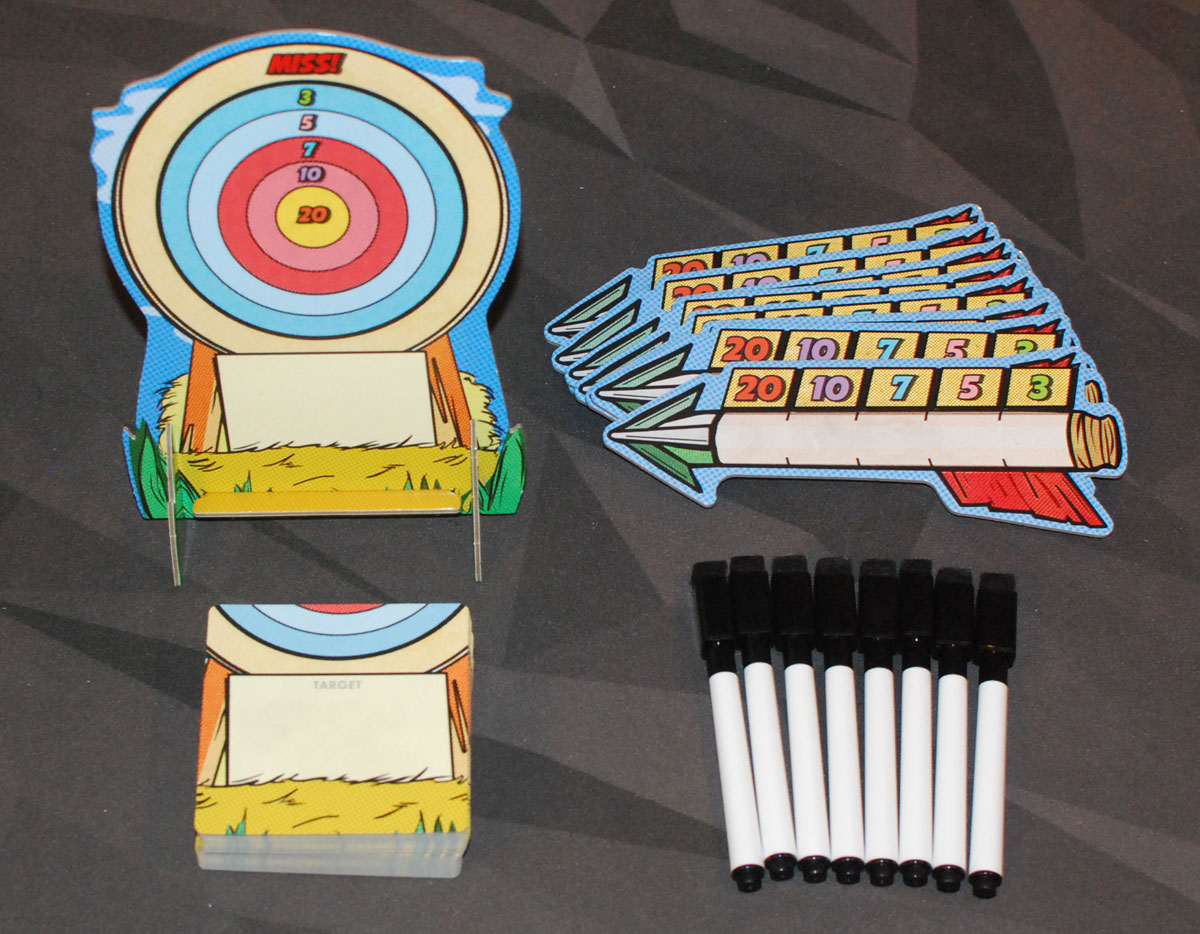
Bullseye Components
Here’s what you get:
- Dry-erase Target board
- 8 Dry-erase Arrow boards
- 8 Dry-erase markers
- 86 Category cards
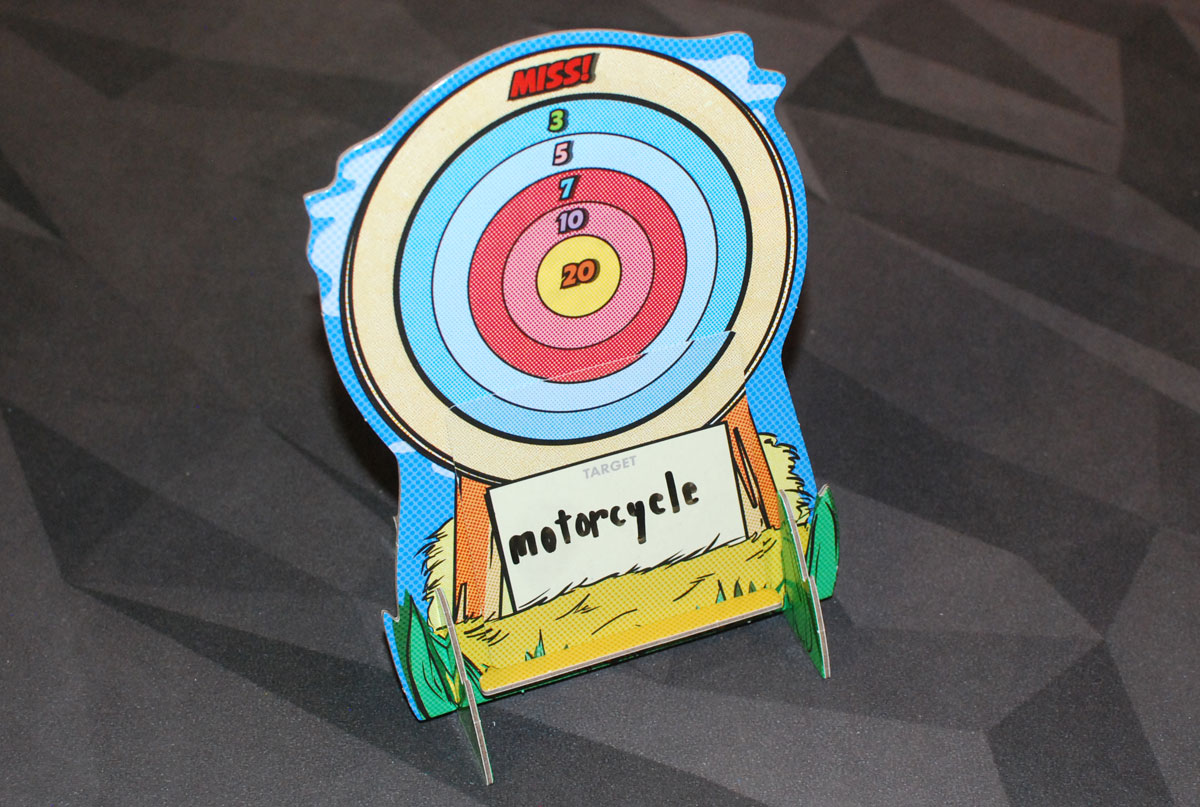
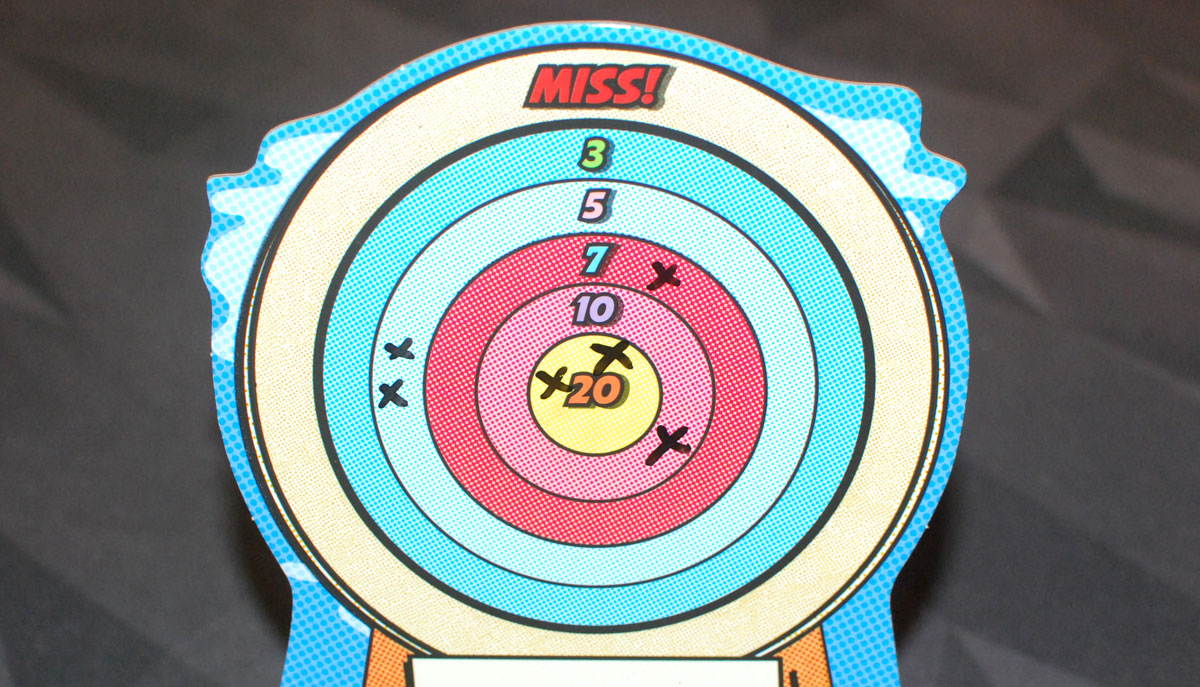
The target board is a large standee, showing an archery target with score values from 20 for the bullseye and decreasing to a “Miss!” on the outer ring. Below the target is a blank sign, which overlaps with the sign illustration on the category cards. My one complaint about the target board is that the “shelf” for the card is very shallow and loose, and tends to fall out easily.
The arrows depict chunky arrows with five spaces on the shaft, marked on the top with the same scores that ring the bullseye. The dry-erase markers are just the standard type that comes in a lot of games, nothing special.
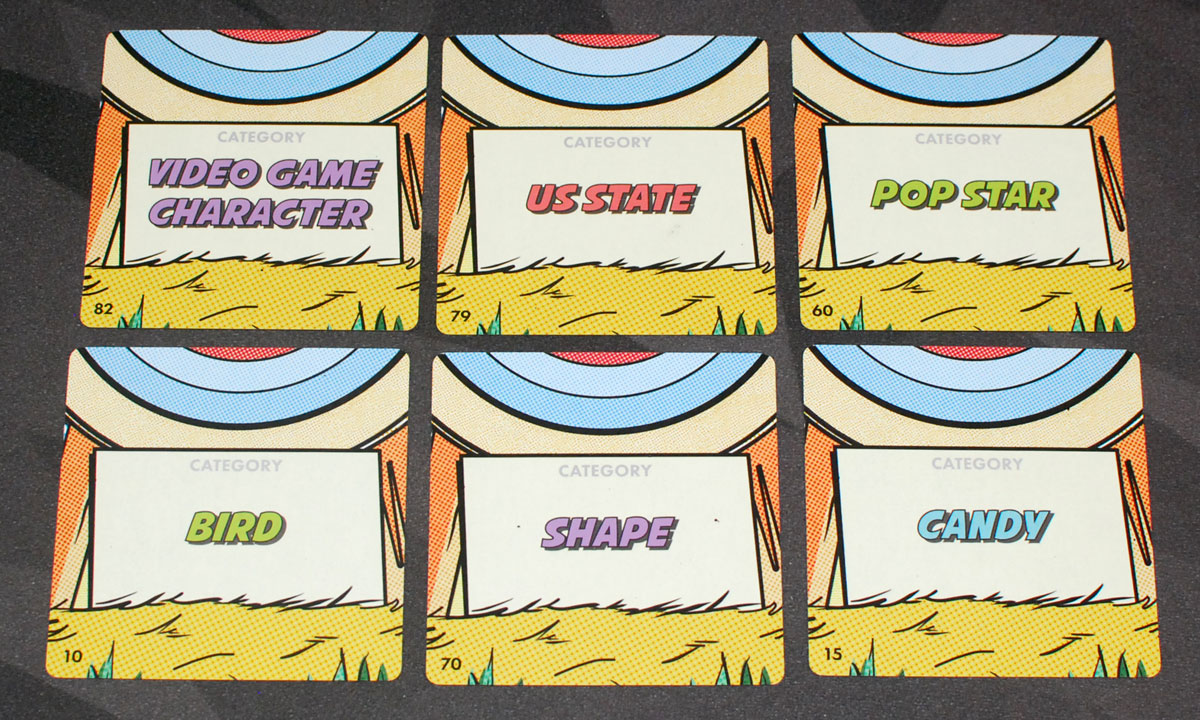
The category cards have a sign showing the category name on one side—”dessert,” “action movie,” arcade game”—and a blank sign on the other side marked as the “target.” There’s a wide variety of categories and one of the things that always strikes me is the difference in ranges of the cards. For instance, if you choose “month” as a category then there are basically twelve possibilities for the target, but how many could you choose from for “pop star”? Or how about “number”?
How to Play Bullseye
The Goal
The goal of the game is to score points by correctly guessing words with as few clues as possible.
Setup
Set up the target board; randomly choose a player to be the “archer” (guesser) for the first round and place the target by them, facing away from them. Shuffle the category cards and set them nearby.
Give everyone an arrow board and a dry-erase marker.
Gameplay
Players will take turns being the archer, who tries to guess a target word based on clues provided by the other players.
Each round, the archer draws two category cards and selects one, discarding the other. The player to their left chooses a target word from the chosen category and writes it on the blank side of the card, and then places it on the target board (so everyone but the archer can see it).
All of the clue-givers simultaneously think of one-word clues for the target word. You may not use the target word or part of it (like “air” or “plane” if the target is “airplane”) and you can’t use symbols and numbers, just letters. Each clue-giver writes the first letter of their clue on their arrow and turns the arrow face-down.
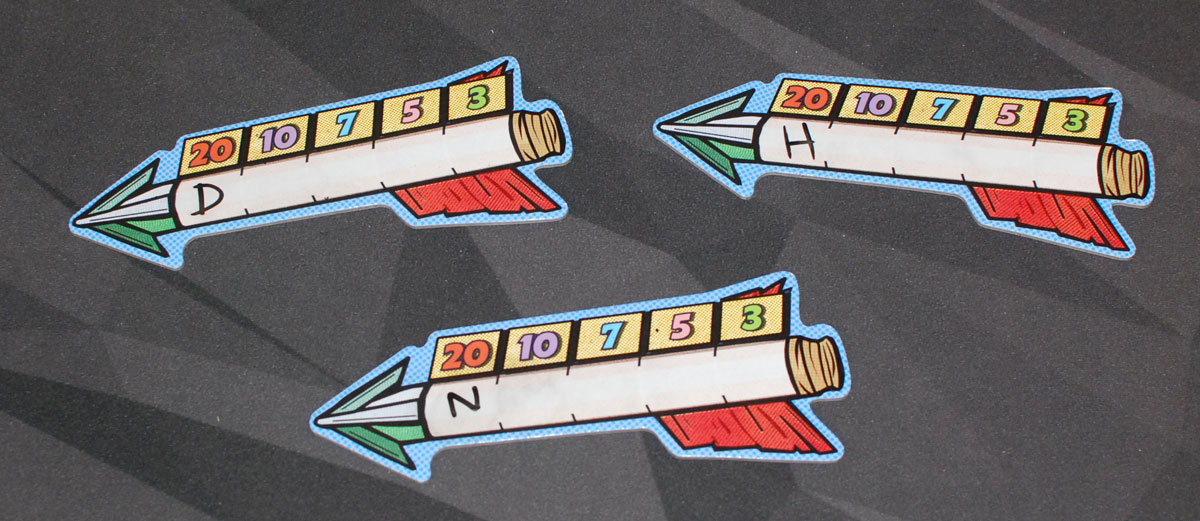
When everyone is ready, reveal all of the arrows.
The archer may either make a guess or pass. If they guess the word correctly, the team scores points based on how many letters were in the clue and marks an “X” on the target board: a 20-point bullseye for guessing it with only the first letters, 10 points for guessing it with two letters, and so on. If they guess incorrectly, mark an “X” on the “Miss!” ring. Either way, the round is over.
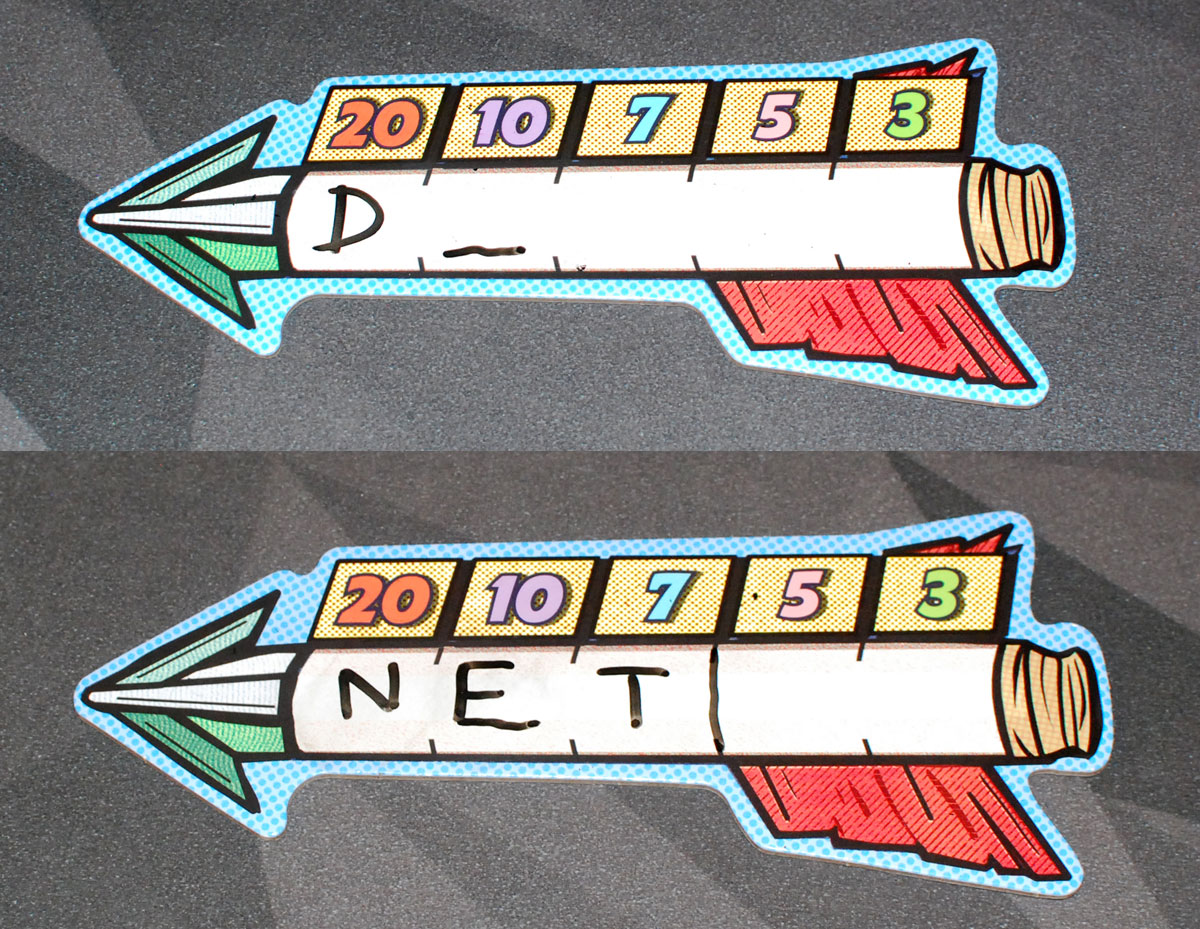
If the archer passes, all of the clue-givers pass their arrows clockwise to the next clue-giver, and then everyone writes the next letter of the clue and reveals them as before. If you can’t think of what the clue should be, you can write an underscore instead of a letter. If you get passed an arrow that has underscores, you may fill in all of the underscores and add one more letter to the end (all arrows should always have the same number of characters filled out, either letters or underscores). If you have completed a clue word, you draw a vertical line after your letter, indicating that the word has ended, and the next clue-giver can start a new word in the next space. The archer can get at most 5 letters per clue and then they must attempt to guess.
After the archer has guessed, erase all the arrow boards, pass the target to the next player, and start a new round.
Game End
For 3–5 players, play until everyone has been the archer twice; for 6–8 players, play until everyone has been the archer once. Circle the 5 best scores on your target board and add up the scores, comparing it to the chart in the rulebook to see how you fared, from “Don’t hurt yourselves” up to “Mind readers!”
Why You Should Play Bullseye
Bullseye reminds me a bit of Just One, another word-association game where everyone has to come up with a one-word clue for the guesser, but then there’s this diabolical twist: you only get one letter of each clue. So when everyone reveals their arrows, the first thing you’re faced with is something like “N,” “D,” and “H.” Hmm, can you guess a sport from that? Okay, so you need a bit more of a hint, so you ask for a second letter.
This is when all of your clue-givers realize that you aren’t the only person who’s trying to decipher the clues. I wrote down “N” but I’ve been passed “H.” I know what word I was writing, but what does “H” have to do with the answer? You’d think that since all the clue-givers know the target word, it would be easy, but a lot of the time, players end up staring at these letters wondering what the heck the other player was thinking.
In Just One, the clues that match each other are eliminated so the guesser doesn’t see them at all. In Bullseye, that’s not the case—but it does mean that you often get the same letter repeated, and it’s maybe not super helpful to have four people all write “S” for their clue. Maybe they’re thinking of four different words that start with S, but you never know. As a clue-giver, when you see multiple arrows with the same letter, you have to make a choice: do you try to come up with a unique word that you think nobody else will, or do you just go for the one you think is the most obvious?
What you find out is that in Bullseye, selecting a category and choosing a target are both very important pieces of the overall strategy. The archer has to think about the possible targets for a category and think about whether there is an obvious single answer that would stand out. The player who chooses the target word needs to think about what one-word clues would fit. We realized that clues that start with unusual letters or letter combinations, or have very short words as clues, tend to be more useful. Does your clue start with “Q”? That’s less common, but then chances are a second letter is going to be a “U” so that isn’t going to provide much more information.
You should also consider what the archer knows and likes. We had one game where the category was “Zodiac” and the target-chooser wrote “rabbit,” thinking of the Chinese zodiac. But the archer chose that category because she was really familiar with Western astrological signs. Even though all of the clues pointed to “rabbit” and she even thought of a rabbit, she simply couldn’t think of what Zodiac sign was related to a rabbit! On the other hand, there have been a few times where an archer was basically able to lock in an answer before even seeing the first letter just because it was so obvious what word we would pick for them to guess.
That can backfire, though. I might have a really good guess about what “sci-fi movie” somebody will choose for me, but then confirmation bias means that when I see the first letter I may be able to come up with words that relate to the movie in my head. Well, of course “D” is for “Delorean” and “T” is for “time travel,” right? Oh, it was for “Darth Vader” and “TIE Fighter”? Guess I should have asked for another letter or two.
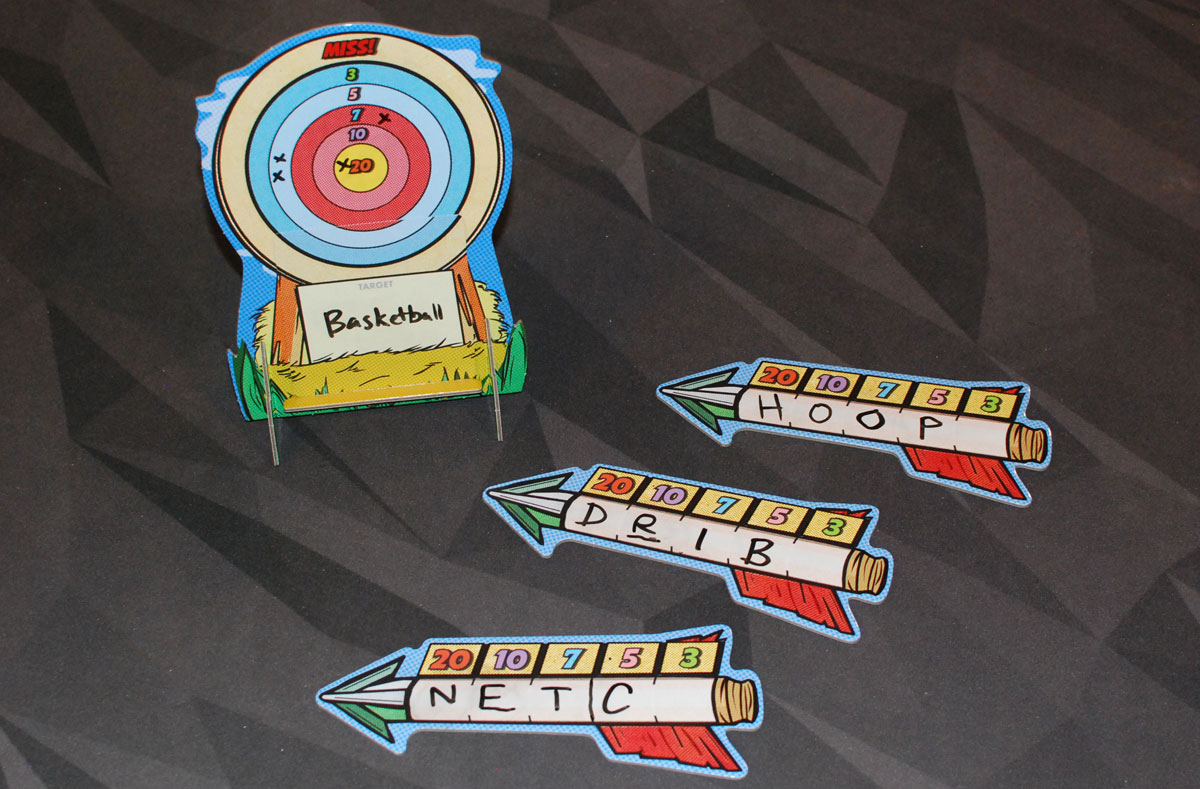
Bullseye is a game that always leads to a lot of laughs as everyone tries to parse what everyone else was doing. I like the fact that even the clue-givers have to act as guessers at the same time, because it adds a touch of chaos, and it keeps everyone engaged no matter which role you’re currently playing. If you’re looking for a fun spin on word association games, Bullseye hits the mark.
Visit 25th Century Games to order a copy—if you order from the publisher, you’ll get a free promo pack with 20 additional category cards!
Click here to see all our tabletop game reviews.
 To subscribe to GeekDad’s tabletop gaming coverage, please copy this link and add it to your RSS reader.
Disclosure: GeekDad received a copy of this game for review purposes.


Jonathan H. Liu

Jonathan H. Liu is a stay-at-home dad in Portland, Oregon, who loves to read, is always up for a board game, and has a bit of a Kickstarter habit. I can be reached at jonathan at geekdad dot com.


