
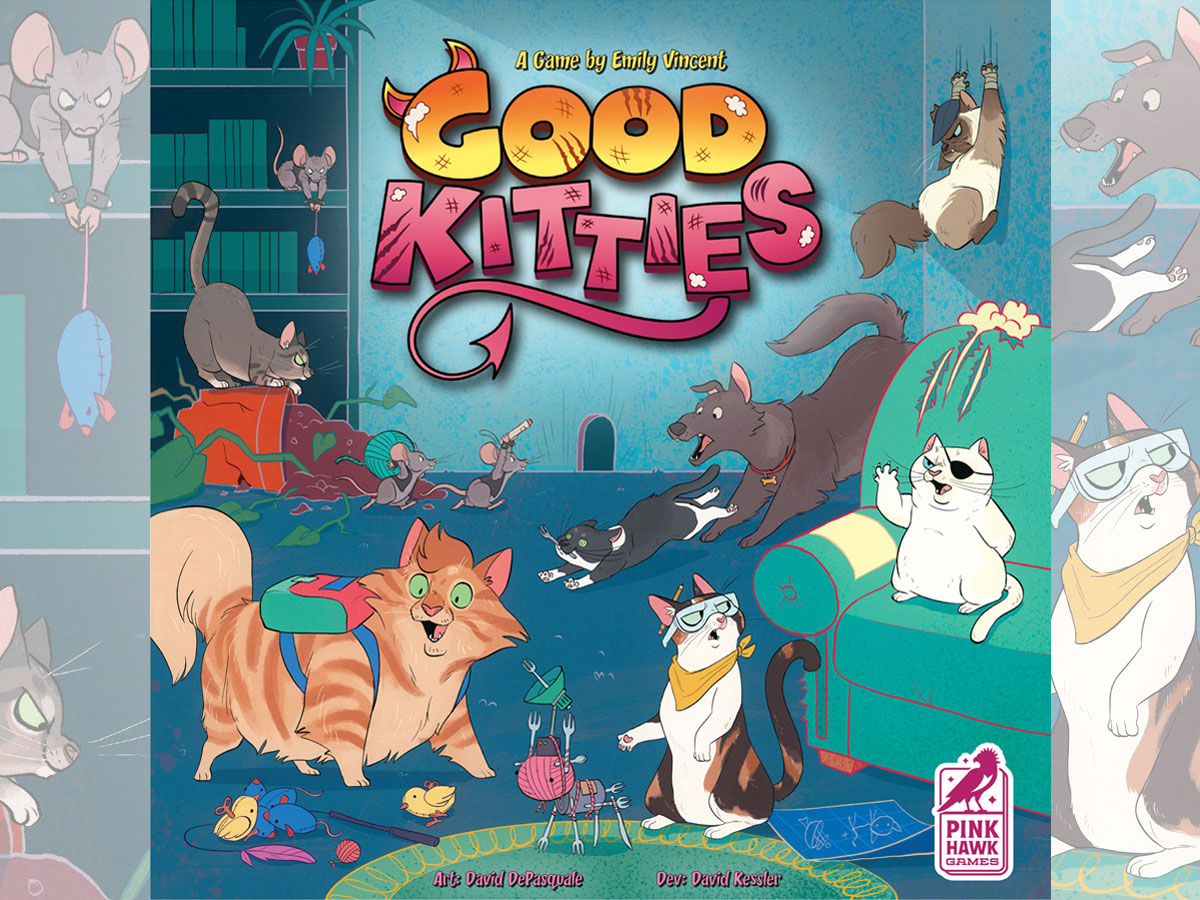
Work together with your fellow cats to take over the house … before the mice do!
What Is Good Kitties?
Good Kitties is a cooperative game for 1 to 4 players, ages 10 and up, and takes about 50 to 80 minutes to play. It’s currently seeking funding on Kickstarter, with a pledge level of $59 for a copy of the game. There are some add-ons available for an expansion that adds 4 more missions, and another for deluxe components, and there are also options to bundle it with another cat-themed game, Super Chonk (see my review here).
Good Kitties was designed by Emily Vincent and published by Pink Hawk Games, with illustrations by David DePasquale.
New to Kickstarter? Check out our crowdfunding primer.
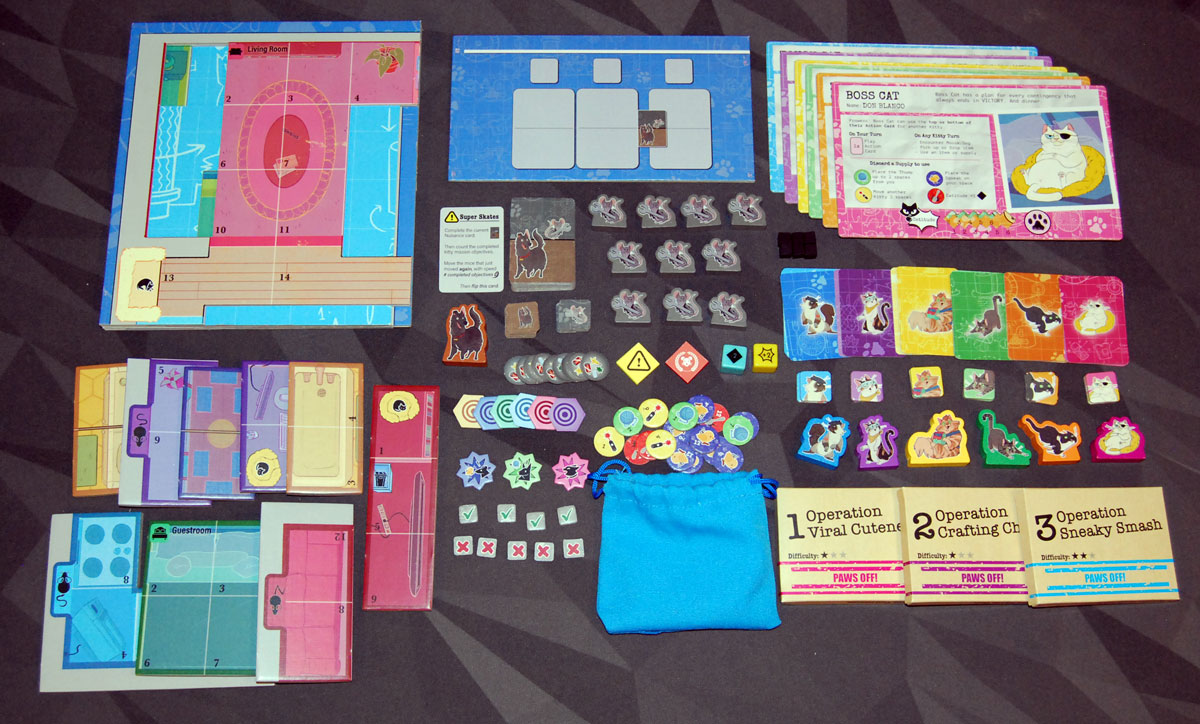
Good Kitties Components
Note: My review is based on a prototype copy, so it is subject to change and may not reflect final component quality. In particular, the prototype only had the first three scenarios.
Here’s what comes in the game:
- Game board
- 9 Furniture tiles
- Action Track board
- Super Skates card
- 24 Nuisance cards
- 10 Mice meeples
- Dog meeple
- 5 Dog Power-Up tokens
- 4 Mouse Power-Up tokens
- 9 Trash tokens
- Mouse Alert token
- Mouse Loss token
- 2 Encounter dice
- 6 Room Target tokens
- Squeak token
- Thump token
- Bad Kitty token
- 7 Progress tokens
- 60 Supply tokens
- 24 Birdie Toys
- 12 Laser Pointers
- 12 Yarn
- 12 Forks
- Supply bag
- 6 Kitty mats
- 4 Catitude cubes
- 36 Kitty Action cards (6 per kitty)
- 12 Kitty Action tokens (2 per kitty)
- 6 Kitty meeples
- 6 Mission Packs
- Mission 1 Tutorial booklet (not pictured)
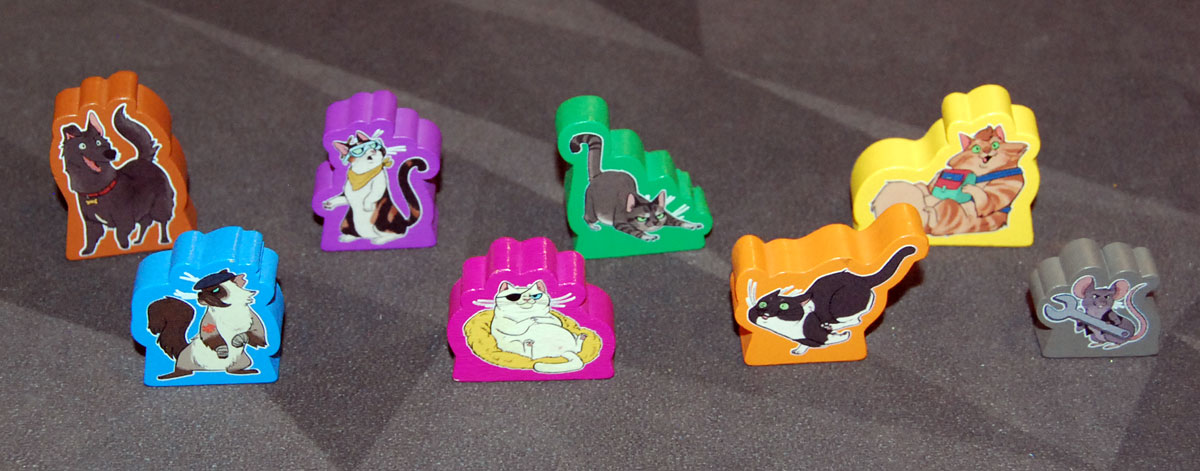
The illustrations of the cats, dog, and mice are really fun—they look like something out of cartoon or a comic book, and they all have a lot of personality. The dog is appropriately goofy and enthusiastic, the mice are conniving, and the cats each have their own trait, like Smurfs. (In case you’re curious, from left to right: Tough Cat, Smart Cat, Boss Cat, Mouser, Zoomie, and Strong Cat.)
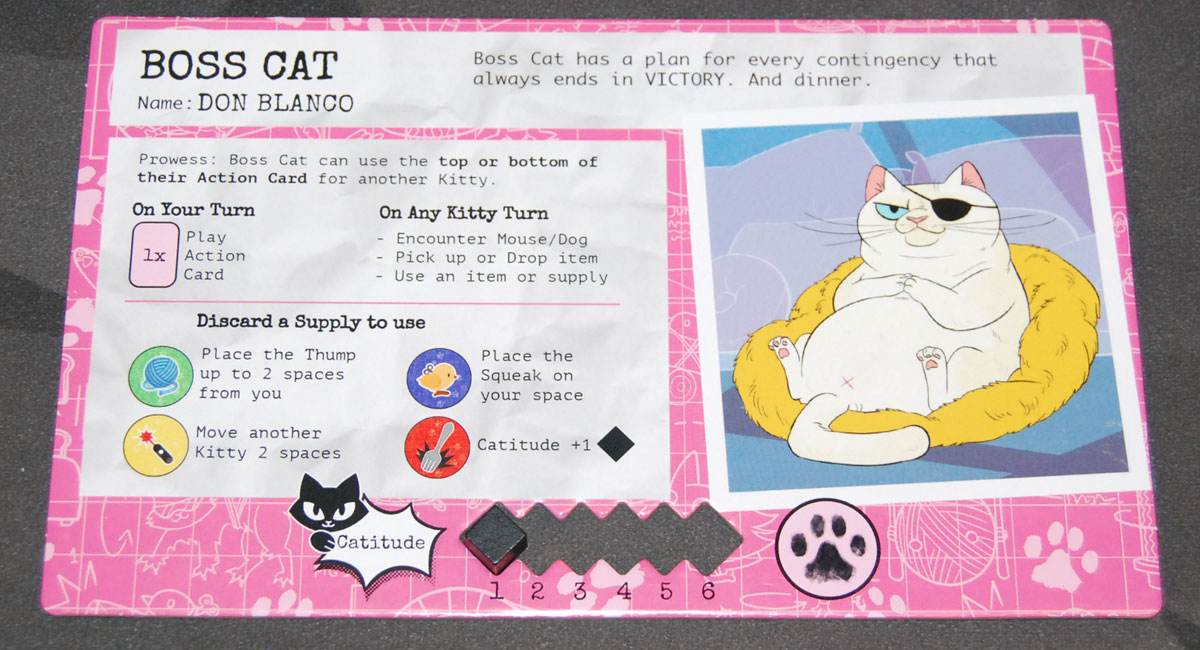
The Kitty mats are mostly for player reference: they have a portrait of the cat with a little tagline, a cut-out catitude track, and various reminders like what the supplies can be used for. Each one also explains the cat’s special ability, and there’s a paw print icon that you can use to store the one supply token you can carry.
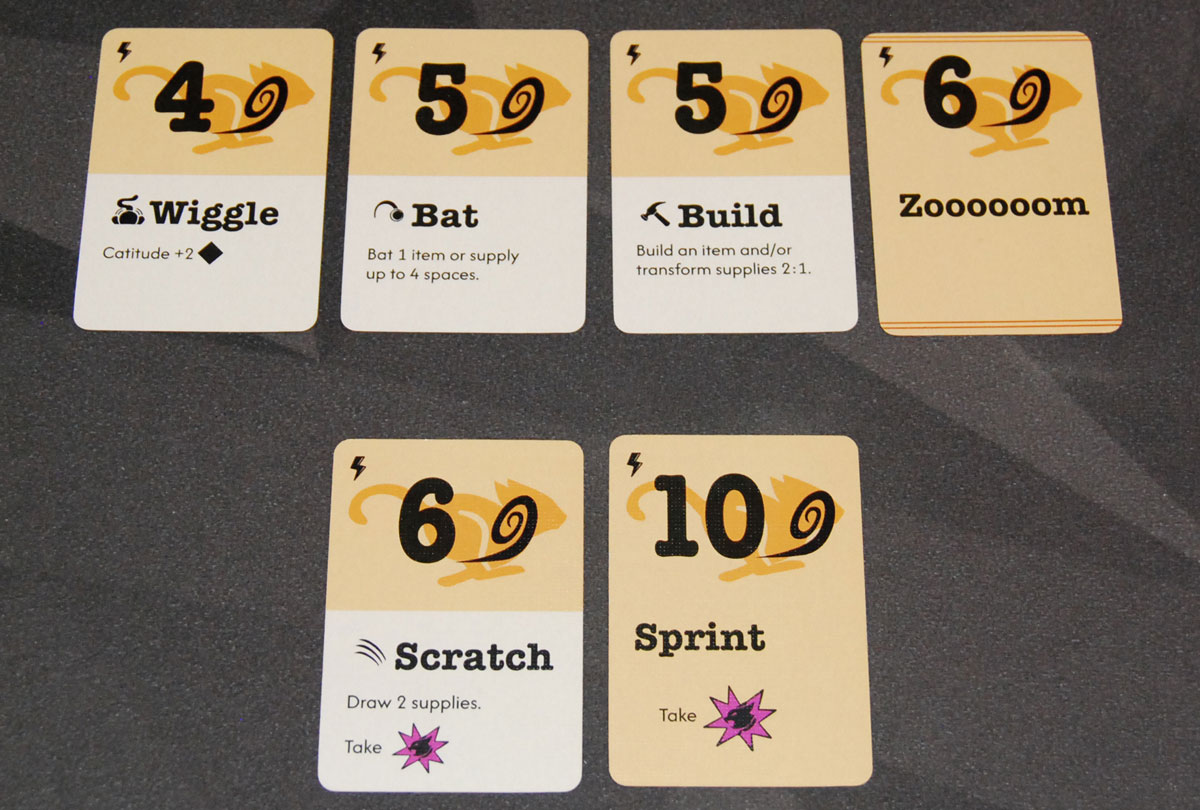
Each cat has their own set of 6 action cards—most cards have a movement number on the top, and then an ability at the bottom. There’s some overlap—most of the cats have a similar group of actions, but with a few tweaks. For instance, Zoomie’s cards just have higher numbers than the equivalent cards of the other cats. Two of the cards have a darker background so you can separate them out easily—these are cards that can be gained later, and they include the “bad kitty” symbol because they make you a target for the dog when you use them.
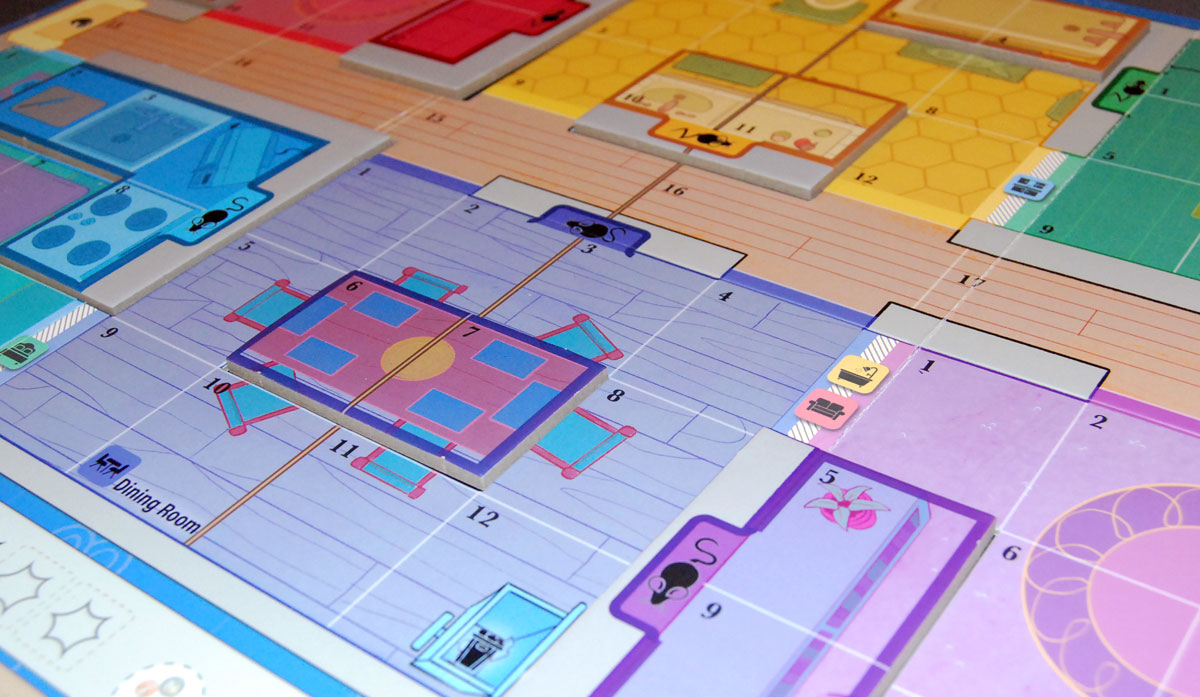
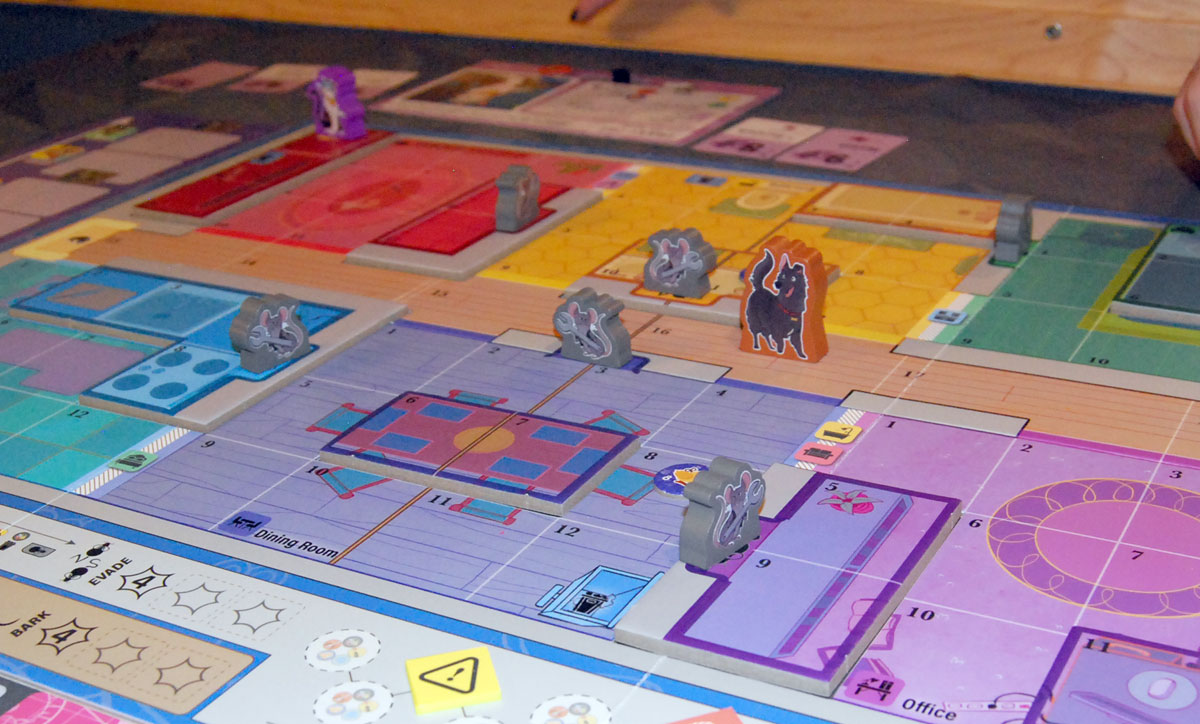
The board depicts a house with one long hallway down the center and six rooms including a bathroom, kitchen, dining room, and so on. (Oddly, there’s a guest bedroom but no main bedroom.) Each of the rooms is x 4×3 grid, with numbered spaces. The board has cut-out holes in it, and the furniture tiles are extra-thick tiles that slot into the board, representing things like the kitchen counter, the bed, a coffee table, and so on. While the tiles aren’t entirely necessary and these things could have just been printed on the board, it’s a pretty nice visual distinction between the ground and furniture—the dog can’t typically reach you while you’re on the furniture.
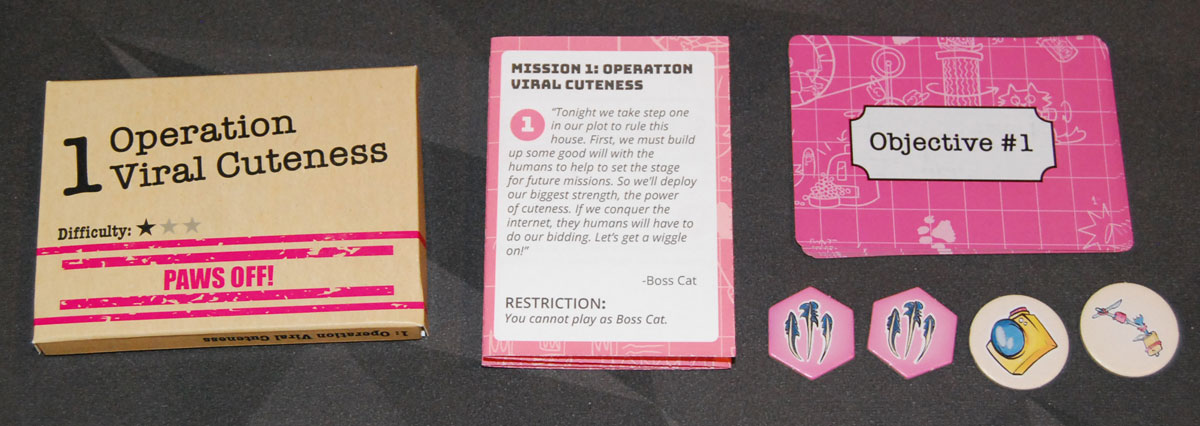
The mission packs are small cardboard boxes that include a little rulesheet, some objective cards, and some other components specific to the mission. The rulesheet has a little story—usually narration from one of the cats—that sets up the plot, but also makes that cat ineligible as an option for that scenario. It also explains any special setup instructions and special rules that are in play for the mission.
There’s a smaller booklet included that walks you through the first few rounds of Mission 1, so if you like to have some step-by-step guidance, it gets you started and you’ll see some of the ways that the different parts of the game interact with each other, but you can also just dive in and play it from the rulebook if you prefer.
How to Play Good Kitties
You can download a draft of the rulebook here.
The Goal
The goal of the game is to complete your mission objectives before the mice take over the house. Each mission has its own specific objectives and special rules.
Setup
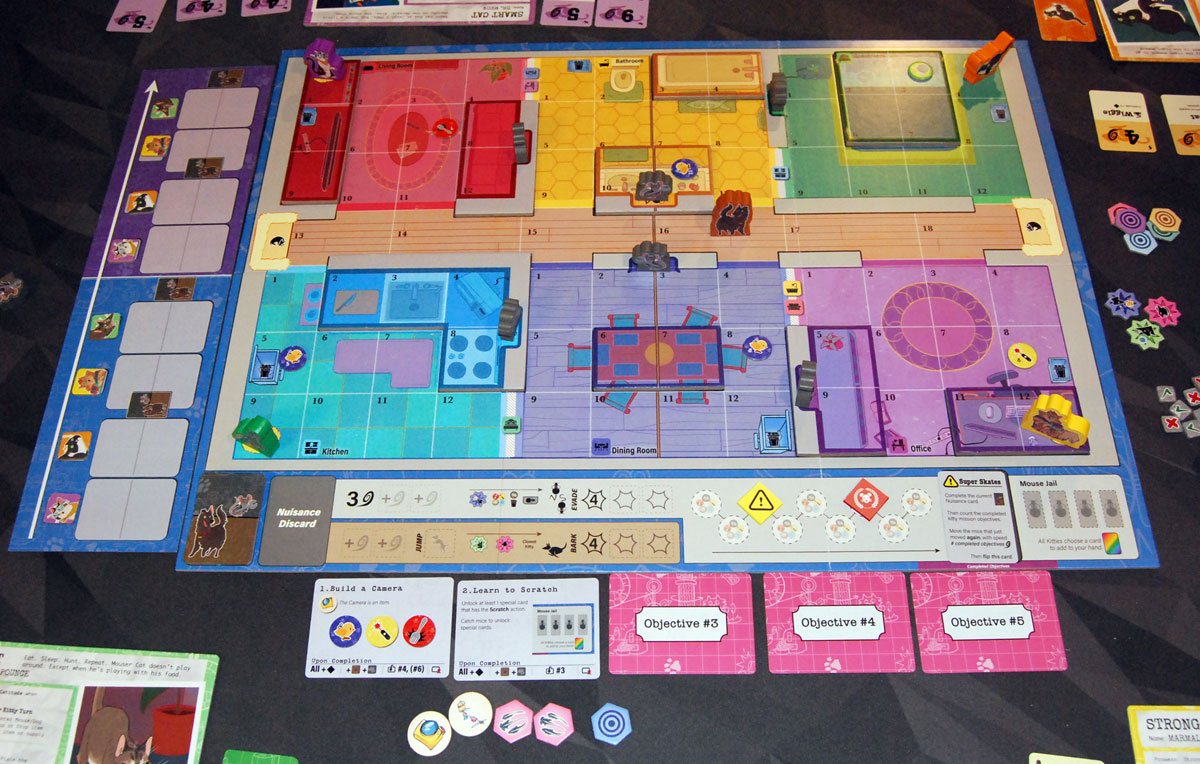
Set up the main board: put the furniture tiles in their proper places. Put a mouse on each mouse hole and the rest of the mice in the supply. Draw an item for each room and place it in the space that matches its number. Place the dog in the hallway on space 16. Set the dice and rest of the tokens nearby in a supply. Place the Super Skates card face-up next to the mouse track. Shuffle the nuisance cards and make a deck (based on the mission and difficulty level) and place it on the designated space.
The mission pack may have additional setup instructions, including setting out the objective cards—a certain number of them will start face-up and the rest are face-down. Depending on the difficulty level chosen, you will put the mouse alert token and mouse loss token on some spaces of the mouse track.
Everyone chooses a kitty and takes the mat, action cards, action tokens, meeple, and a cube. Place the cube at 1 catitude on your mat, and place the meeple on a cat bed in one of the corners of the main board. (Everyone has to start in a different space.) Place the two special action cards (with the darker card back) face-down next to your mat, and the other action cards in your hand.
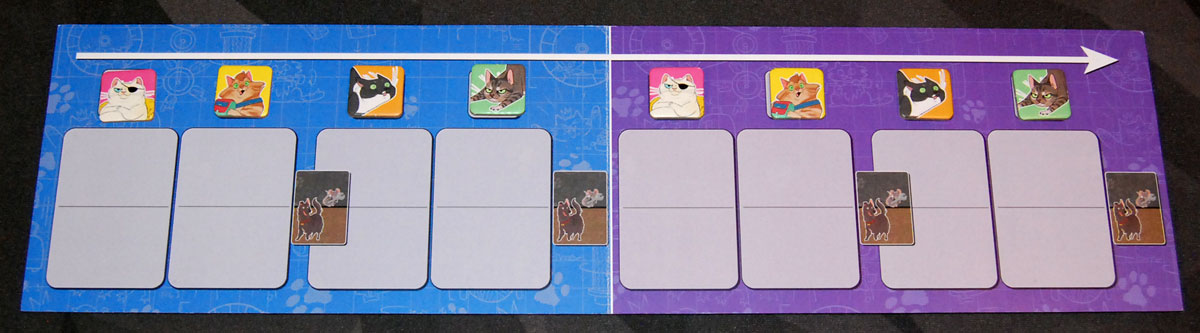
Choose a starting player (the player who most recently pet a cat). Player put their action tokens on the action track in turn order. Note that you will repeat the turn order so that everyone will get two turns per round.
Gameplay
The turn order is shown on the action track. On your turn, you play a card from your hand and activate it, or else you can trade spots with somebody else. The only rule about trading turns with another cat is that each cat only gets one turn per half of the action track. When the action track has been filled, give everyone their cards back and start a new round.
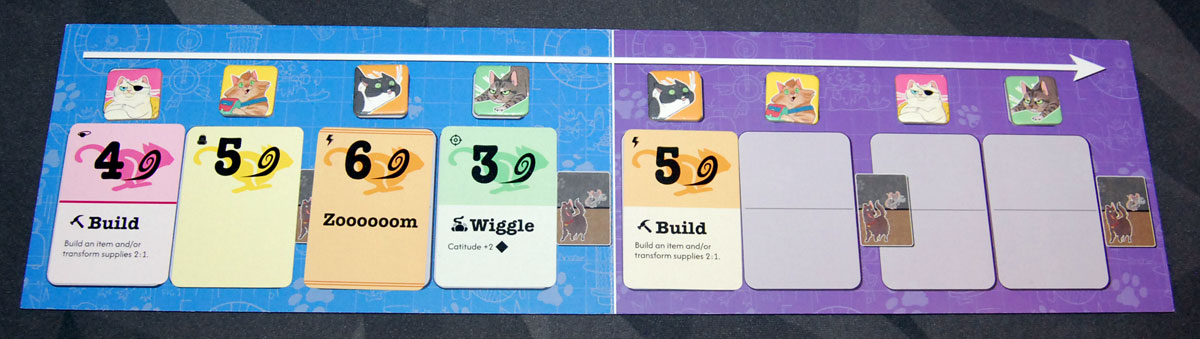
Each action card has a movement amount—you may move up to that many spaces (orthogonally only) during your turn, and you can do other things while moving. Picking up or dropping items is free, as is discarding them for their effects. Many of the cards also have an additional effect at the bottom of the card: wiggle lets you increase your catitude, build lets you assemble things required for the objectives, and bat lets you move an item a few spaces to get it closer to another cat or position it as needed.
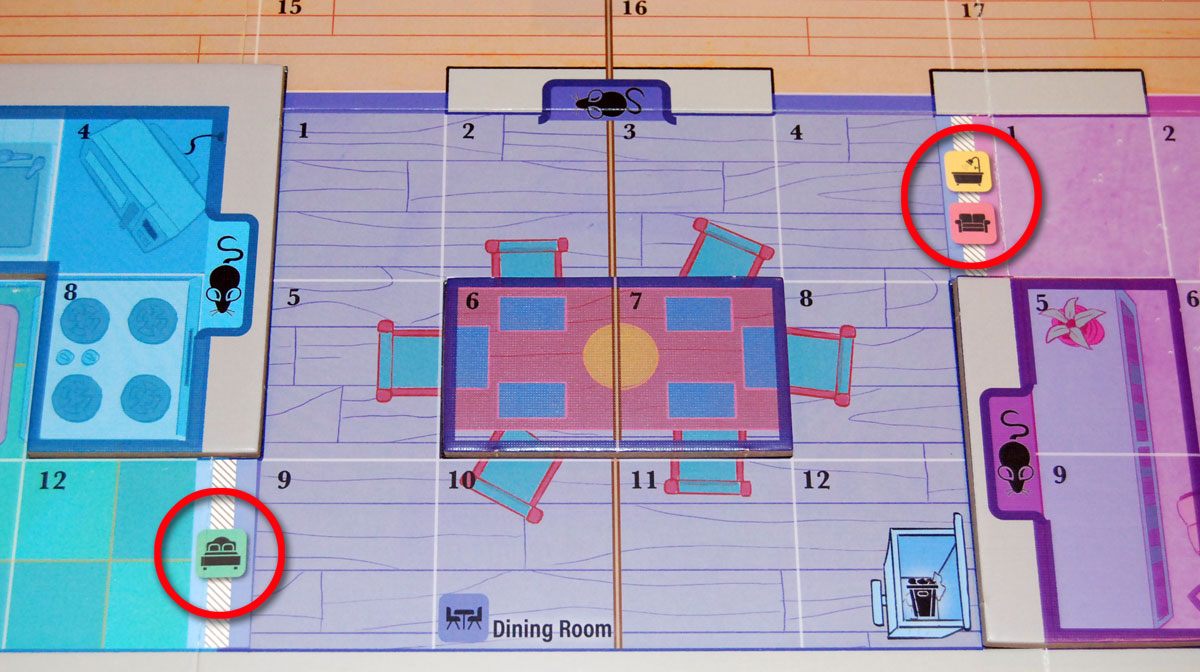
Between some of the rooms there are supply gates that show a room icon. The cats can get past these gates, but the dog can’t. Every time a cat crosses a supply gate, draw a supply from the bag for each room indicated and place it into its numbered space. The gates will add supplies to the rooms on the opposite side of the house.
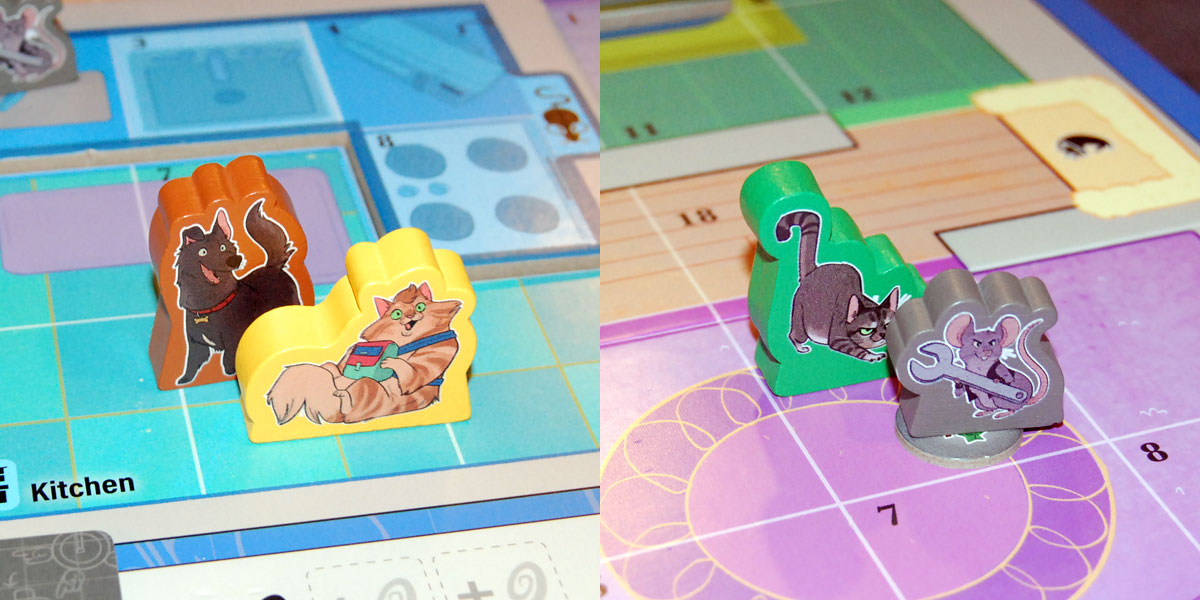
If you enter the space with the dog or a mouse, you’ll have an encounter. You must roll the dice. The yellow die has values from 0 to +3, and this is a temporary catitude boost (you don’t move your cube, but you add this to your total). Compare your total catitude to the dog’s bark level or the mouse’s evade level, shown at the bottom of the main board.
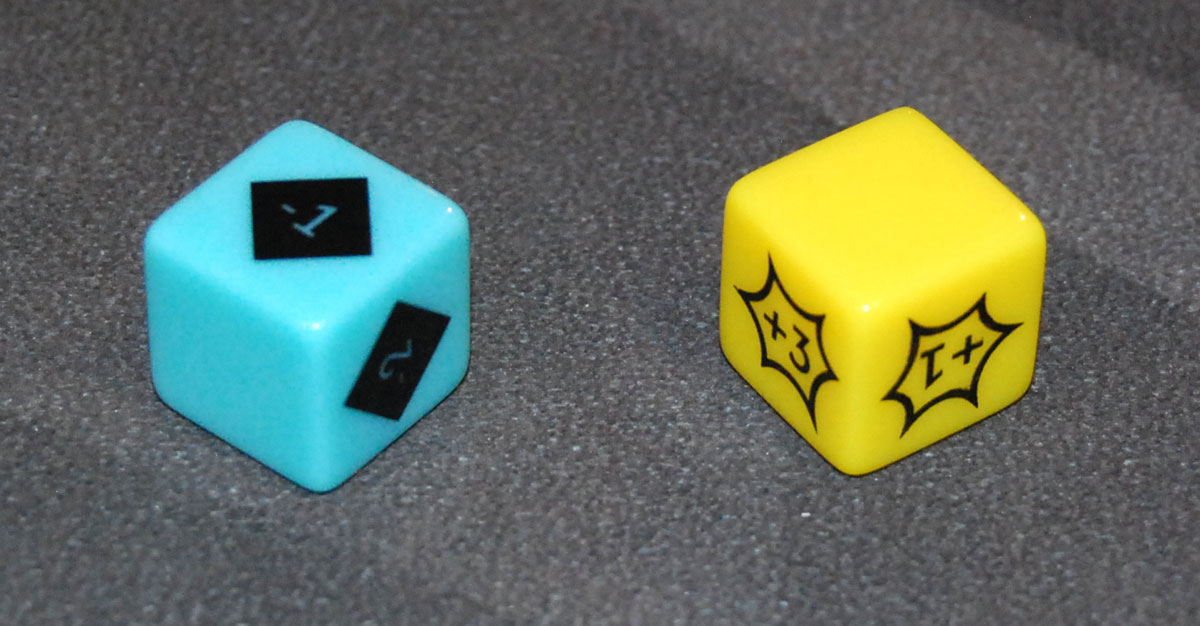
If you meet or exceed, then you win—the dog gets sent to the dog bed on the other half of the house and you get a random item; the mouse gets sent to mouse jail. If you lose to the dog, you discard a random action card from your hand and get sent to a cat bed on the opposite half of the house; if you lose to the mouse, it gets an extra move toward its destination. Win or lose, you then spend the amount of catitude shown on the blue die.
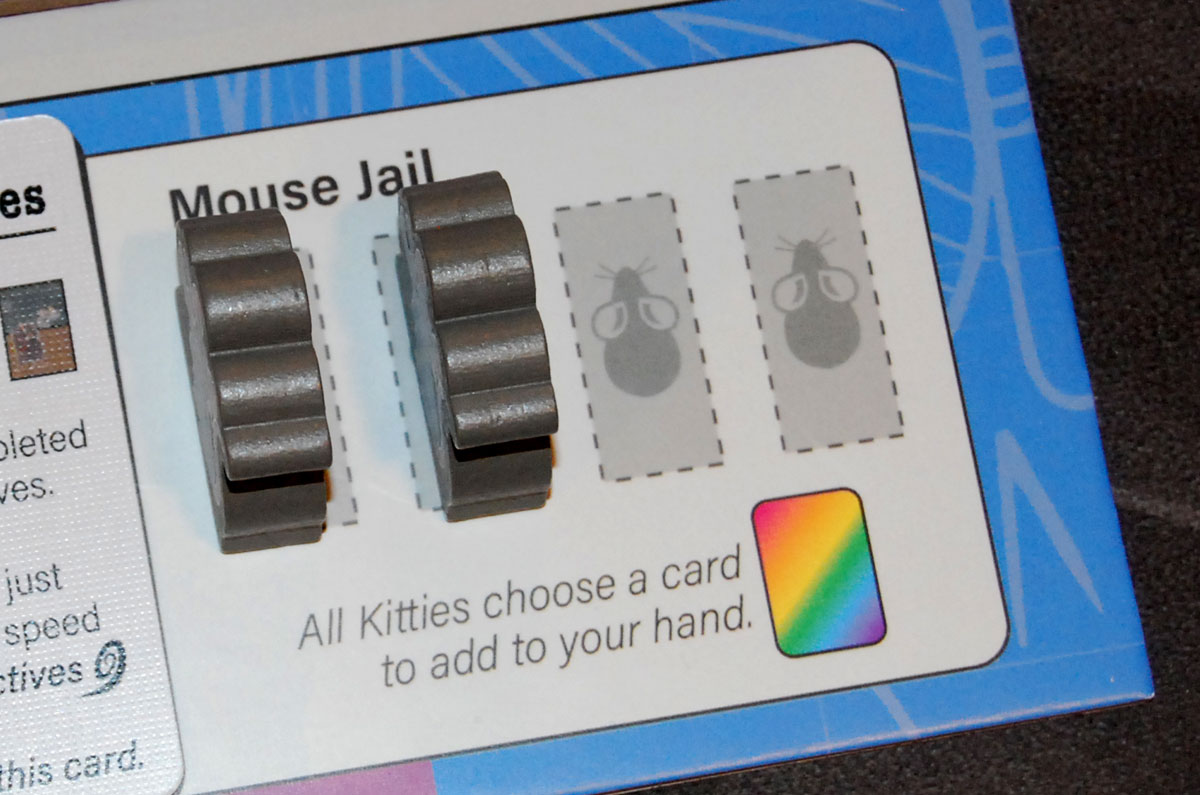
Each time you fill up the mouse jail with four mice, everyone gets to pick up a card and add it to their hand. Typically this will be one of your special action cards (with the bad kitty icon) but if you’ve been caught by the dog and had to discard action cards, you could choose to take one of those instead.
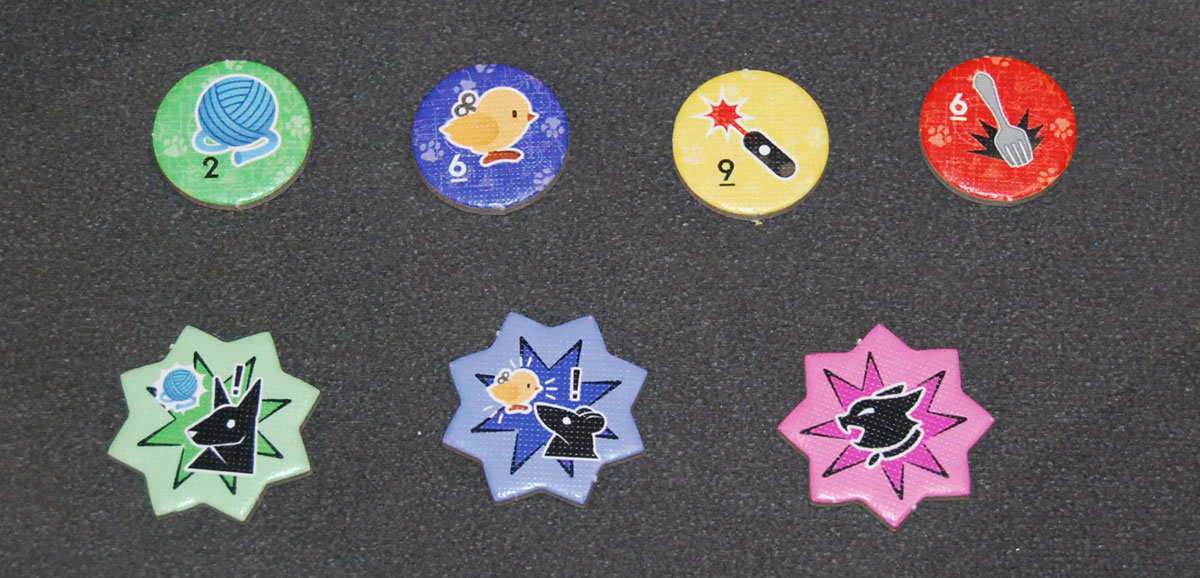
The supply tokens are often needed to build things for your objectives, but you can also discard them for their effects:
- Yarn: put the “thump” token up to 2 spaces away—this becomes the priority target space for the dog
- Birdie Toy: put the “squeak” token in your space—this becomes the priority target space for the mouse in that room
- Laser Pointer: move another cat 2 spaces
- Fork: increase your catitude +1
The “Bad Kitty” token is used when you play an action card that has that icon. You are now the dog’s priority, after the thump token.
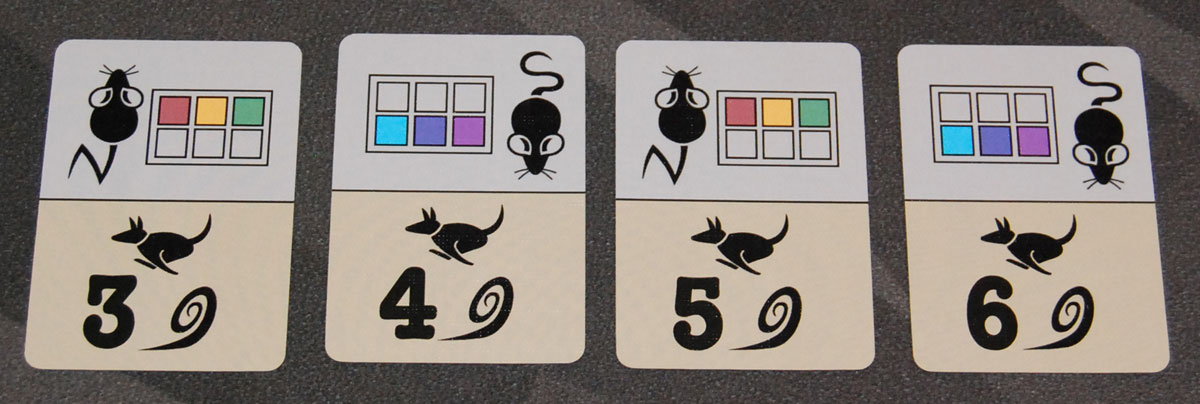
Every two cat turns, you play a nuisance card (as indicated by the nuisance cards printed on the action track).
The top half of the card shows which mice will act: the north half of the house or the south half of the house. Each mouse will move according to its speed—they start off with speed 3, but as they gain power-ups this could increase. Mice will try to get to an item, but if there isn’t one available (or a cat is sitting on it), they’ll head for the trash can in the room, where they’ll get some trash (adding a trash token). If they already have an item or trash, they will head back toward the mouse hole. 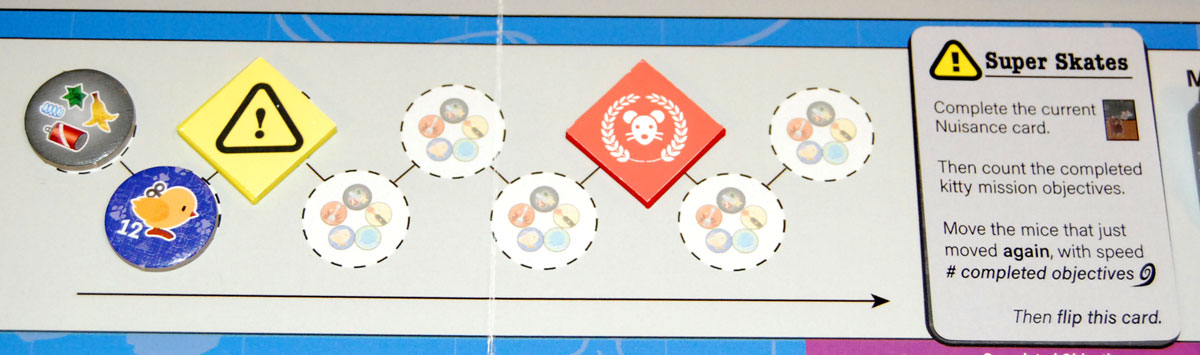
The mice are about to make their super skates! (Prototype shown) Photo: Jonathan H. LiuEvery token the mice bring back to the mouse hole gets added to the mouse track. When an item is placed on the alert token, the mice trigger their super skates, giving them extra movement. If an item is placed on the loss token, then the mice have completed their dastardly schemes, and you all lose!
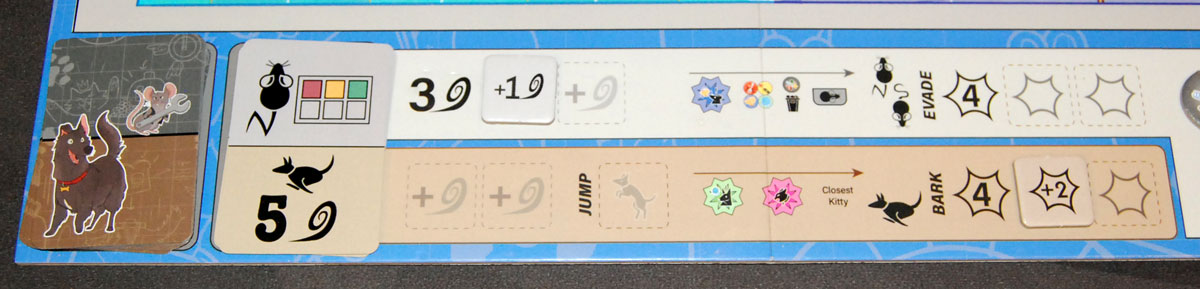
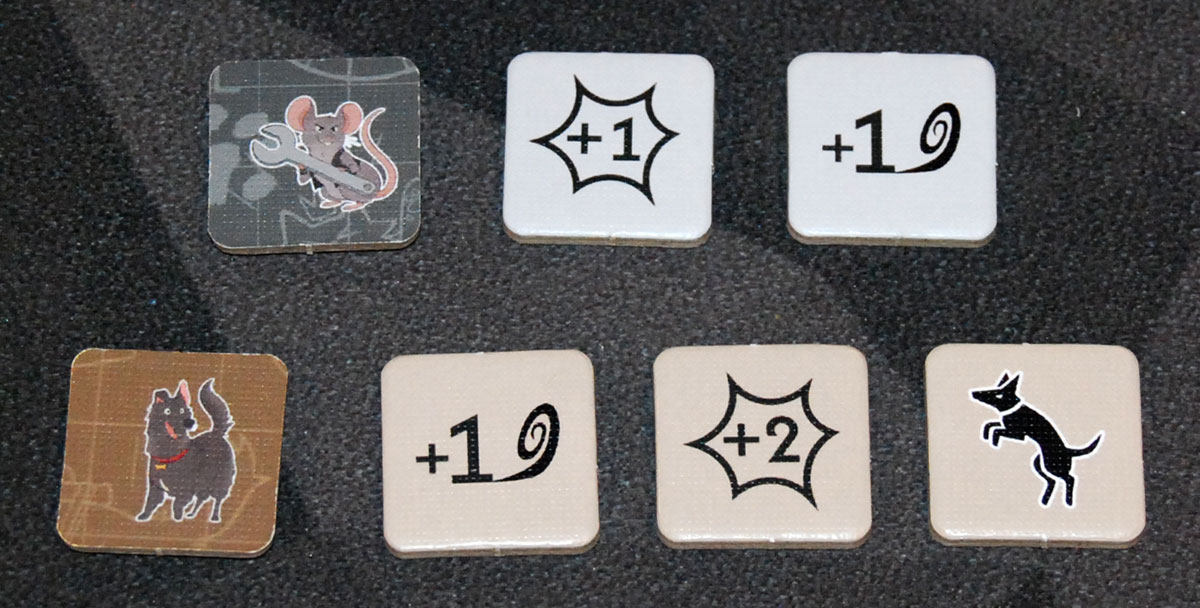
The dog moves the number of spaces shown on the bottom of the card, plus any speed bonuses it may have. It always targets the thump token first, then the bad kitty, and then the nearest cat. If a cat is on furniture, the dog will move next to it, spend one movement point to bark at it, and then continue moving. Otherwise, the cat will need to resolve an encounter with the dog, and the dog’s turn will end. (If the dog reaches the bad kitty or barks at it, the bad kitty token is discarded.) One of the power-ups the dog can earn is “jump,” in which case it can jump onto furniture to chase the cats. If the dog ever enters a space with a trash token, it eats the trash and the token is discarded.

There are various objectives—creating specific contraptions using the build action, getting into particular positions, and so on. When you fulfill an objective, a few things happen: every cat gets +1 catitude, and the dog and mice each get an upgrade. Also, each objective will indicate which other objectives get revealed. For instance, in the photo above, building the camera (objective 1) will reveal objective 4 (and 6, if you’re playing at “feral” difficulty level).
Game End
You win if you complete all the objectives!
You lose if the mice reach the loss token on the mouse track, if you need to play a nuisance card and there are none left, or if it’s a player’s turn and they have no action cards in their hand (because they’ve been caught by the dog too many times).
Why You Should Play Good Kitties
Good Kitties may have a lot of humor and a lighthearted premise—cats and mice trying to take over the house using their wacky contraptions—but it does require some serious teamwork to pull off these missions. The first mission, Viral Cuteness, involves building a camera and a selfie stick to make some cute cat videos, while also framing the dog to get it out of the way. In later missions, you’ll get to start with some of the contraptions that the Smart Cat has designed, giving you more tricks in your repertoire.
Pacing is important: completing objectives is the end goal, but each time you achieve one, you power up the dog and the mice. If you can capture some mice first and unlock some of your other action cards, that might give you an edge. Don’t spend too long, though, because there are only so many cards in the nuisance deck, and if that runs out then it’s game over. Striking the right balance can be very hard.
Maintaining the flow of supplies is also important. It’s easy to add more items to the house—just run back and forth over the supply gates. But if you don’t have teammates ready to scoop them up, you might just be setting the mice up for victory. Many of the objectives require a couple of items to build, and since the cats can only carry one item each (except for Strong Cat), that usually means you have to meet up somewhere with the items, or else bat them around and hope the mice don’t swipe them. In one game, we threw things out into the hallway because the mice don’t go out there, but then you’re working in the dog’s domain. The hallway has larger spaces, so both the cats and the dog travel a lot faster there, but it’s risky! The items can also be really useful for their effects—distracting the dog and the mice, for instance—but then they’re gone and you’ll have to pick up more of them if you need them for a contraption. There’s a limited number of each, though it’s high enough that you probably won’t run out unless you’re just tossing them with abandon.
I liked the variety in the different cat abilities. Tough Cat can stand his own against the dog and is the only one who can become “bad kitty” in the starting hand of cards. Boss Cat can use the top or bottom of his card for another cat, which can be really effective at getting somebody out of range of a dog, or giving somebody an extra wiggle action. The particular mix of teammates you choose will affect how you tackle the mission, and it’s important to rely on everyone’s strengths.
I got a chance to play through the first three scenarios in the prototype, and we enjoyed the fun story. There are three difficulty levels to choose from, so you can tune the game for your own gaming group. We played at the medium level and we managed to beat all the scenarios, but it was pretty close most of the time. I like that there are options to turn up the heat if it’s too easy or give yourself a break if it feels impossible.
All in all, Good Kitties is a solid cooperative game with a fun story and a good bit of variety. It’s a game that requires planning and communication, but there’s always a little bit of unpredictability in which mice will act next or how fast the dog will be on its next turn. There’s some flexibility in the turn order so you can set somebody up for an important action, and you can work together to distract the dog so that nobody gets caught. Are you ready to out-scheme the mice?
For more information or to make a pledge, visit the Good Kitties Kickstarter page!
Click here to see all our tabletop game reviews.
 To subscribe to GeekDad’s tabletop gaming coverage, please copy this link and add it to your RSS reader.
Disclosure: GeekDad was loaned a prototype of this game for review purposes.


