
Because of some travel this week, I’m a little short on time so this week’s stack is shorter than usual (and I probably won’t have a column next week at all). This week includes a few books I haven’t finished yet but wanted to share because they seemed timely for various reasons.
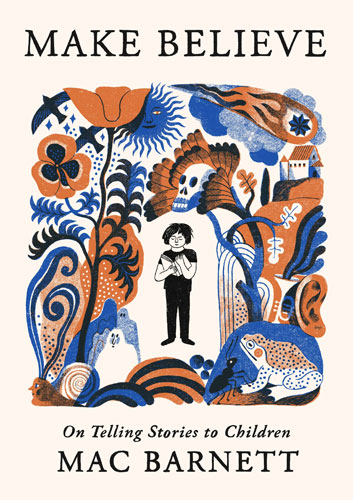
Make Believe: On Telling Stories to Children by Mac Barnett
Mac Barnett is a children’s book author, and this year he became the U.S. National Ambassador for Young People’s Literature. I’ve written about many of his books in the past: the Brixton Brothers kid-detective series, the Terrible Two series, Mac. B, Kid Spy (featuring Mac himself as a kid, spying on behalf of the Queen of England), plus many picture books back when my kids were small and their books were big. (I try not to say that my kids have “outgrown” picture books because I think there’s still a joy to them and we still maintain a large collection of them even if my kids aren’t reading them regularly these days. They’re there for them to return to whenever they want. And my kids know that I still read a lot of kids’ fiction on a regular basis, not just because I’m reviewing them, but because they’re something I want to read and share with people.) Barnett’s books tend toward the silly and absurd and were always delightful to read out loud—the hardest part was keeping a straight face.
Make Believe is actually his first book for adults, and it’s about kids’ books. In this collection of essays (complete with often silly footnotes), he makes the case that adults should care more and talk more about kids’ books, because adults are almost entirely in control over what stories end up in front of kids. Kids, in general, are not the ones writing, illustrating, publishing, selling, buying, or selecting the books for which they are the primary audience. Kids’ books often carry the weight of needing to be educational or otherwise helping to “improve” kids rather than just entertaining them. They’re also lumped into one genre, despite the fact that they are as diverse as adult books: non-fiction, sci-fi, fantasy, horror, humor, and more.
Apparently Barnett did catch some flak for one particular line in the book, in which he riff’s off Sturgeon’s Law (or Revelation—see the footnotes) and says that “94.7 of children’s books are crud.” That’s not a great way to win friends in the children’s book industry, for sure—but while the number cited is meant to be an exaggeration and is based on Sturgeon’s 90 percent figure, he does make a good case for why there are so many bad children’s books out there, and suggests that a lot of it is due to the way that we don’t trust kids to know what they like or want or need. (I might note that, with the proliferation of AI-generated picture books showing up these days, that 94.7 percent might end up being an undercount within the next few years if we can’t head it off.)
At any rate, this is a short book—I read it almost in a single sitting—but it has some really great thoughts on children’s books, and it’s also very funny. If you love books and you love kids (or especially if you somehow work in children’s books despite not loving books and/or kids), I think it’s worth a read!
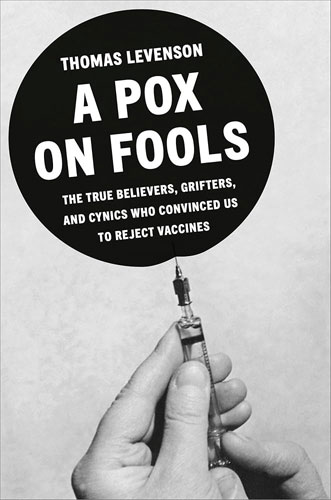
A Pox on Fools by Thomas Levenson
Hey, so have you heard about the diarrhea parasite? It took a long time for the CDC to track down the source of cyclospora to iceberg lettuce from Taylor Farms, which led to the biggest outbreak in the US since it was tracked in the mid-’90s. In part, that’s because the current administration saw fit to gut the CDC, including the departments that track things like this specific parasite. (It has also come out that Taylor Farms donated a huge amount of money to a super PAC that lobbied against food safety traceability, delaying a law that was initially slated to go into effect this January.)
A Pox on Fools isn’t about cyclospora, but this current news cycle is very much in line with the topic of this book: the rejection of vaccines and the path that led us here. I’ve only read the first couple chapters so far, but Levenson digs into the claims made by RFK Jr. and the MAHA movement, comparing them to objections made about vaccines when they were first being developed. He explains what’s wrong with these arguments, but also shows how this current wave of vaccine skepticism is not making American healthy again, but is instead leading us toward increased health risks and away from the tools that we can use to combat them.
I’ll report back in more depth when I’ve finished the book, but for now I’ll just caution that this book will probably make you mad—I mean, more than you already are.
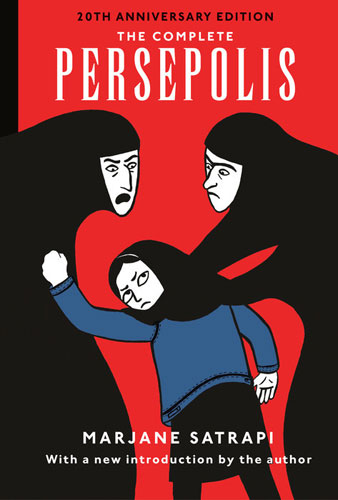
The Complete Persepolis by Marjane Satrapi
I read Persepolis over a decade ago, and I’ve had this 20th anniversary edition on my shelf for a few years now. After Satrapi’s passing at the beginning of June, I thought it was time for a re-read. It’s a window into Iran during a specific time period, but as Satrapi wrote in the new foreword, it’s also surprising how much has not changed in the intervening years. (Or rather, that things change, and then revert, and then change again.) Satrapi was herself a controversial figure—her death resulted in both a lot of praise and a lot of condemnation from different quarters—and I wanted to go back to re-read her book to see what sort of an impression I’d have this time around.
My Current Stack
Currently I’ve started reading A Crime Through Time by Amelia Blackwell, in which Georgiana Darcy (yes, from Pride & Prejudice) finds herself transported to 1999 and attempts to solve a murder. I have to admit that I don’t know Pride & Prejudice well so a lot of the references are probably wasted on me, but I am enjoying the fish-out-of-water time travel portion of it, at least.


