
MAR10 Day has come again, and along with Nintendo’s celebratory sales (like Super Mario 3D World + Bowser’s Fury and Super Mario Odyssey for $39.99, and Super Mario Party Jamboree – Nintendo Switch 2 Edition + Jamboree TV reduced to $59.99), sweepstakes, and other fun promotions, this year’s event includes three new additions to the Nintendo Classics library available to Nintendo Switch Online subscribers. The first, GBA standout Mario vs. Donkey Kong, you’re likely already familiar with, but the other two selections represent a dubious corner of Nintendo history that the company has only recently sought to explore: Mario Clash and Mario’s Tennis for the oft-maligned Virtual Boy.
The Story So Far
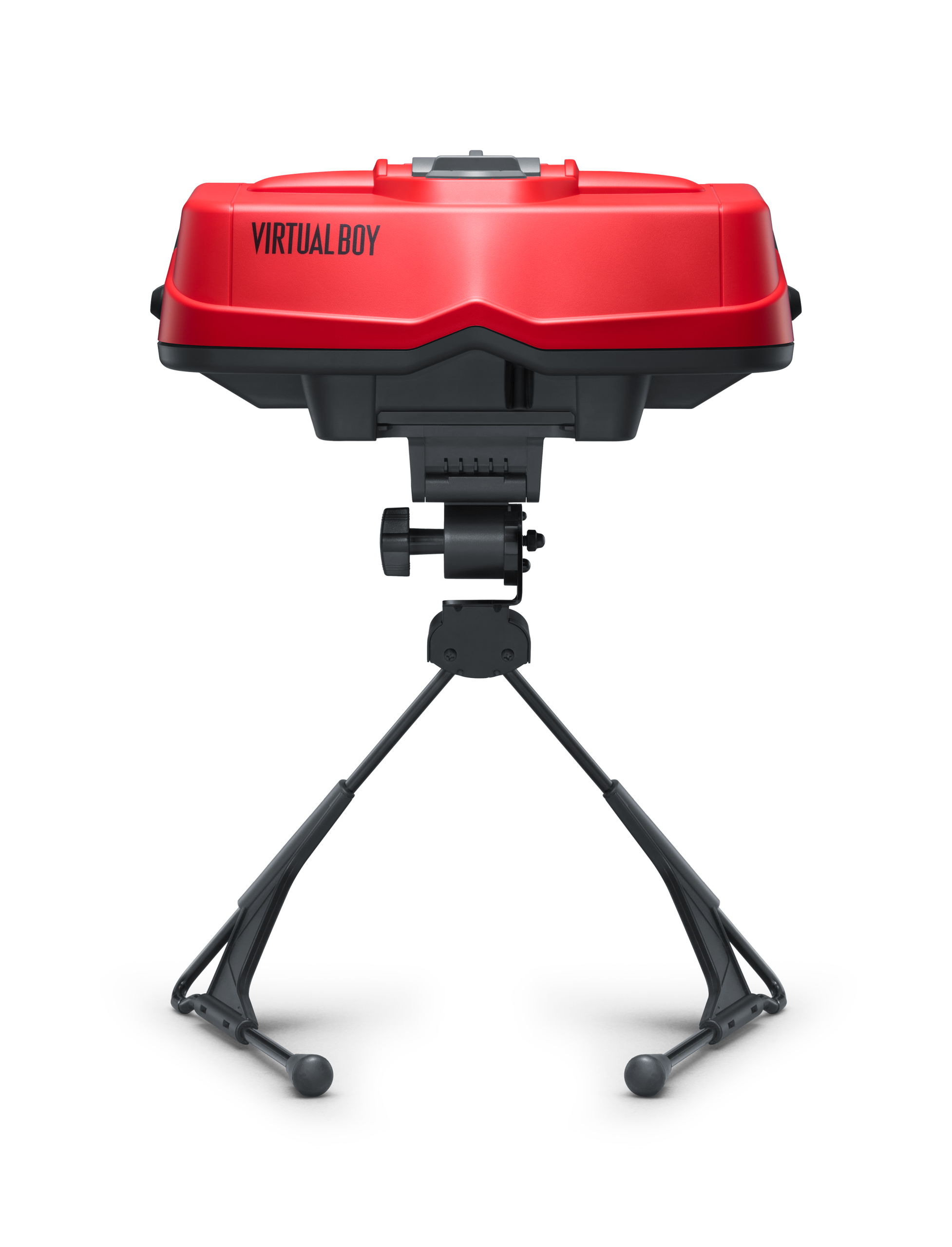
The Virtual Boy, an innovative 32-bit tabletop headset that employed the parallax effect for stereoscopic 3D gameplay, launched in 1995. The project was largely helmed by visionary designer Gunpei Yokoi, the inventor of the original Game & Watch and the iconic Nintendo Game Boy. Still, it was released to an overwhelmingly disappointing reception and remains Nintendo’s lowest-selling standalone system to date.
Common knowledge holds that Yokoi, dogged by this failure, shamefully retired from Nintendo shortly before his untimely passing in 1997, but, as is so often the case, this is a misconception. Specifically, it fails to take into consideration his lengthy 31-year tenure at Nintendo, his work on 1996’s highly successful Game Boy Pocket iteration, and his collaboration on the Bandai WonderSwan, which was posthumously released in 1999.
Still, the Virtual Boy remains a true Nintendo anomaly, that weird cousin who’s seldom included in the family photo. In retrospect, though, the Virtual Boy was merely too ambitious a product for its own good and an idea decades ahead of its time.
Now, with the help of a specialty accessory, old fans and curious newcomers alike can experience its odd but endearing gameplay on the Nintendo Switch family of systems.
A Brand New Boy
The Virtual Boy for Nintendo Switch 2/Nintendo Switch is an altogether different beast from its predecessor. To begin your journey to the angry red planet, simply download the Virtual Boy – Nintendo Classics from the Nintendo eShop. Opening the app, you’ll notice a warning… well, two warnings.
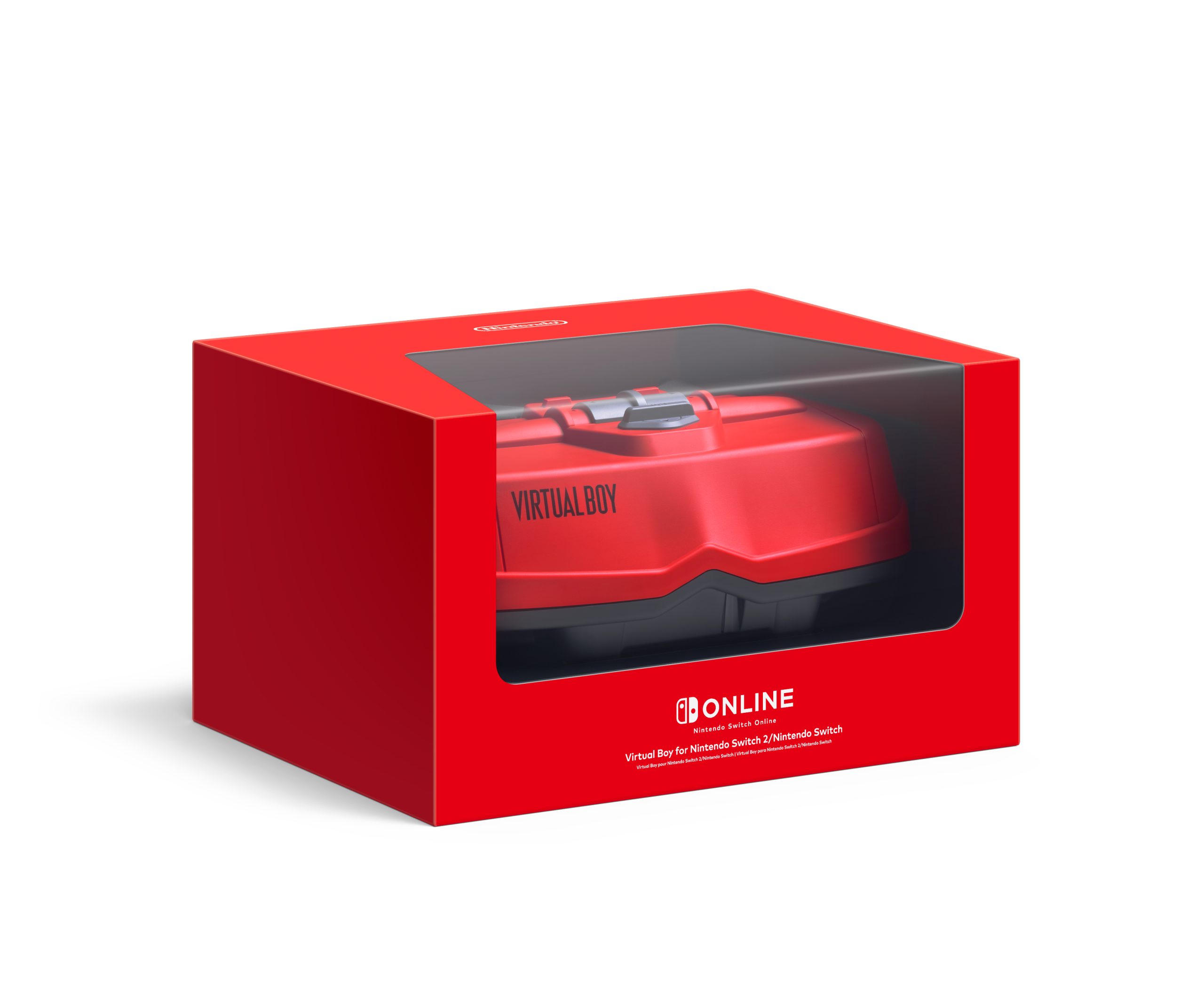
This is because Virtual Boy – Nintendo Classics displays two parallel images on your console to recreate the stereoscopic 3D effect. Given the double display and the limited resolution of each image, it’s not exactly playable in this state. Instead, you need either the $99.99 Virtual Boy for Nintendo Switch 2/Nintendo Switch accessory or its $24.99 Labo-style cardboard little brother—both available from the Nintendo Store.
While the Virtual Boy for Nintendo Switch 2/Nintendo Switch arrives disassembled, it’s a quick and easy build. Just attach the main headset unit to the stand via the integrated clasp, and you’re good to go. (If you’re planning to play on an original or OLED Nintendo Switch, make sure you replace the Switch 2 bracket with the one marked “Nintendo Switch” before attaching the accessory to the stand.)
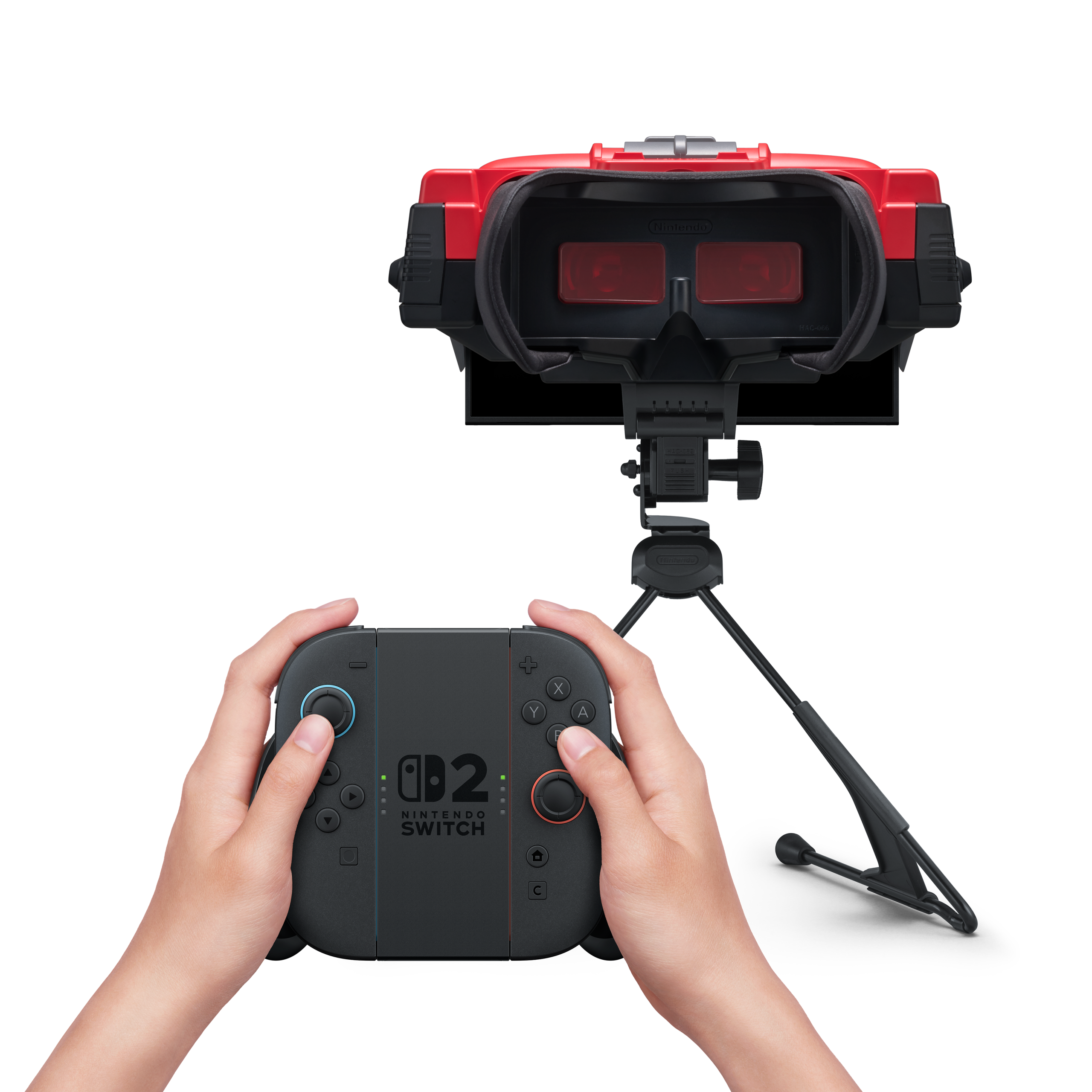
As the owner of an OG Virtual Boy, I believe this device does a great job of evoking the original in its overall look and feel. Gone, of course, is the old corded controller—we’ll be using Joy-Cons now—and even though the old focus knob and slider located on top don’t move, they still add a nice little nostalgic touch. The foam blinders/headrest piece seems nicely solid, and the two-legged stand is a dead-ringer for that of the actual Virtual Boy.
To insert your Switch 2 system, remove the Joy-Con 2 controllers and gently open the headset at the seam, which is cleverly hidden. The rubberized Nintendo logos on either temple are your guide, so place your thumb on one and lift. Slide in your Switch 2, close the lid, and grab your Joy-Con 2s as we proceed into the high-tech virtual gameplay of yesteryear.
An Admirable Offering
Aside from that initial doublevision and an additional “exiting VR mode” prompt, the Virtual Boy – Nintendo Classics interface looks and behaves like the numerous other classic libraries. Make your pick from the initial offering of seven titles, and you’re immediately transported into a red-and-black gameworld of your choosing.
The Virtual Boy catalog is notoriously scant, so the included titles represent some of the best the system has to offer. First and foremost, Virtual Boy Wario Land is a solid sidescroller with some added depth (pun intended) and arguably the tip-top of the heap.

Golf and Galactic Pinball are personal favorites, primarily because of my affinity for these kinds of titles… despite my lack of any real connection to their real-world inspirations. Both are simple, straightforward affairs that greatly benefit from the inclusion of the Suspend Point system (accessed, as ever, by pressing ZL+ZR)
3D Tetris changes the perspective on the world’s favorite puzzle game, asking you to look at things from the top down as you complete those lines. Lots of different block types help to flesh things out, though, if you, like me, struggle with spatial relations, this one can be taxing.
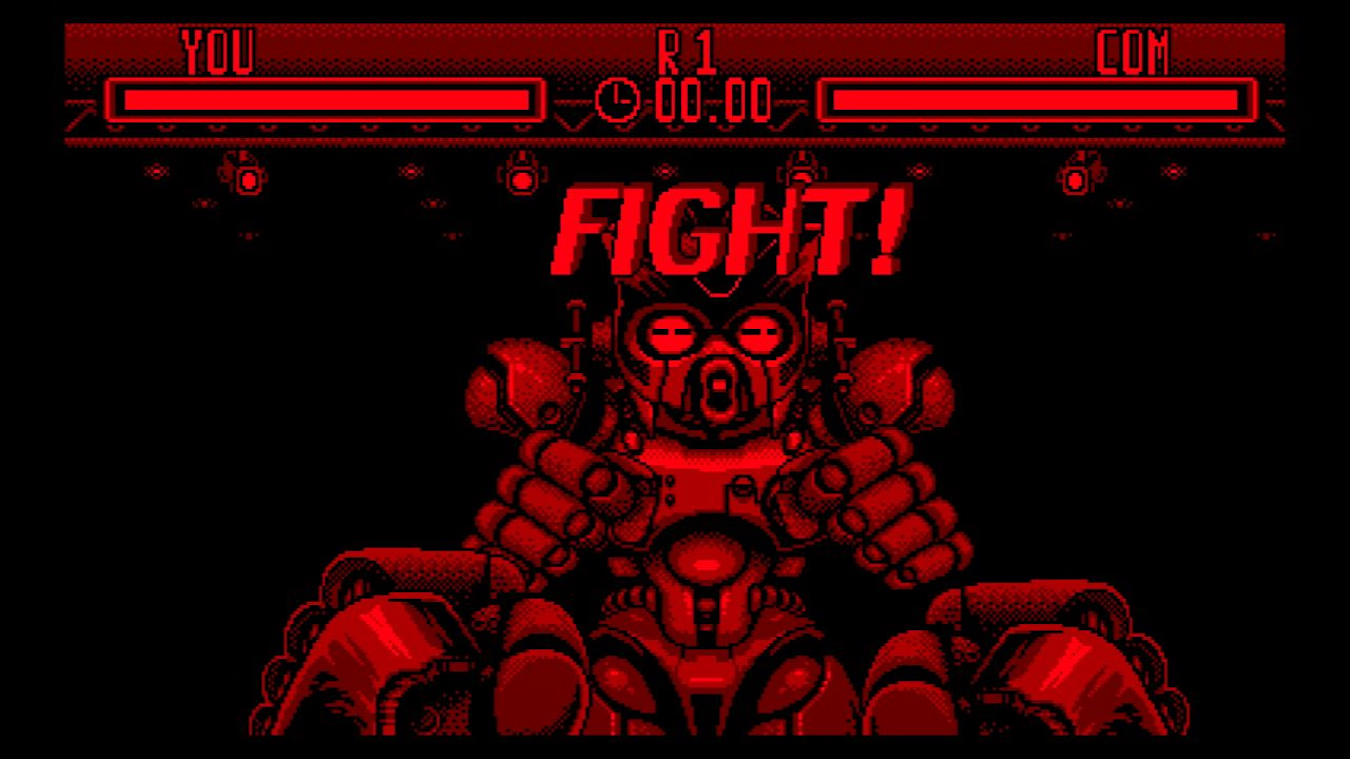
Red Alarm and Teleroboxer both rate near the bottom for me. The former is a wireframe rail shooter that, while crude, employs the 3D depth to great effect, while the latter is a classic Punch-Out riff with genuinely competent visuals, but it’s also the one game that seemed to fatigue my eyes the fastest. Neither is bad, mind you, just not my cup of tea.
The seventh included title is Insmouse no Yakata (The Mansion of Innsmouth), a Japanese-only release inspired by the works of H.P. Lovecraft. Despite not being localized, navigating its monster-filled mazes while a tight time clock counts down does a fine enough job of surpassing any language or cultural barriers. This is actually the game I’ve gone back to the most due to my love of all things horror, and owing to it being the only inclusion I’ve never been able to play before.
Gameplay on the Virtual Boy was famously uncomfortable during long sessions, with the intense red imagery alone also proving grating for some users. Personally, while I never had any issues with my original system, this Switch 2 upgrade does seem more comfy overall, with upcoming features, like the ability to change the display color, further helping to make the experience more enjoyable for a wider array of gamers.
More Fun to Come
While newcomers Mario Clash and Mario’s Tennis are, sadly, not exactly Wario Land-caliber releases, both represent a kind of arcade-y fun currently missing from the Virtual Boy lineup. I also really appreciate Nintendo using MAR10 Day as an excuse to share these forgotten titles with a whole new generation who have likely never even heard of them.
These also don’t represent the only additions Nintendo has planned for the Virtual Boy – Nintendo Classics, though, truth be told, even nine Virtual Boy games being made available on a modern system is far more than I’d ever have guessed!
From shell-slinging in Mario Clash to monster-fighting in Insmouse no Yakata, I am, admittedly, a sucker for all this red-tinged retro madness. Whether or not you and yours will enjoy the fun enough to warrant the $100 (or even $25) investment depends a lot on your individual interests, but like a lot of old-school fans and long-time collectors, I’m just glad to see the Virtual Boy return from beyond the veil.
In fact, I think I might go get in a couple more 3D tennis matches before work.
So, happy MAR10 Day to all those who celebrate, and may the red beam of the Virtual Boy light your way to a better tomorrow.
Review materials provided by Nintendo of America. This post contains affiliate links. And a joyous MAR10 Day to you and yours!


