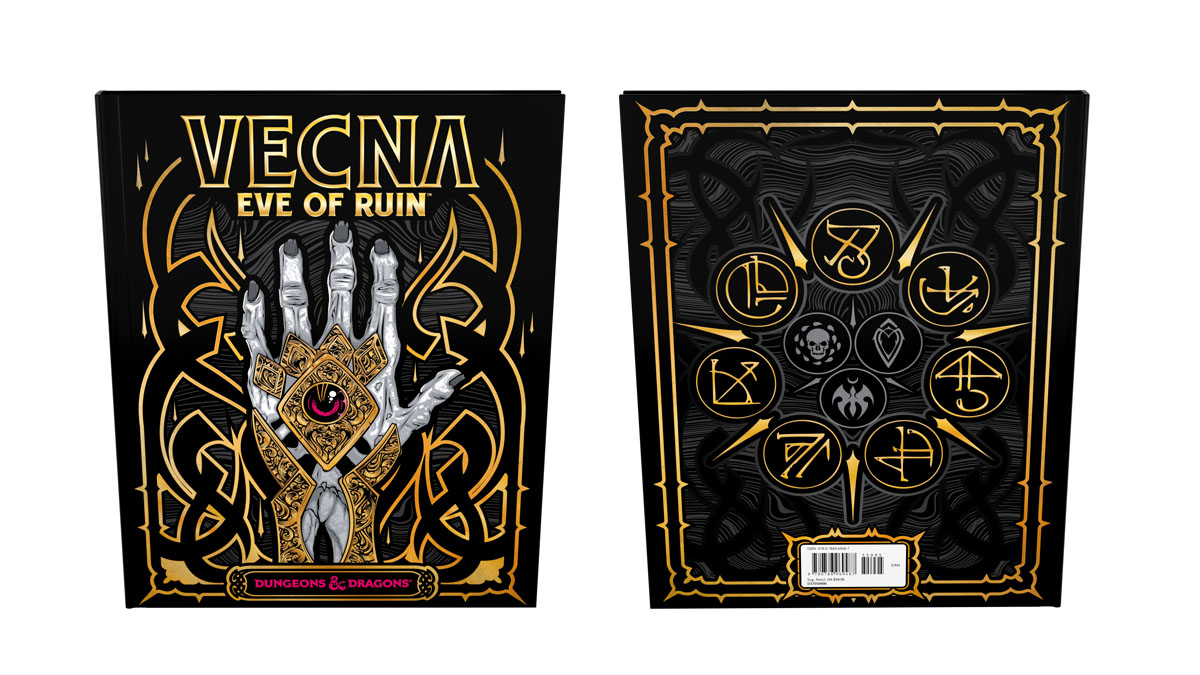
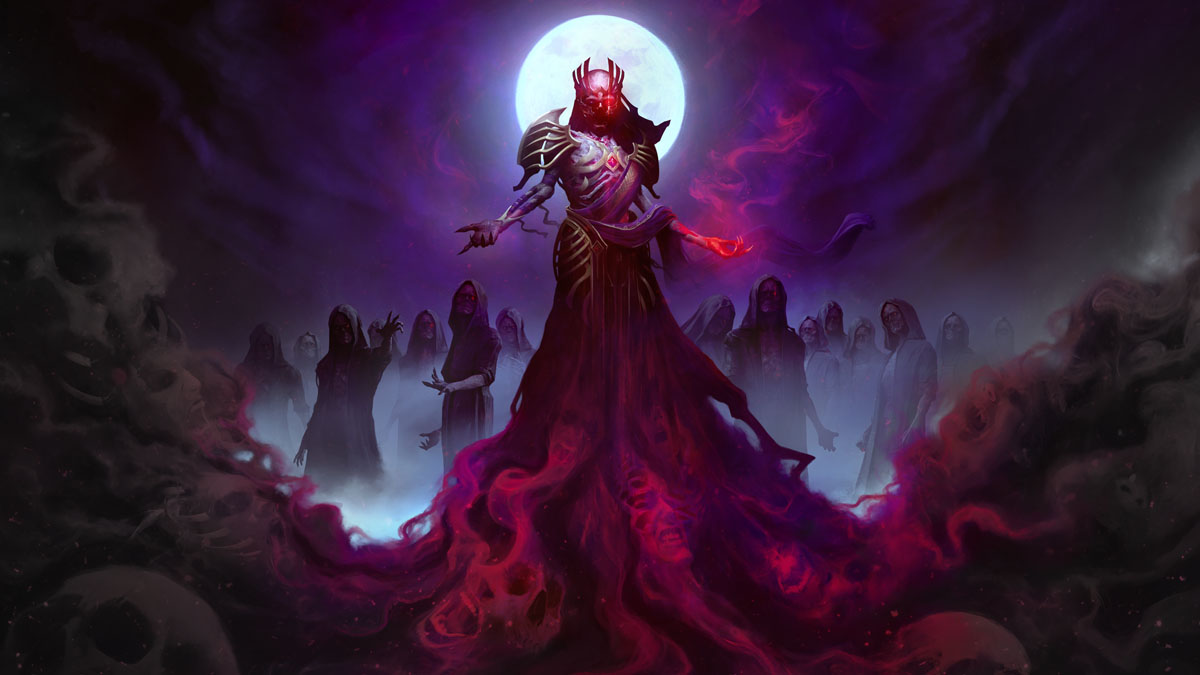
In the recently released adventure Vecna: Eve of Ruin, players set out on a quest to stop the most infamous lich/deity in TTRPG lore: Vecna. From an engaging adventure hook to a satisfying conclusion, players and Dungeon Masters (DMs) are able to explore famous non-player characters (NPCs), find genre-defining artifacts, and visit the multiverse in their attempts to secure the required power to save the multiverse from the greatest threat it has ever faced. Read on to learn what players and DMs can expect from this adventure, and determine for yourself if this is the next great adventure for your table.
Spoilers Abound
While a small number of spoilers appear in the introduction and excerpt of this article, I am doing my best to save the most impactful spoilers for players to discover through play. Some mechanics are so foundational to the gameplay that spoiling some aspects is unavoidable, so if you want 0 further spoilers, I’ll suggest stopping here. If you’re fine with some gentle spoilers but want to avoid big secrets, simply do not expand the spoiler tags in this post. Those areas are for DMs who want to know the nitty-gritty of the adventure before purchasing it.
For Players
In general, players can look forward to a well-articulated adventure where the DM always knows what’s coming in the future. The adventure has a specific track, but most of the content is self-steering, so players don’t have to guess what they are meant to do next. This allows players to forge ahead in their quest without agonizing over every potential activity in the game. Players begin with a 10th-level character and will gain 8 levels through play. Some groups may have an additional level (at the DM’s discretion) depending on extra challenges the players take on, but that should not be expected, as the adventure is paced specifically for 17th-level characters to face the final challenge of the adventure.
Player Spoilers

Travel the Multiverse
Players who are looking for an opportunity to leave their default setting will love this adventure. Every time the players turn around, it seems like they find themselves in another branch of the multiverse. Notable locations include the Underdark of Faerun, Waterdeep, the Shadowfell, the Astral Sea, Eberron, a Domain of Dread, Krynn, Oerth, Avernus, Sigil, and Pandesmos. Whether you normally play in the Forgotten Realms or another setting, your players and their characters will get to shake things up and go on a tour of the most iconic locations Dungeons & Dragons has to offer.
What’s in a Secret?
The thematic mechanic for this adventure is the management of secrets. Players can collect particularly powerful secrets, which they can spend to buff themselves and their allies. The DM knows who knows these secrets, but players will have to do some investigating to find them all.
Spending Secrets
When a character reveals a secret to an NPC, they lose the secret from their collection and gain advantage on all d20 checks for one minute (10 rounds of play). This is a staggeringly powerful boon, but players may want to resist the urge to hoard them all until they face Vecna, as the boon lasts for 10 rounds, and only a couple of secrets are likely to be useful for that confrontation. Saving secrets for after the campaign ends is likewise fruitless, as the secrets lose their power with the resolution of the adventure.
For Dungeon Masters
The most useful part of this adventure for DMs is the self-driving narrative. Players have a strong incentive to follow the breadcrumbs, so DMs are less likely to need to roleplay extensive background material while trying to get them back on course for the adventure. The rewards and support they get from the NPCs likewise encourage players to complete goals and move the story forward. If you’ve ever struggled to keep your players on task, this is a great story to take a break from that. Of course, all adventures have some degree of this, but the story is a compelling one with dire consequences for failure, so it’s easy to remind players that all of the worlds are at risk if they mess around too long in random encounters.
DM Spoilers
Vecna’s Link
The mechanic behind player characters being able to collect secrets is an unintentionally created link between their souls and Vecna. This link gives the characters the power to manipulate secrets to buff themselves substantially. There are 17 specific secrets for the party to collect. I encourage DMs not to be too liberal with bonus secrets or give away secrets for which the characters didn’t earn the trust of the secret-keeper. This is simply because 10 rounds of advantage on every D20 check is a massive advantage both in and out of combat.
Precise Pacing
A noteworthy element of Vecna: Eve of Ruin is the well-executed pacing of the story. Using milestone advancement means that players spend a realistic amount of time playing at each level, learning the limits of their class abilities well (and sometimes stretching them) before players end up in a boss fight. DMs don’t need to create additional combat scenarios to provide the necessary practice, nor do they need to reduce the combat to make some levels/objectives less of a slog. This isn’t praise I typically give a published adventure, but I will gladly concede the point in this case.
Materials
In all adventures from Wizards of the Coast, there are some sort of materials for DMs to use and some to share with players. Included below are recaps of these materials to help DMs evaluate this adventure. As the last adventure is designed around the 2014 rules, it’s certainly useful to have a cadre of new monsters to rely on, as the 2014 Monster Manual has its limits for higher-tier play.
Appendix A: Bestiary
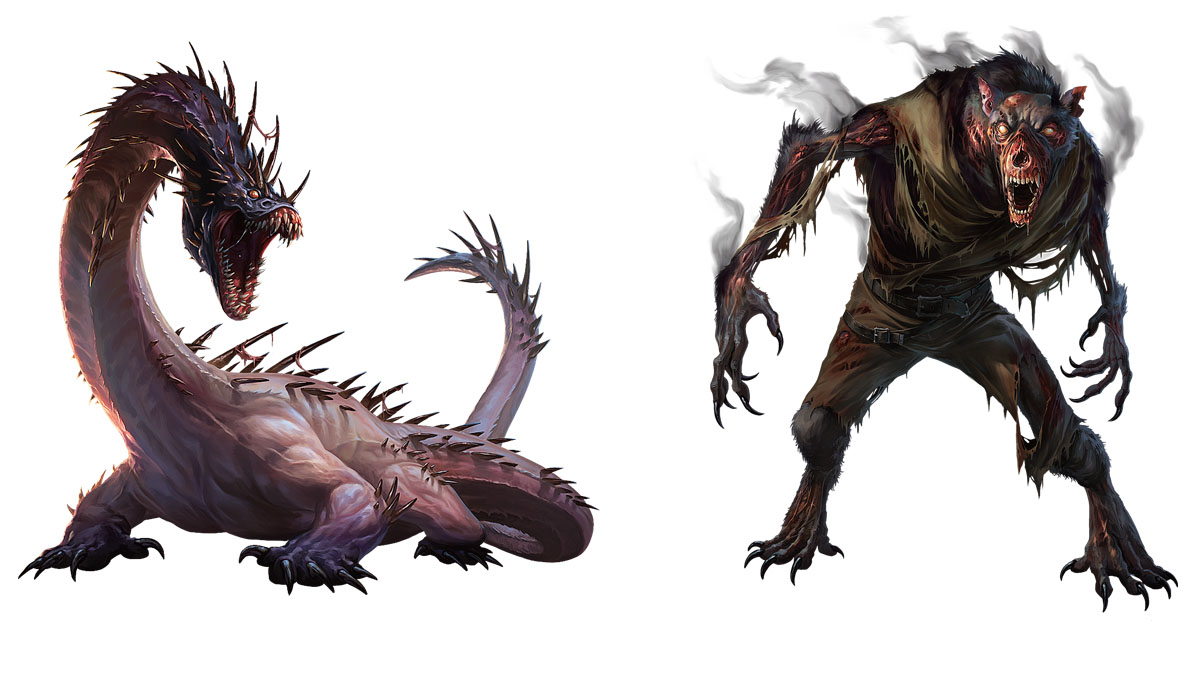
The Bestiary is a miniature complement to the Monster Manual. The stat blocks included help fill any gaps found in the Monster Manual, such as creatures unique to this adventure or those found only in certain worlds. Creatures that make an appearance here include various fiends, titans, undead, and unique cross-category creatures. These creatures include the Deadbark Dryad (an evil and vengeful dryad transformed by grief), a were-undead known as a Deathwolf, and the many-limbed monstrosity known as the Spiderdragon.
Appendix B: Character Dossier
The Character Dossier includes biographies of all iconic NPCs and deities the story introduces, providing helpful information for each of them and stat blocks for those who might fight or aid the players in combat. Villains and heroes included here are Acererak the Devourer, Alustriel Silverhand of Silverymoon, Kas the Betrayer, Lolth the Spider Queen, Lord Soth the Solamnic Death Knight, Miska the Wolf-Spider, Mordenkainen the Spellsmith, Strahd Von Zarovich, Tasha the Witch, Tiamat the Dragon Queen, and Vecna the Undying King.
Appendix C: Secrets Tracker
The final appendix is a list of secrets the players might encounter along with the ability to track whether that secret has been spent and how many are kept. Most notably, it also lists the chapter in which the secret is obtained to help a DM quickly refresh their memory if a secret is missed by the players.
Poster Map
The poster map for Vecna: Eve of Ruin is an interesting change from some other poster maps. On one side, DMs will find Alustriel’s residence, which also serves as a place of rest and preparation for the players throughout the adventure. The other side features a number of maps needed for various portions of the adventure. While I wouldn’t suggest using the poster map with players, as it is full of spoilers for future content and a bit unwieldy, it is a better source of maps for copying. Because the poster map is removable, it’s much easier to copy off just the maps you need, compared to trying to open a book enough to copy the maps as they are presented in the chapters.
TL;DR
At the end of this adventure, there are some key takeaways. The adventure begins at level 10 and runs to level 18. DMs can extend the campaign easily using the locations and resources already available to the players throughout play. DMs might have some reading to do, but there is less outside prep required to run the adventure than is typical for this type of adventure. Finally, players and DMs will enjoy a thrilling series of quests as they work together to save the multiverse from its most powerful evil: Vecna the Lord of the Rotted Tower. This adventure is already available for purchase, and an alternate art version is available through game stores.