It’s not every day you get a new favorite entry in one of your best-loved video game franchises… and yet Nintendo has somehow managed to pull this off twice for me in the last three months alone. Yes, just as Splatoon Raiders revolutionized my go-to shooter by shifting focus away from the series’ multiplayer functionality, Fire Emblem: Fortune’s Weave has all but redefined my most beloved tactical RPG by making the game itself as powerful and epic as the earthbound gods that shape its story.
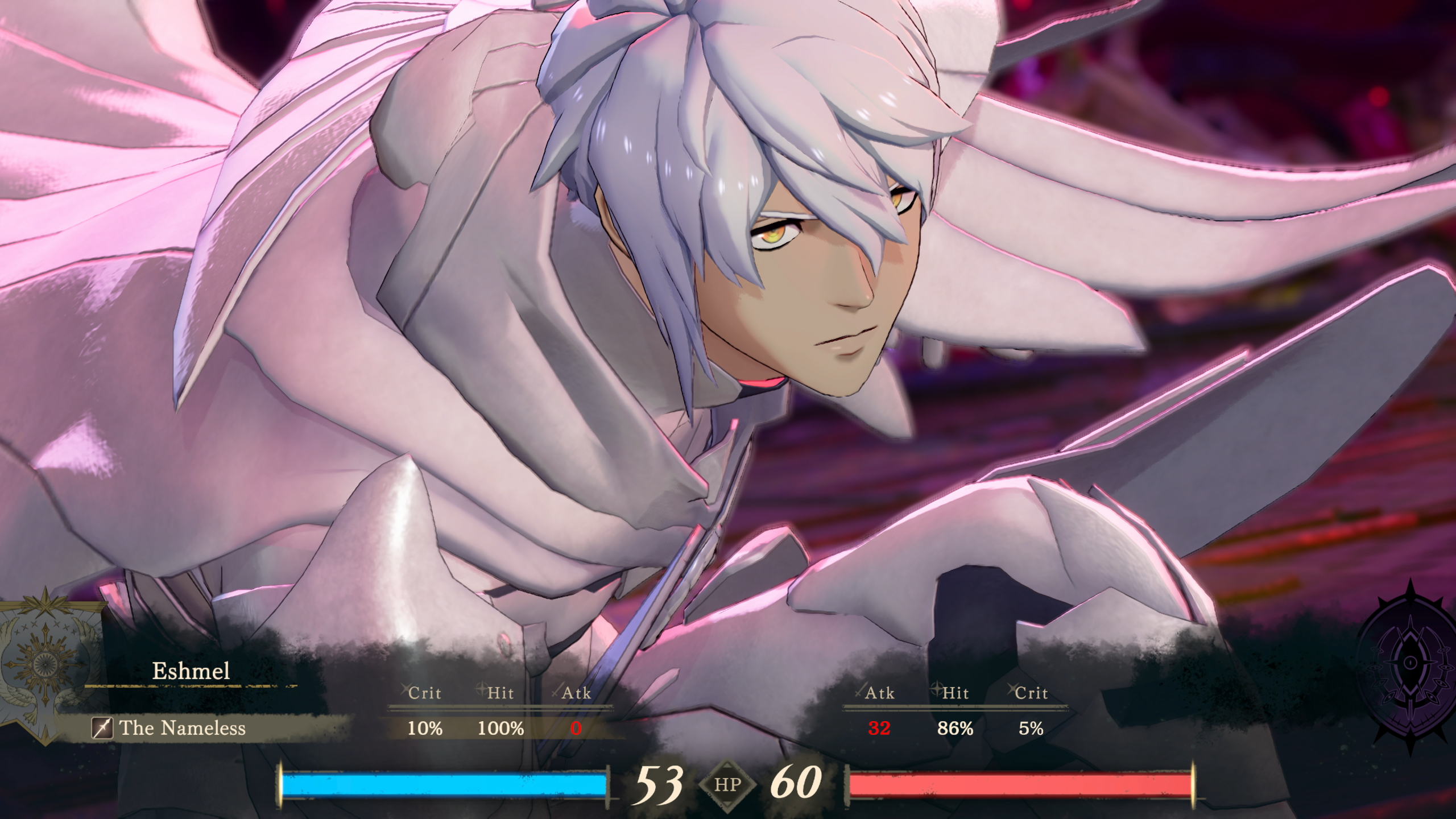
This most impressive of RPGs starts off in classic fashion, in a dark future where the forces of good falter before overwhelming odds. Here we witness the divinely technological rebirth of our customizable protagonist, Eshmel. At the behest of Sothis, the progenitor goddess we met in Fire Emblem: Three Houses, and aided by the Dagdan goddess of fate, Fortuna, Eshmel travels five years into the past to affect the outcome of a contest of champions known as the Heroic Games.
Though Fortune’s Weave provides a little taste of its trademark turn-based battles in the prologue, this is where the game begins in earnest. Eshmel, in the form of the Pale Raven, observes (and occasionally intervenes in) the intertwining tales of four separate competitors, each with their own abilities, starting allies, and motivations. This last part is of particular note, as the winner of the Heroic Games can have a wish granted by Solel, son of founder Dagda the Great and current ruler of the land.
Cai, alongside his companions Tialla and Peter, enters the contest out of necessity. With his mother long dead, Cai wishes only to save the life of his imprisoned father, with the Heroic Games simply a means to that end. His youth means that he has trouble early on accessing the temples and taverns available to other competitors, but his abilities to easily gather materials, farm on empty map plots, lure and capture animal mounts, and receive combat tutoring help level the playing field—as does a mysterious gem from his late mother’s locket which, after becoming embedded in his hand, allows him to sense nearby enemies in dungeons and launch fiery attacks on the battlefield.
Musician Leda, by contrast, enters the Heroic Games with vengeance on her mind. With her parents murdered and her kingdom burnt to cinders, she has spent her adult life hunting down those responsible, even as her caretaker Buccar tries to appeal to her better angels. With her magical vihuela, Leda casts spellsongs to influence the tides of battle, but she can also use it to perform at local taverns, building renown as the dark instrument itself chips away at her self-control.
Dietrich, a warrior from Fódlan to the north, arrives in Dagda when a boat he is on is destroyed by a massive sea creature. The single-minded swordsman craves battles with ever-stronger foes and enters the competition—alongside the dour magician Fabio and the bubbly Esmerlda—as a way to best his contemporaries and secure a rematch with this beast. He fights with a powerful sword that allows him to learn unique Combat Arts from defeated enemies but threatens to corrupt him in the process, just as it did his ancestors.
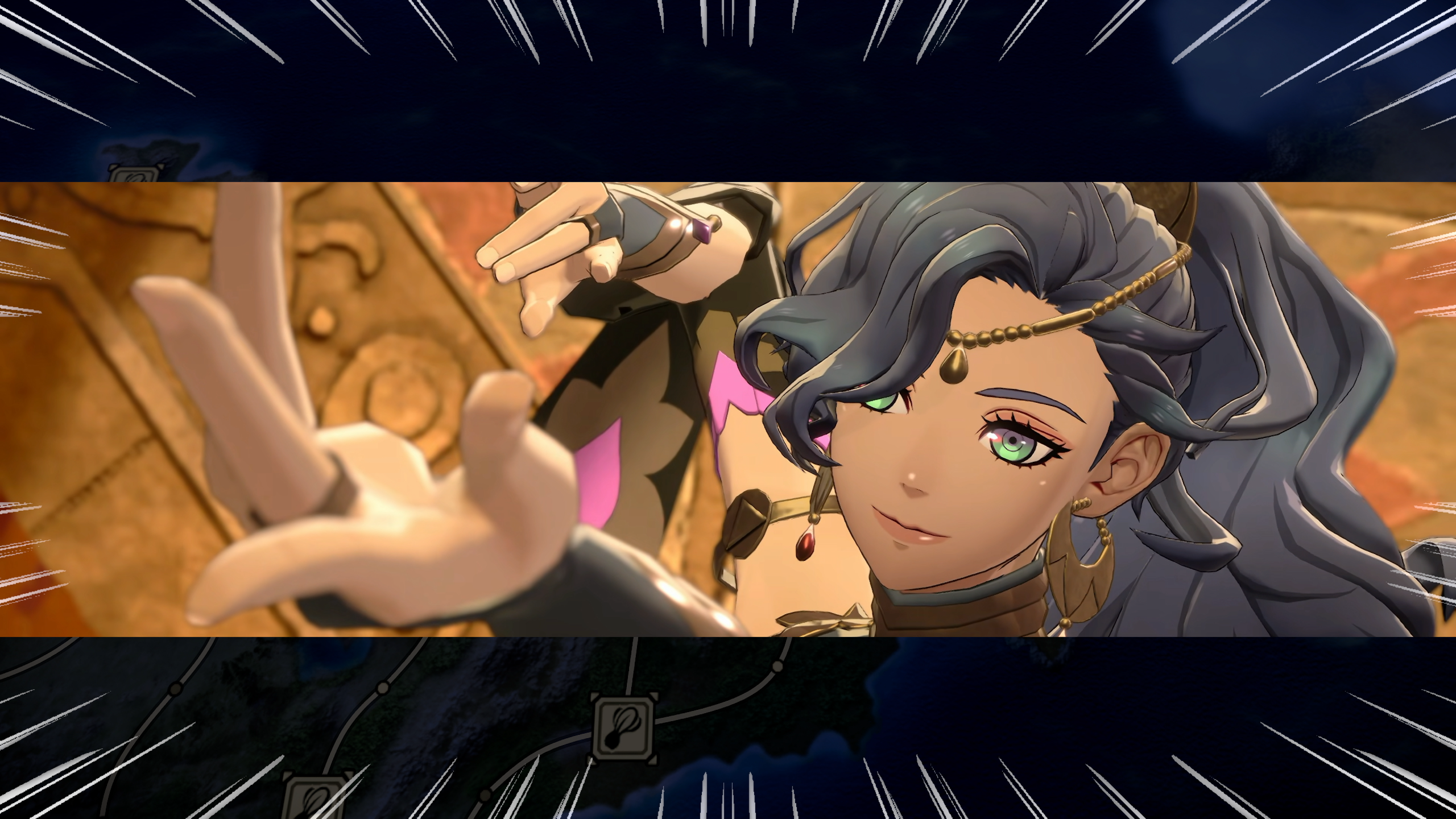
Finally, Queen Theodora represents the wild lands of the south where, after a struggle for the crown, she acquires an enchanted arm that gives her great strength, allowing her to hurl boulders at enemies. Despite the concerns of her retainers, Bonaventure and Tobias, she does her best to conceal that, like the other contestants’ artifacts, this limb bears a curse that instills within the keeper a growing bloodlust. She fights for the reunification of her ancestral homeland and, using her station, Theodora can recruit battalions of warriors and healers from nearby settlements, deploying them to search the map itself or assigning them to allied units to aid in combat.
Unlike Three Houses, which asked players to pick a single side of the growing conflict, Fire Emblem: Fortune’s Weave instead encourages you to explore all four storylines, switching easily between the narratives using the Obelisk Chamber available—alongside features like Foresight regarding upcoming battles, perks known as Boons of Salvation, and achievements called Notable Deeds—through the Pale Raven’s Perch.
You have plenty of time (measured in turns) between qualifier matches and proper rounds of the Heroic Games to peruse the capital city of Dagsion and the greater world map where you can buy weapons and supplies, chat up potential recruits to increase your support level, and otherwise follow the threads each story has to offer. Elements like combat training and sharing meals to increase character bonds return from Fire Emblem: Three Houses, alongside new entertainment features like a bathhouse and theater and even temples where you can work to gain favor from the various flesh-and-blood gods that inhabit the continent.
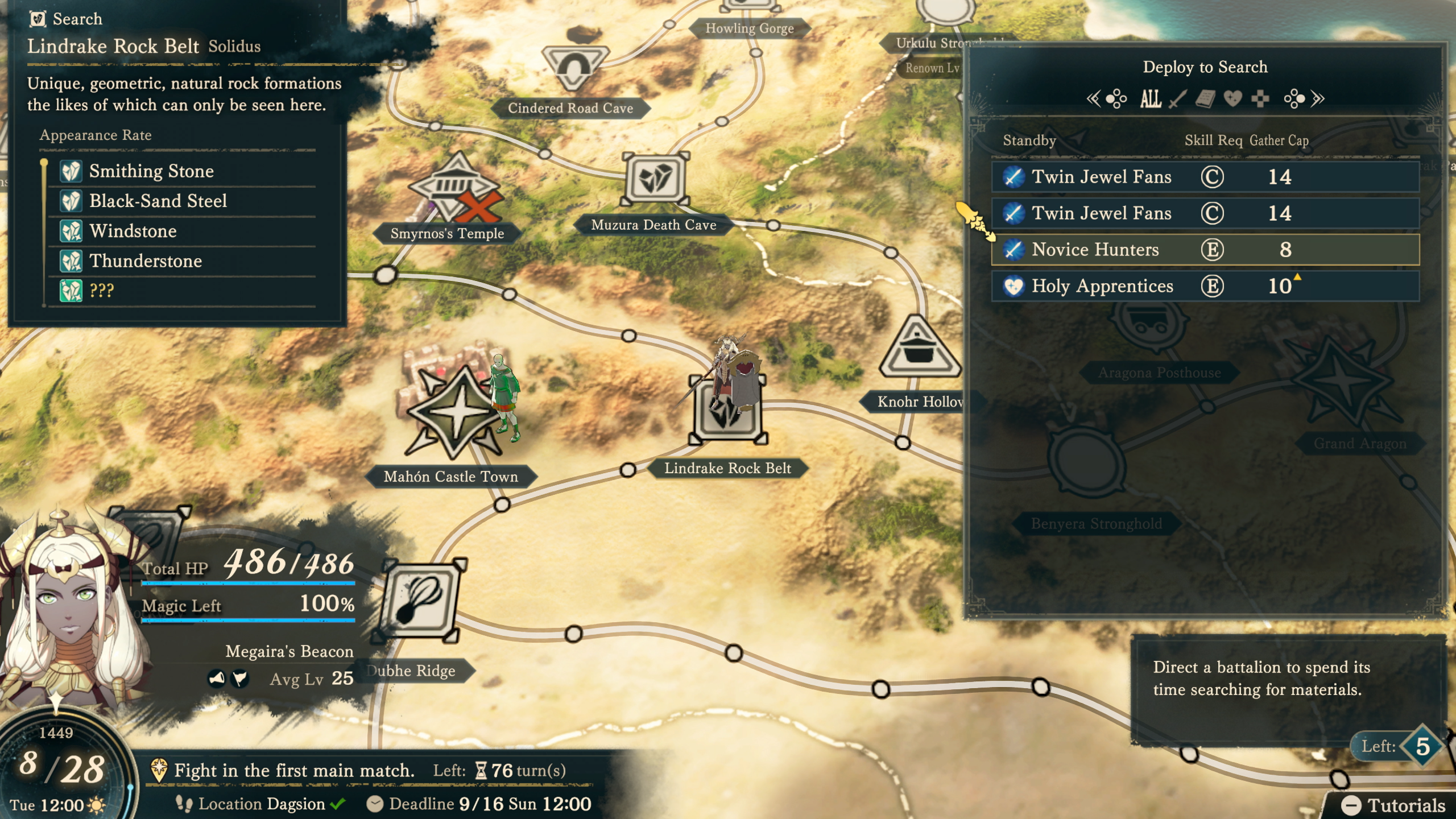
Outside of Dagsion, the world map is nothing short of massive. There are other towns to visit and resources to gather, not to mention dungeons (à la Fire Emblem Echoes: Shadows of Valentia) in which your party can engage in turn-based clashes where each side has a single shared pool of life points. Depending on your currently chosen hero, you’ll also get lots of great story moments, from Dietrich and Fabio plumbing the game’s hidden high-tech past to Cai uncovering his own more personal mysteries.
The main selling point, however, is always going to be those classic Fire Emblem battles, and you get plenty of them as well. This time around, the old weapons triangle is ignored in favor of a more robust system: bows are effective against airborne enemies, magic against armored foes, swords hit twice (with the second attack having a higher critical chance), and axes do great damage with reduced accuracy. Oh, and there are a few laser guns… which are lumped in with brawling weapons… for some… reason.
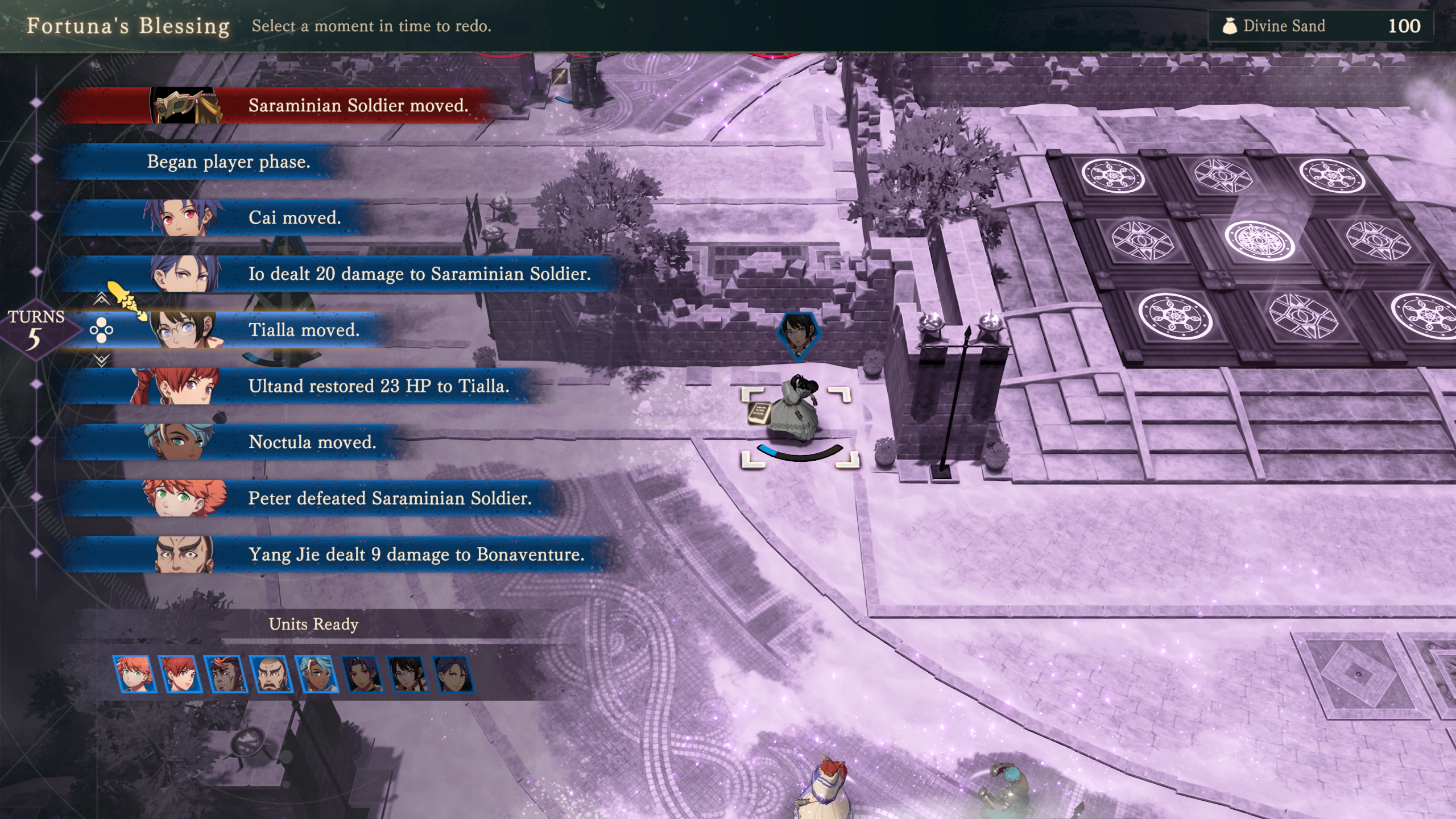
Like all contemporary Fire Emblem games, you can choose to play in the classic permadeath style or a more forgiving mode, wherein defeated allies are merely removed from the current battlefield but can be used in the next skirmish. Plus, the ability to rewind time to readdress combat missteps, this time through Fortuna’s blessing, thankfully returns to help smooth out game difficulty. Weapon durability is largely a thing of the past, with only spells restricted to a limited number of castings before a character needs to rest and recharge.
Instead, weapons only degrade when characters use related Combat Arts, trading weapon resilience for perks like increased damage or range. Similarly, your Flame Lords (those primary characters we just discussed) can use their cursed artifacts (collectively known as Drake’s Treasures) to perform Blaze Arts, devastating attacks or similar impressive battlefield maneuvers that chip away at the caster’s life points just like Combat Arts compromise weapon durability.
The game’s expansive first act focuses wholly on the Heroic Games, with the strongly implied point being that Eshmel should employ Fortuna’s uncanny mastery of causality to allow each Flame Lord to triumph in turn so that they can aid in the impending battle against Balor, the soon-to-be-arisen demon king responsible for the game-opening catastrophe.
How this works from a traditional time travel perspective is more than a little hand-wavy, but it’s damn sure a fun ride. Seeing the same interaction from different perspectives or special events that affect a single character while everyone else remains blissfully unaware makes for a compelling story any way you slice it. It took me back to 2003 and my first Fire Emblem experience, being instantly enthralled by a fantasy epic that put me in the driver’s seat.
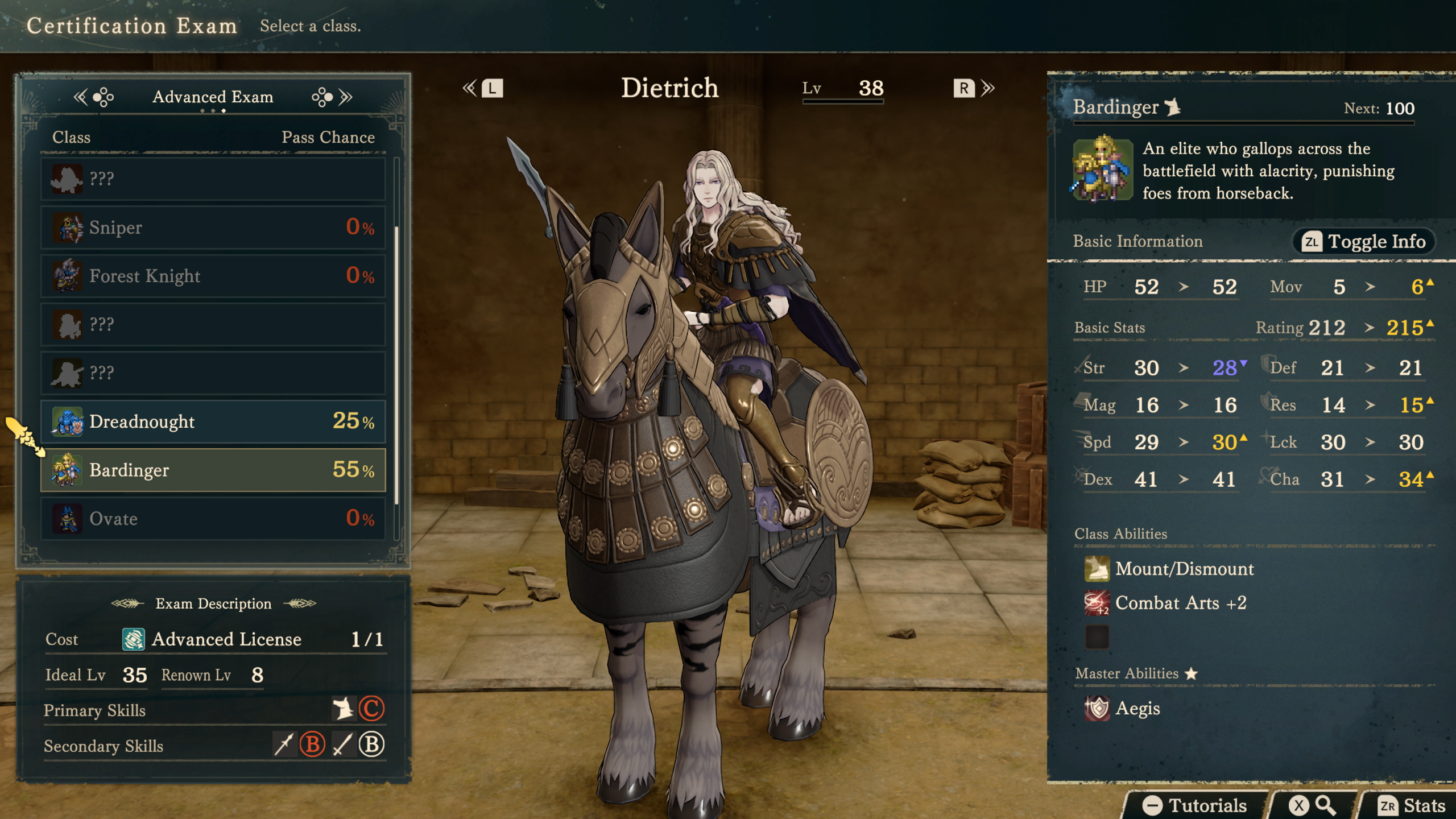
This multi-path style of storytelling also gives different Flame Lords the chance to recruit many of the same allies, though what a character’s role becomes in each ad hoc army is nicely flexible, and Leda’s backup healer can just as easily become Theodora’s hotshot archer. Character growth and development, even for these lesser players, is a big part of what makes Fortune’s Weave so satisfying, with most starting at a simple base class before moving through beginner, specialty, and advanced classes as they evolve in power and purpose.
The game’s latter two-thirds, with the second act focusing on a rapidly shifting war and the third on the ultimate conflict with Balor’s forces, incorporate higher-level classes, which you’ll need as the difficulty ramps up considerably. It is possible to skip the streamlined war arc with other Flame Lords after your first completion, so in the name of brevity, I played through with two characters and then allowed the game itself to make development choices for the remaining heroes and their allies using the skip function.
Unlike the varied tales of the Heroic Games, the events of the war seemed to play out pretty similarly for all four Flame Lords, so I didn’t feel like I was missing much. Plus, this allowed me to more quickly reach the game’s spectacular final act. Here the player can compose and command a growing number of squads headed by your heroes of choice, with Eshmel now an active party to the ensuing carnage.
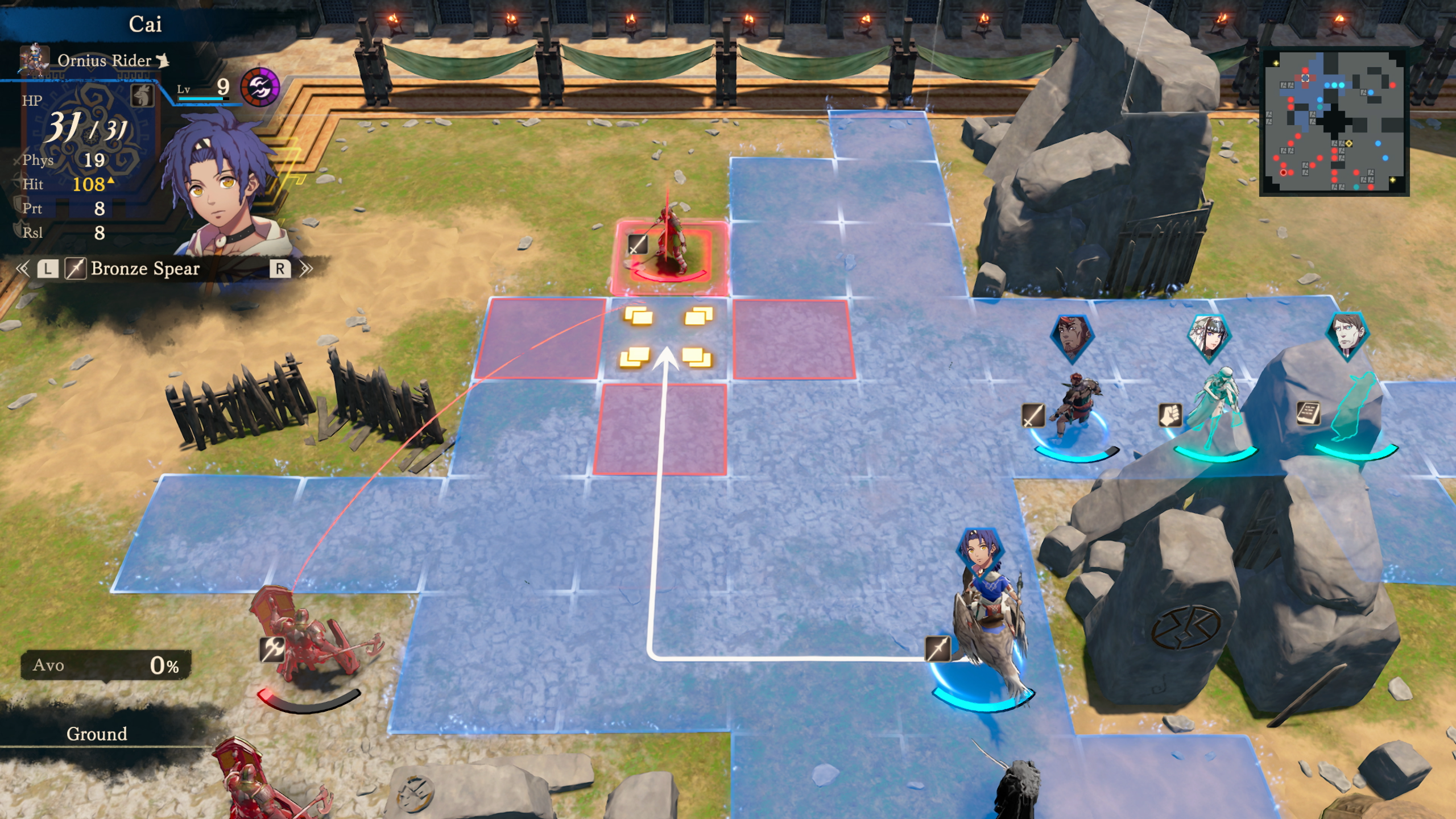
In the wake of Balor’s forces razing the land, settlements must be rebuilt, temples restored, and, most importantly, underworld gates eliminated to cap his growing power and influence. Even with divine power on your side, the battles in this third act can be punishing, making those early rounds in the Heroic Games seem quaint by comparison.
However, by this point, assuming you’ve taken all four Flame Lords through the first two acts, you do have access to a properly developed fighting force, including your preferred builds of those allies you recruited on multiple playthroughs. The pace of gameplay here returns to the system established during Act One’s opening contest (X number of turns until Y objective), so creating squads that can handle secondary objectives while also packing enough of a punch to ward off roving enemies becomes paramount.
At irregular intervals, you’ll need to tap your best and brightest to take down evil enemy generals from the past (both Dagda’s and your own). Again, these clashes can be challenging, but Fire Emblem: Fortune’s Weave does such a spectacular job of conditioning the player to respond to unexpected battlefield conditions that you’ll likely impress yourself as you pull off unlikely victory after unlikely victory with the fate of the world in the balance.
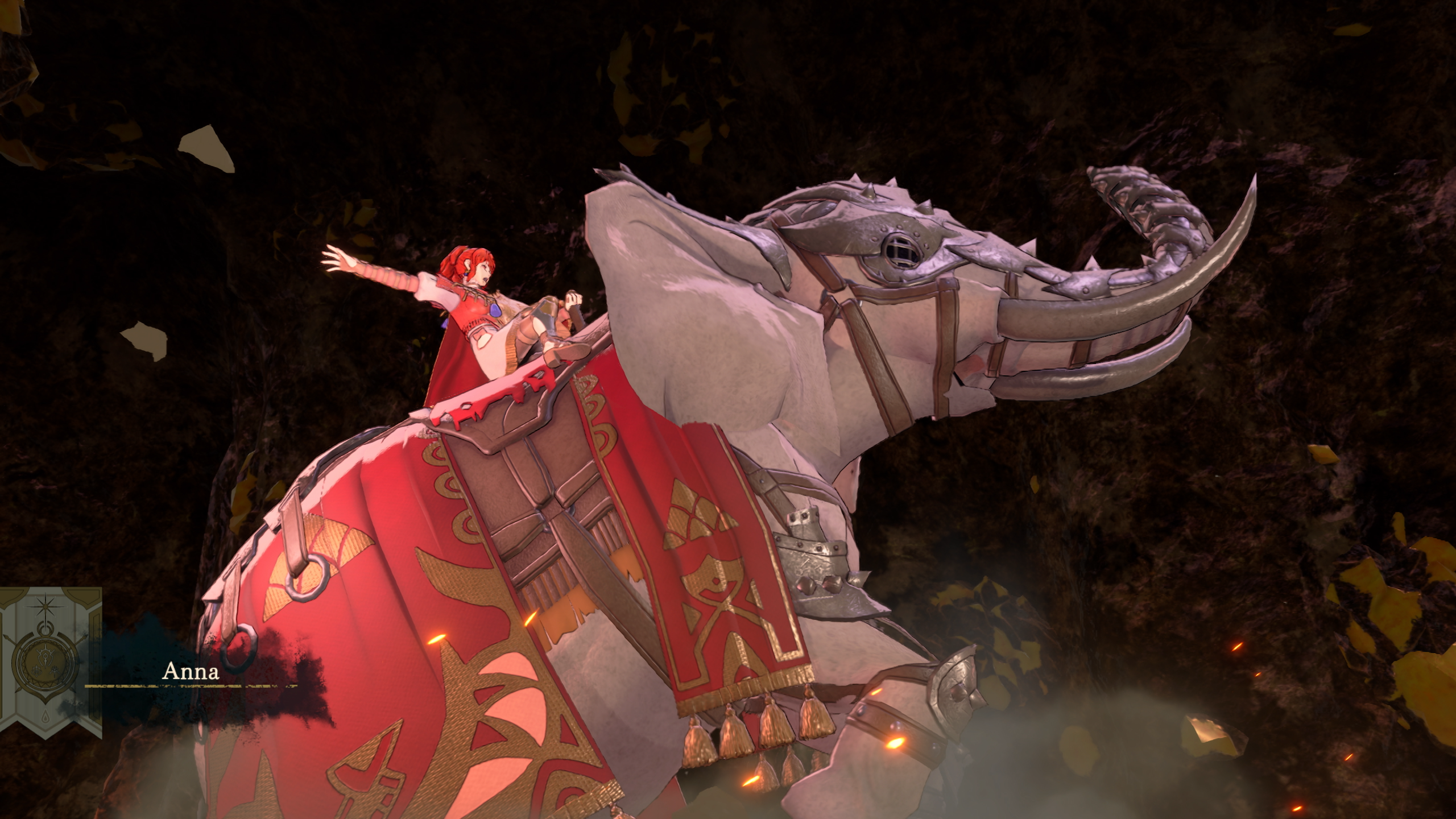
Perhaps most impressively, through all these skirmishes, through all the plot twists and weirdo time travel, playing Fortune’s Weave never felt like a chore. Even now, as I look down the barrel of 140-ish hours of gameplay, I still haven’t had enough. I am just as enthralled by and in love with the Dagdan Empire and its unlikely residents as I was when my first Flame Lord, Leda, made her way into the bustling metropolis of Dagsion. (And yes, I’ll probably go back and replay the war arc for those two warriors I skipped!)
With a stellar voice cast and stirring soundtrack paired with stunning visuals and perfectly tuned controls, Fire Emblem: Fortune’s Weave is the kind of exclusive that the Nintendo Switch 2 was built for. It is a triumph of technology, storytelling, and gameplay the likes of which must be experienced to be believed. My game of the year? Of course it is.
Fortune’s Weave is available this Thursday, September 17, at an MSRP of $79.99 for the physical releases and $69.99 for the digital version. And it’s worth every penny.
A review copy of Fire Emblem: Fortune’s Weave was provided by Nintendo of America. This post contains affiliate links. Like Dietrich, I remain on the hunt for ever stronger foes against which to test my mettle.