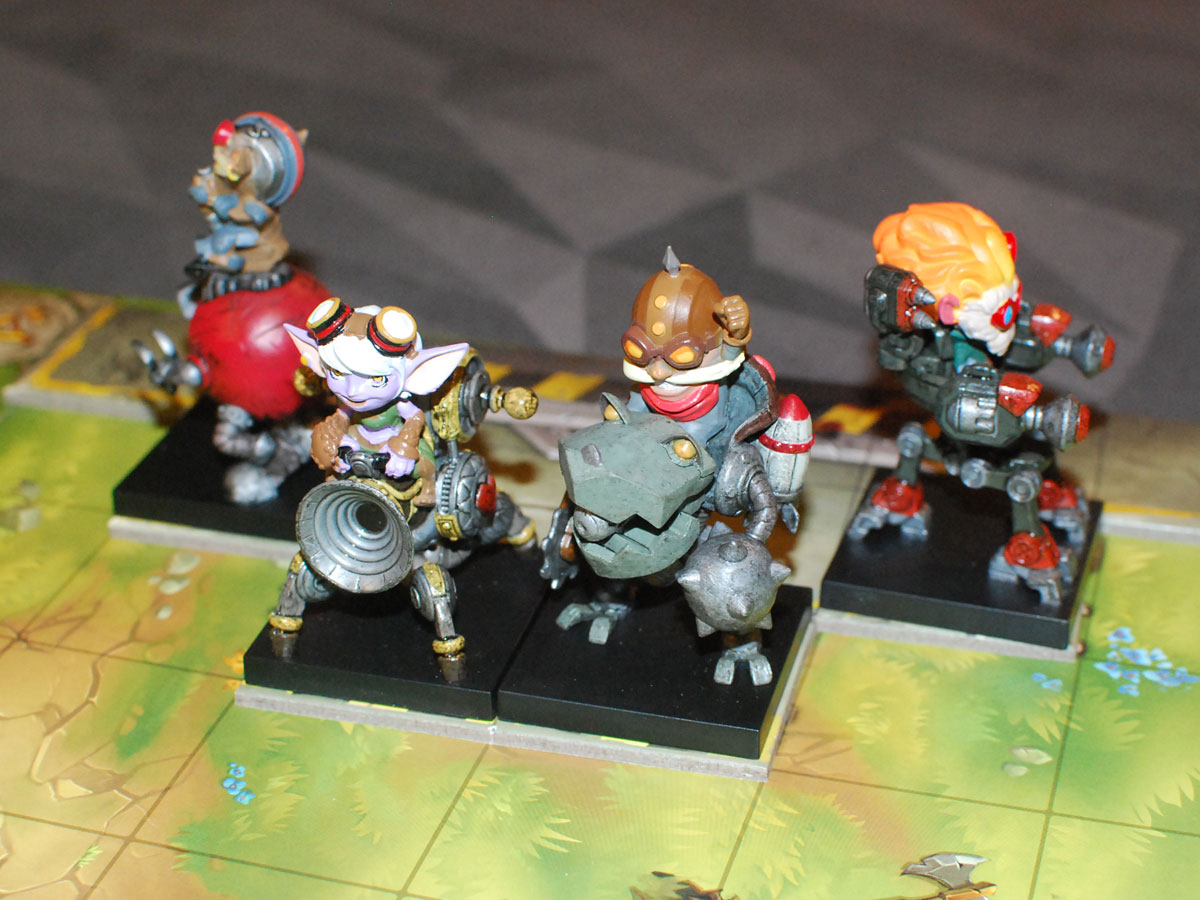
Ten years ago, Riot Games, a video game developer, surprised fans by announcing a tabletop game set in the world of League of Legends. Mechs vs. Minions was a cooperative programmed-movement game, where you and your teammates played as Yordles, piloting your mechs through fields filled with axe-wielding minions through ten scenarios. It was only available directly from Riot Games and has been out of print and hard (or at least expensive) to acquire.
Well, if Mechs vs. Minions is one of your grail games, I’ve got good news for you! Incredible Dream Studios has partnered with Riot Games to re-publish the game, and it’s available in two editions. The Classic Edition is a reproduction of the original (with a new box cover), and the Bandle City Edition is a trimmed-down version that has all of the gameplay but with a little less bling. Both versions also include some new content that wasn’t in the original: 10 solo puzzles, and a skin card pack (alternate art versions of the characters—this doesn’t affect gameplay, but is fun for fans of LoL).
I’ll have more about the game itself below, but first some details about getting the game: you’re limited to one copy per order at this time. The Bandle City Edition ($75) will eventually be in retail, but the Classic Edition ($200) is a limited run. You can pre-order either one from Incredible Dream with an expected ship date at the end of the year. Riot Games also has a limited number of the Classic Edition available for pre-order in their merch store. The pre-orders close on October 13.
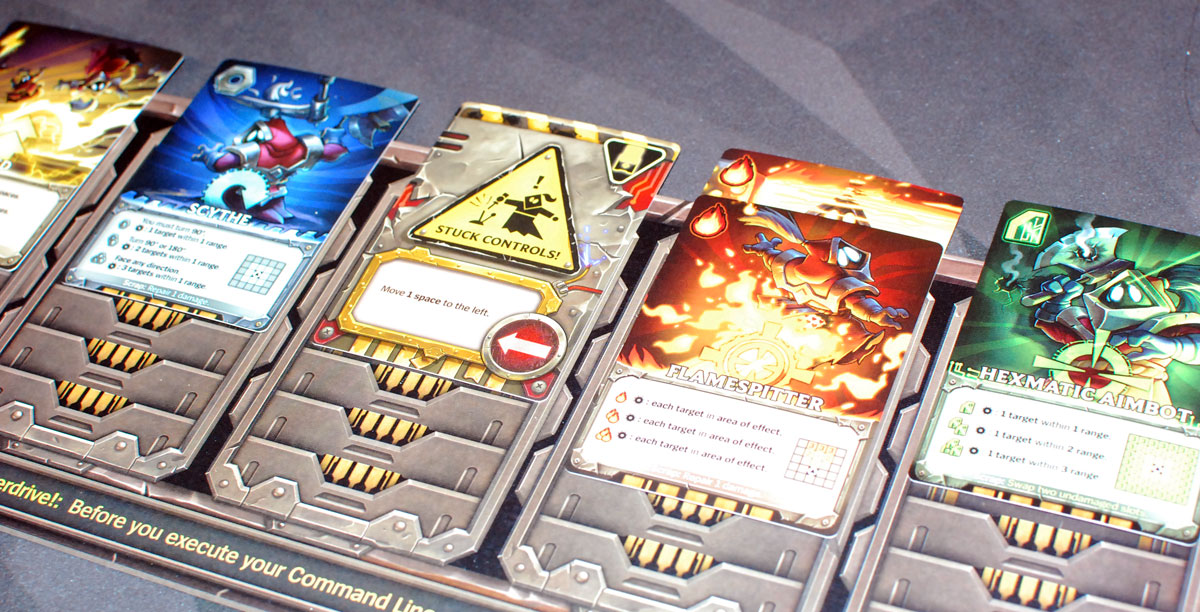
In case you’re not familiar with the game, Mechs vs. Minions is for up to 4 players (the new editions accommodate solo players too) and each of the ten missions takes about 60 to 90 minutes to play. Each player has a control panel, where they place cards to control their mechs: cards allow you to rotate, move, and attack. One of the innovations in Mechs vs. Minions was that you could stack up to 3 cards of the same type, leveling up its effect. For instance, you could upgrade from “rotate 90 degrees left or right” to “rotate 90 or 180 degrees” to “face any direction.” Attack cards were more powerful when stacked. Each round, you add a card to your board, and then play out all the commands in order.
When you took damage from the minions (or other effects), you drew cards from the damage deck, which could mess with your programming. Damage cards might rearrange your command slots, or even overwrite your commands with haywire controls—you could get stuck taking an extra step to the right every turn, or you might have to roll a die and face a random direction. There were ways to repair damage, but often at the cost of forfeiting a new command card.
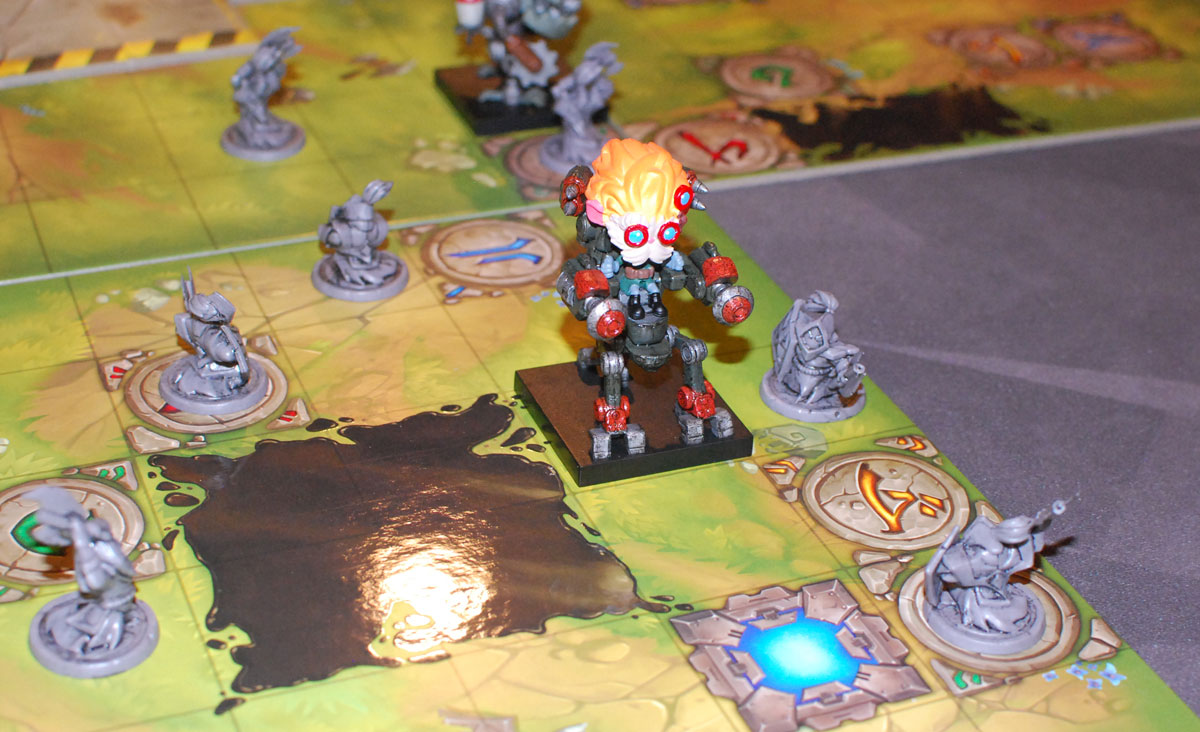
The game used modular map tiles, building out a big map for each mission with different configurations of oil slicks, repair pads, and minion spawning points. Every round, after all the players have run their command lines, the minions move, attack, and then spawn some more. Defeating minions raises your team’s gear level, which can unlock your character’s special abilities. Each mission had its own particular twists, too—sometimes you were dragging around a giant bomb. Sometimes the minions were trying to swarm the school. There are also really intense boss fights.
One thing I remember about the original edition is that, since Riot Games was selling directly to the consumer and not going through distributors, they kept the sticker price absurdly low: $75 for a huge coffin box filled with deluxe components. A decade ago, $75 was pretty steep for a board game, but even then there were comparably priced games on Kickstarter that didn’t have nearly as much packed into the boxes. The current $200 price tag for the same edition feels a bit closer to expectations, and the smaller Bandle City Edition now carries the original $75 price. What a difference a decade makes!
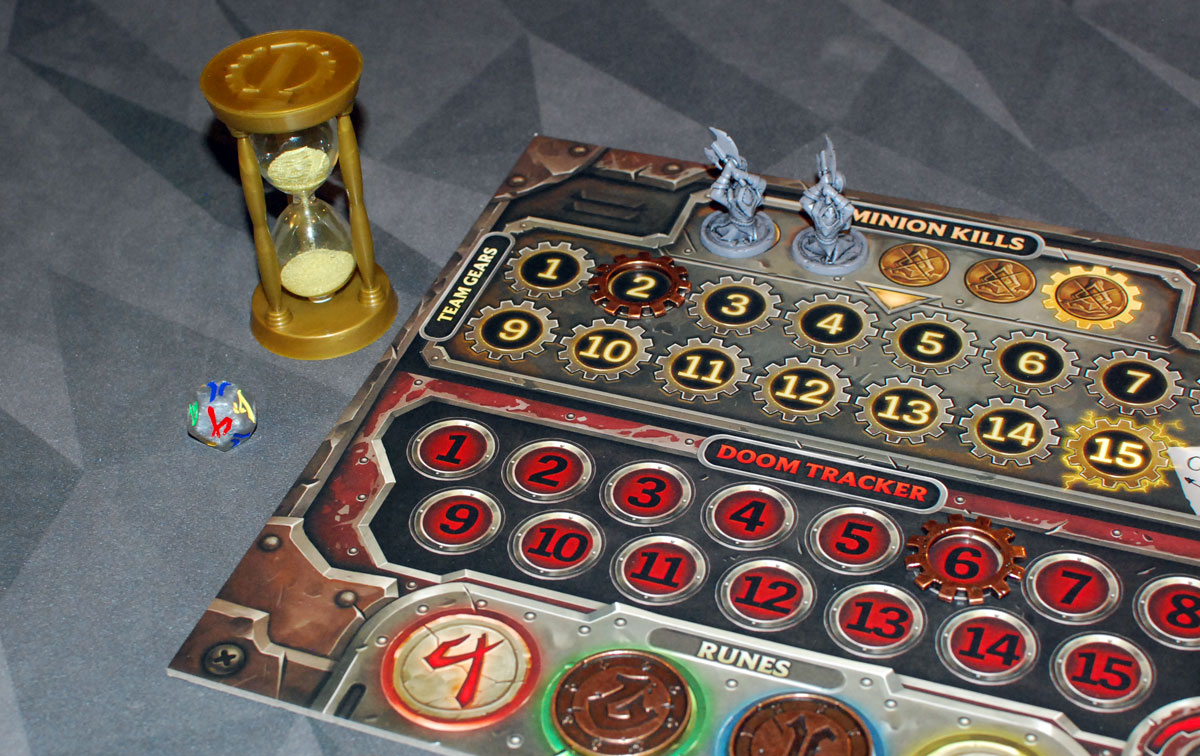
I won’t do a whole components breakdown, but the Classic Edition includes oversized painted miniatures for the four Yordles and the boss, plus 100 minions that have a basic wash so they look a lot better than just plain gray plastic. (Although the minions are all interchangeable, there were 4 different poses just for variety.) There was a huge fancy hourglass—used during the card-drafting phase—plus metal gears and coins, UV gloss on the boards, and custom dice.
The Bandle City Edition has replaced the mechs with acrylic standees, and most of the other components (including the minions) have been replaced with cardboard tokens (though the gears are wooden). It’s still quite nice, though: the boards kept the UV gloss, and the acrylic standees are effective. (If you’ve played Kinfire Chronicles from Incredible Dream then you’ve seen the style of standees used here.) Plus, the box will actually fit on your Kallax shelf.
If you want a real blast from the past, you can even see the old Mechs vs. Minions website, where it lists the on-sale date from ten years ago! I’ve still got my copy of the original (all the photos are from that edition), and I’ve actually been playing through the campaign with my 13-year-old and a couple other friends recently, and it’s reminded me what a great game it is. For more info or to pre-order, visit the Incredible Dream pre-order page!