
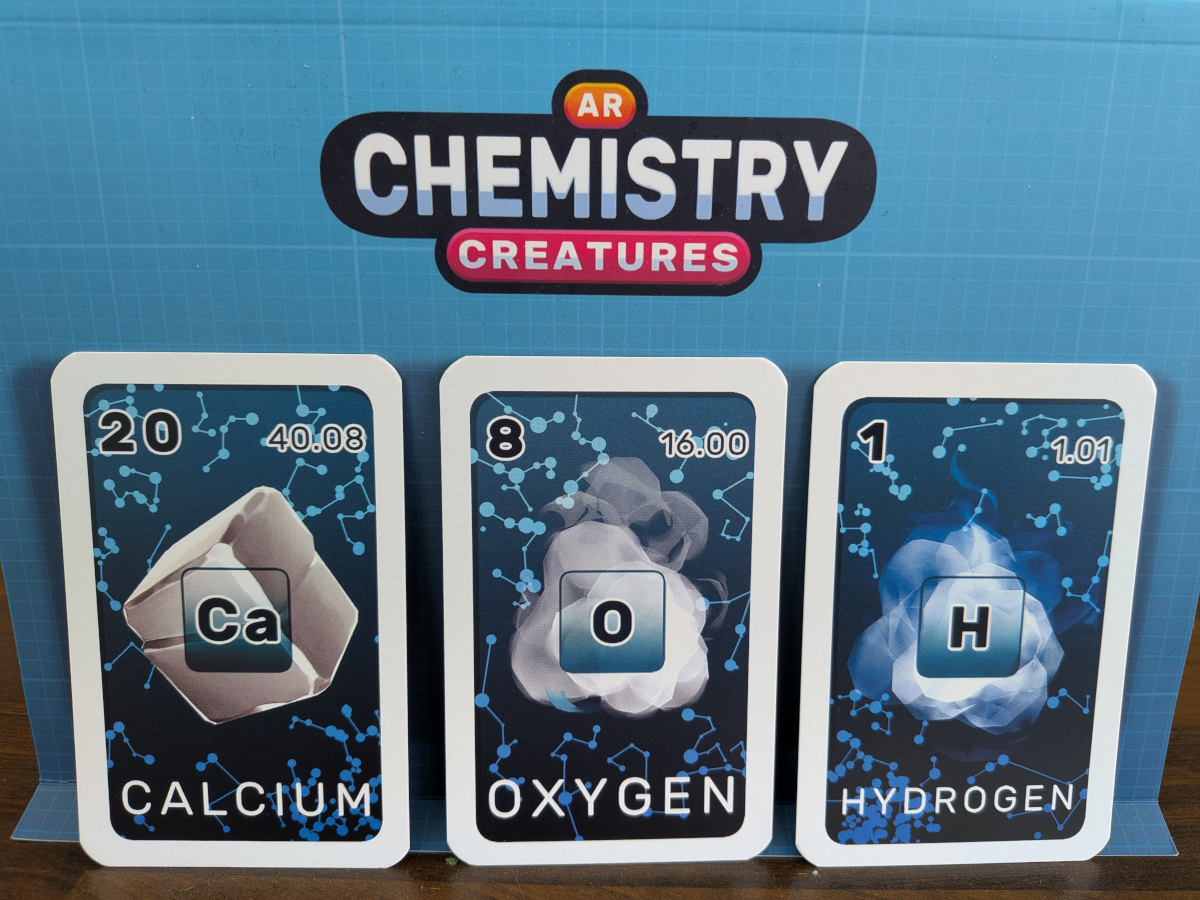
Chemistry Creatures has been created in the UK by Limbotech. It’s an augmented reality game that runs on Android or iOS. You’ll need a deck of Chemistry Creatures cards and the app on your phone or device. You can find more information on the Chemistry Creatures website.
How Does Chemistry Creatures Work?
The first pack of cards available have elements 1-20 on them. The cards are used in the game to complete missions that help the creatures in Chemistry Creatures app overcome obstacles and problems.
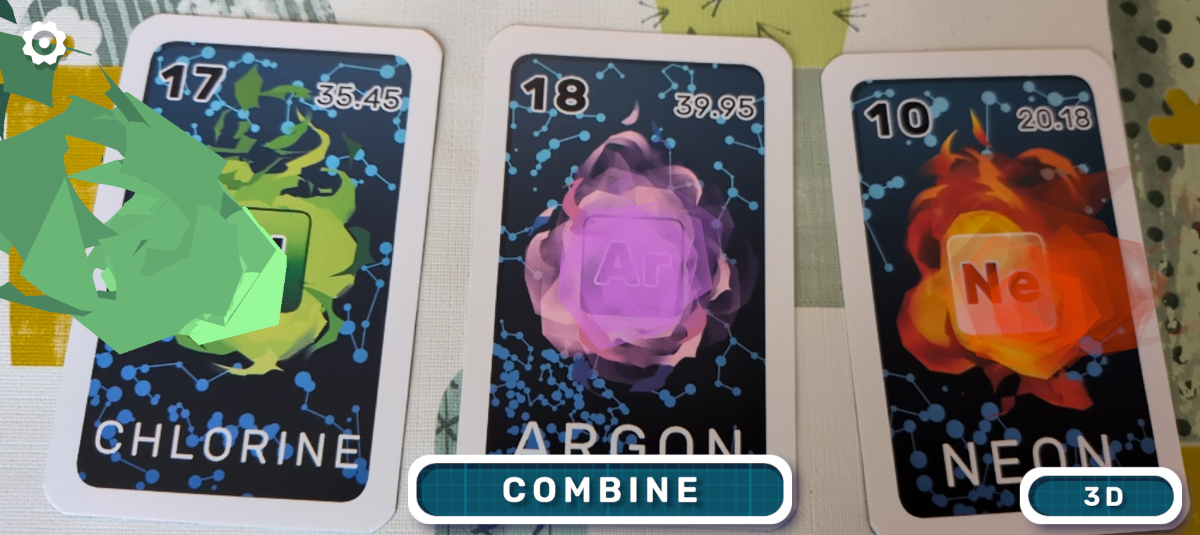
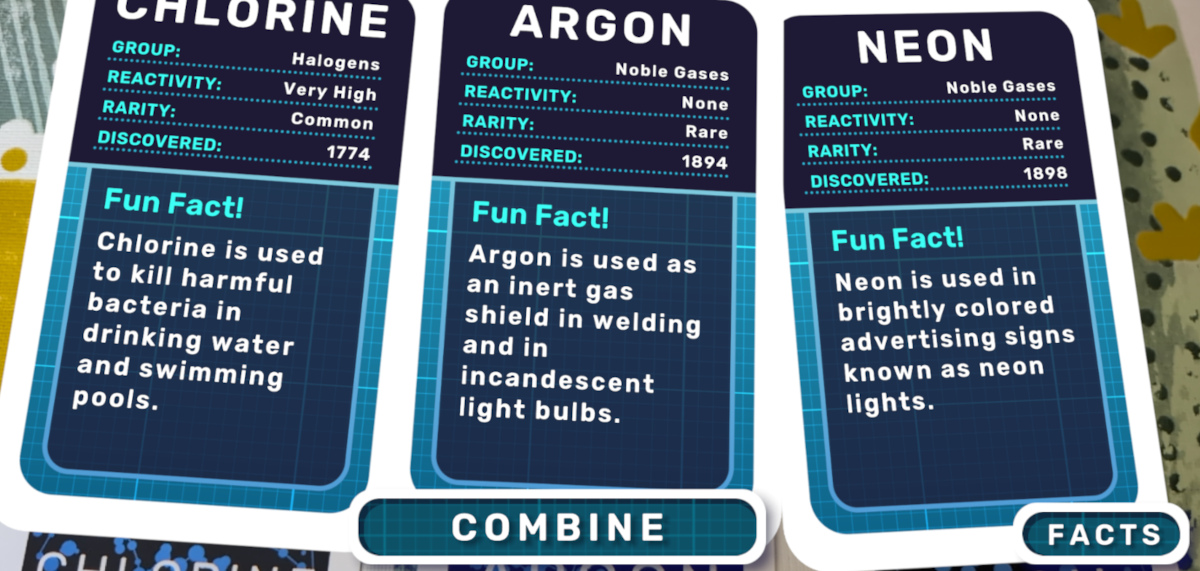
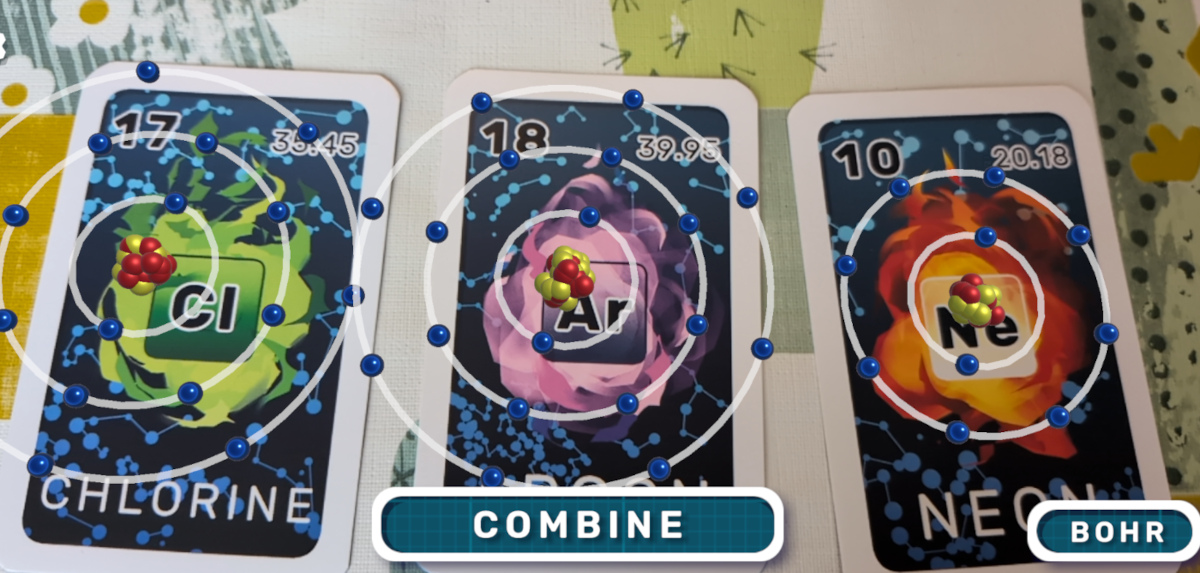
Before we get stuck into the missions, the game is driven by the augmented reality features within the app. You can use the AR with the cards in three fun ways. Hold the phone over the cards, and the default setting displays a funky animation for the element on the card. You can scan several cards at once. Indeed, to play the missions, you will have to. Press the tab in the bottom right corner, and it will switch, first, to a Top Trumps-style datacard and then to a great election orbital animation.
You could play around with this for some time and not get bored, especially if you’re a chemistry nerd, but what we’re really here for are the missions.
How do Missions Work?
When you fire up a mission, you’ll be told which elements you’ll need to complete it. It’s important to realise that you won’t necessarily have to use all of the elements in order to complete a mission. There’s almost always at least one, and usually two, red herrings in there.
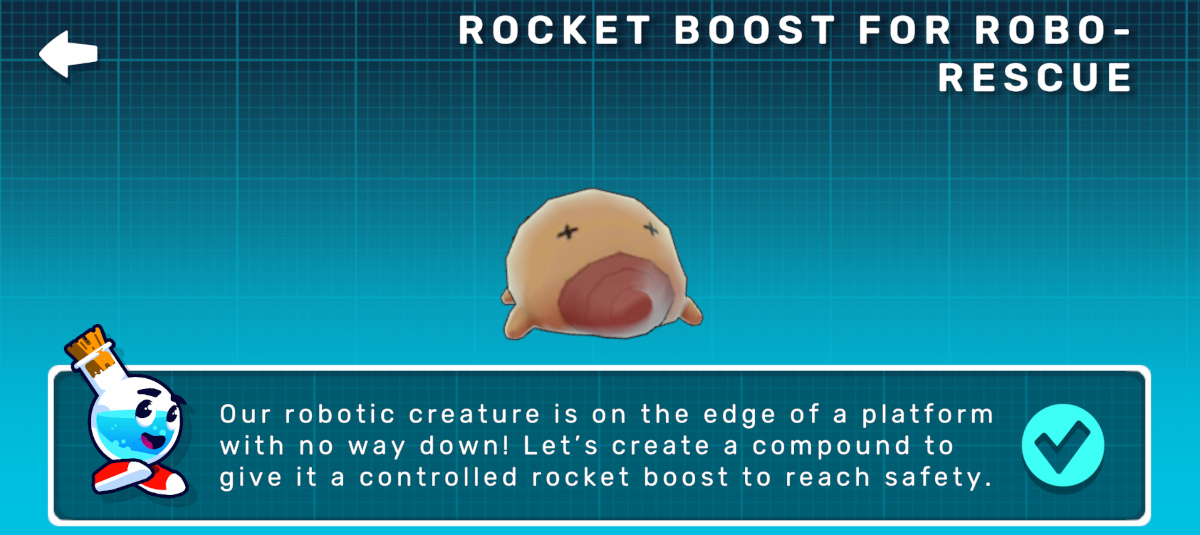
Next, you’ll be given the mission. These can be pretty tenuous, but if you’re the intended age for the game, you probably don’t care. Usually, you’ll have to help a creature; perhaps they’re having a problem with insects, maybe they want to grow faster or stronger. Maybe they’re stuck on a platform. Using the elements given, you have to make a compound that will solve the problem.
Using your phone to fire up the element cards, you’ll be able to combine them. The game has two modes, basic and expert. In basic mode, you only have to specify which elements you want to use. You don’t have to worry about the number of each element needed.
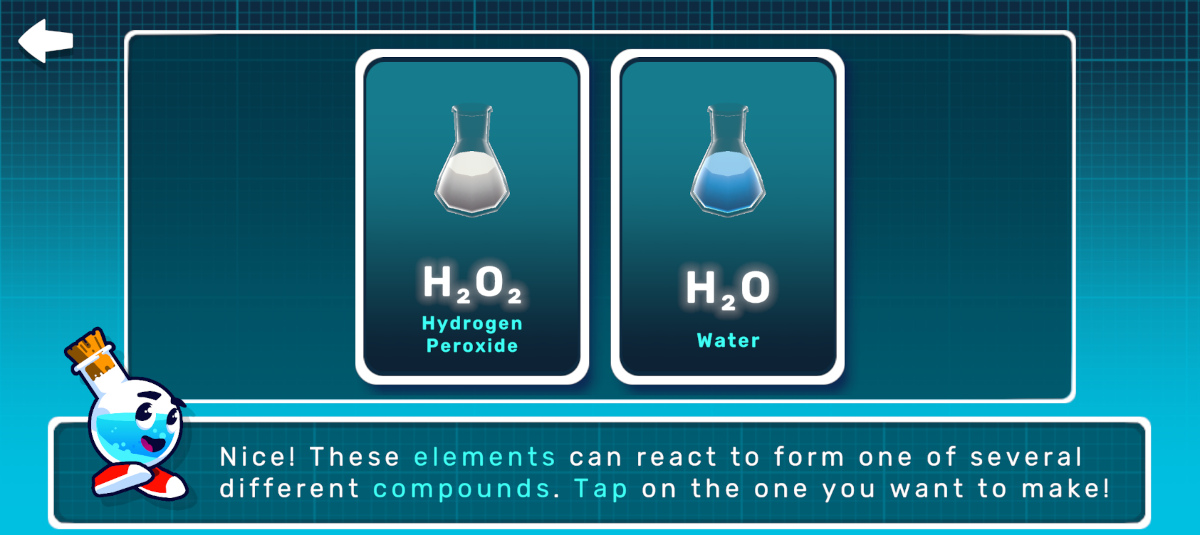
For example, the opening mission requires that you extinguish a fire. You can combine Water and Oxygen. In basic mode, the game will ask you if you want to create water (H2O) or hydrogen peroxide (H2O2) to solve the problem. Only one of them is the right answer.
In expert mode, you have to specify the molecule ratios, too. This makes the game significantly trickier.
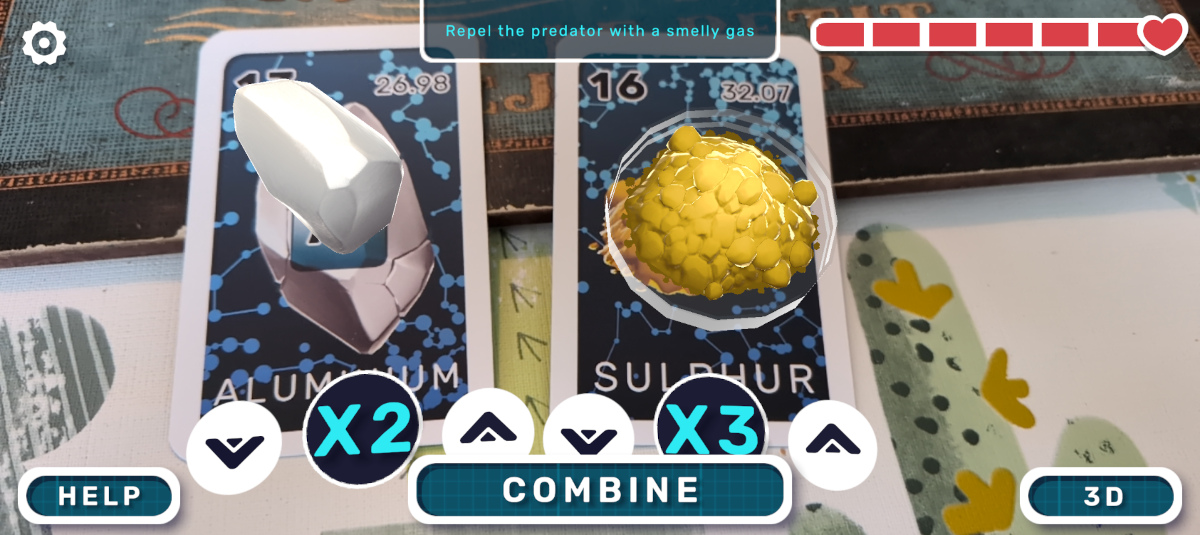
Fortunately, whichever mode you are playing the game in, you can choose to reveal up to three hints. These will help you determine which elements you need to use to solve the problem.
In either mode, whenever you do create a new compound, you’ll be told the properties of the compound you’ve made. Often, at this point, it’s very easy to tell whether you’ve made something that will help or hinder. If you decide you’ve got it wrong, you can go back to the AR mode and try again.
If you choose the correct compound, you’ll complete the level. If it’s wrong, you’ll be asked to try again. Each time you make a wrong choice, you’ll reduce your score for that mission, working down from three stars.
Once you’ve completed a mission, you’ll be asked to move on to the next one, or you can pick from any of the others in the menu. There are 100 missions to play with your twenty cards, which feels like an awful lot of chemistry. All missions are replayable. As a pacakge, it will keep you going for hours!
Is Chemistry Creatures Worth a Look?
Definitely!
I was pleasantly surprised by Chemistry Creatures. GeekDad gets pitched an awful lot of educational games, especially ones with a tech component. They’re almost always underwhelming. Good ideas, but without the execution to back them up. Chemistry Creatures is a great idea, and it’s backed up by a slick running app, quality physical components (the cards are printed on quality card stock), and some interesting and tricky puzzles. The cute creatures help promote engagement, too.
The game is quite hard, which only increases its longevity. This is not a game where you’re going to sit down and systematically be able to solve each level on the first time of asking. You’ll need to consult the hints and learn stuff as you go. For example, for a puzzle about batteries, while I knew that Lithium was important, I had no idea that an active component in the process was Lithium Sulfide. I needed a hint to work out the answer (and I had to remember my valence chemistry to work out the number of each atom needed!). Chemistry Creatures teaches its subject as it goes along, but it doesn’t make it a chore.
I imagine you could enjoy Chemistry Creatures with children 7 upwards, younger if they have an interest in the subject. They might need some help, but it’s a fun exercise to play together anyway. Because of how the game works, you can have sessions running concurrently with different players and a single set of cards. As long as two people don’t need the same element at the exact same time, you’re good to go. It’s a small thing, but the technology has worked every time, too. Very important if you want to keep younger players entertained and maintain their engagement.
I very much enjoyed the time I’ve spent with Chemistry Creatures so far, and I’ve only done about 15 or so of the missions. I’ve hopped about looking for puzzles that use interesting elements, and I’ve found it to be an engaging and informative experience. There’s a lot to learn here, or in this case, relearn; my chemistry degree has rarely felt so rusty!
What Next for Chemistry Creatures?
I have no inside track on this, but based on the strength of this initial deck, there’s no reason not to expect more cards from further down the Periodic Table. Why not add radioactive decay, or, thinking about my children’s recent forays into GCSE and A-levels (UK exams at 16 and 18), why not add an organic chemistry module? The system would be perfect for displaying the different carbon structures and the myriad reactions that create them. It would certainly become more complicated than for this base deck, but it feels like huge swathes of the subject are perfect for this sort of interpretation (though I guess, for older chemists, you might need to lose the cute creatures).
If you’re looking for a way to foster enjoyment of chemistry and further understanding of what chemical reactions can do, Chemistry Creatures is an excellent place to start. Check out more, here.


