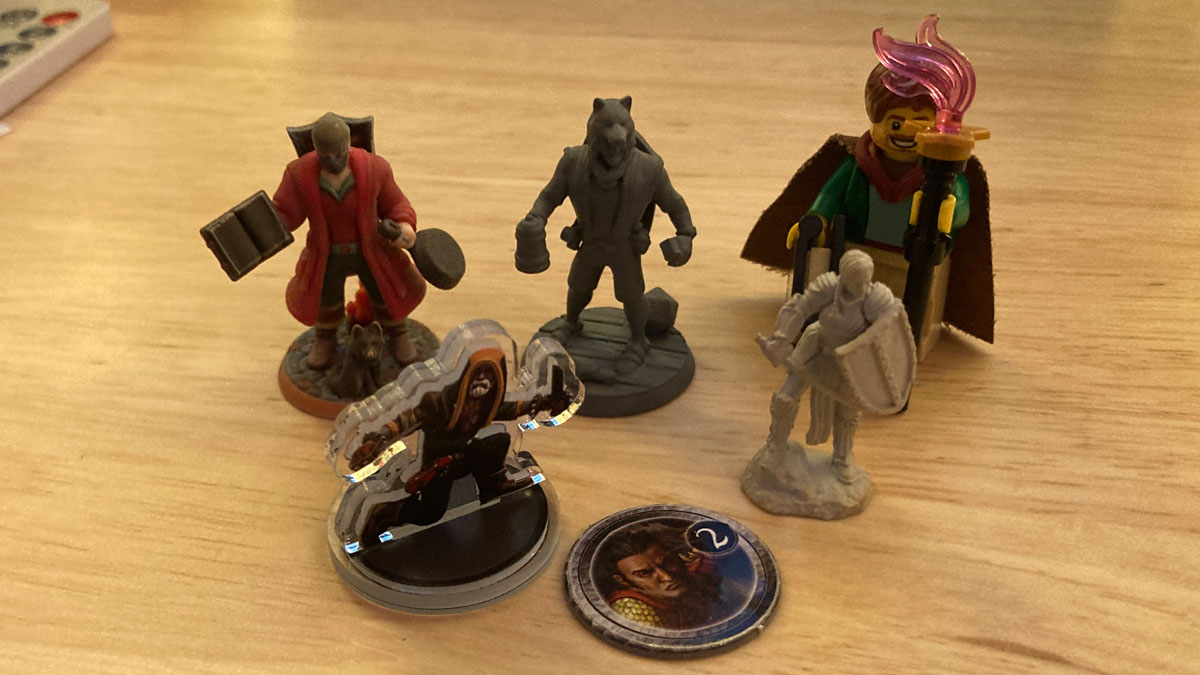
If you’ve ever played D&D, you’ve probably run into a question players have been trying to answer for 50 years now: how should I represent my unique character on the battle mat? These days it’s easier than ever to find options both online and at the table. But when there are so many options, how do we choose? This guide aims to help you do exactly that. First, we’ll go over the options available, then I’ll give you my picks for various situations. Ultimately the choice is yours, but there are some differences that will influence your choice. I’ll also note that this article can also provide clarity for other gaming systems, such as Pathfinder.
Jump to:
- Overview
- Traditional Miniatures
- Tokens
- LEGO
- 3D printed
- Standees
- Compare and Contrast
- Best Pick for DMs
- Best Pick for Customization
- Best Easy/Budget/Newbie Option
- Best Pick for Interactivity
- Best Gift Option
Overview
There are countless categories of markers, standees, and minis one has access to these days. Whether you’re looking to 3D print the perfect option or want something easy and no fuss, it is possible to find exceptional options to fit your needs. There can be many components to your decision-making process, including the kind of table or battle mat your group plays on, what other players at your table use, and more. For each option, I’ll do my best to include factors to consider before making your choice.

Traditional Minis
Inspired by the wargames that spawned Dungeons & Dragons in the first place, traditional minis come in heaps of options, usually unpainted. While there is some customizability in being able to paint your mini, not everyone wants the fuss of such detailed work that might not turn out well every time. Add in the expense of paints, primer, brushes, and other supplies, and the relatively inexpensive option of premade miniatures becomes quickly and dramatically more expensive. One can also procure them in metal.
Pros:
- Can be painted custom
- Can be re-painted to change colors
- Lots of options available
- Compatible with nearly all battle mats
Cons:
- Fairly fragile, unless cast in metal
- One needs skill to paint them
- Painting materials add expense
- Chance of painting mistakes making the mini unsatisfying

Tokens
Tokens are a time-tested option for representing characters, NPCs, monsters, and even terrain on a battle mat. Paper tokens can be purchased or printed at home and made one- or two-sided. Glass tokens, dice, and pieces from other games can all be useful, but they tend not to reflect the characters they represent. Another option is token clings, like those found in the D&D Campaign Case: Creatures, which are the tokens I use most often. The plastic tokens can be used with or without clings, adding more options.
Pros:
- Paper tokens weigh almost nothing
- Non-paper tokens can be sourced from almost anything
- Cost-effective
- Easy to replace
- Quality options exist to create large varieties to mix and match
Cons:
- Generic tokens often lack clarity
- Paper tokens can die easily if food or drink is present at the table
LEGO
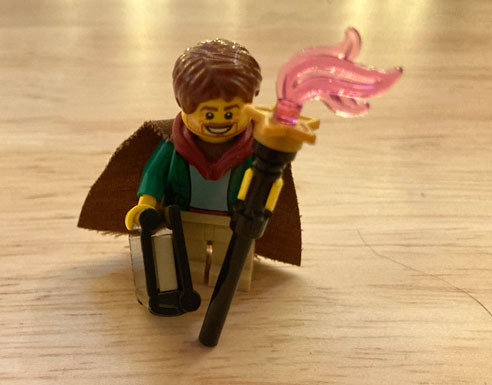
The minifigures produced by LEGO are exceptionally versatile units and can be remixed quickly and with ease. One may be limited by their creativity or options currently available, but I have used the same 15 minifigures to make hundreds of NPCs, including fantasy races, monsters, and humanoids. Keep an eye out for my upcoming guide on how to design D&D minis using LEGO elements.
Pros:
- Non-permanent choices mean you can re-use pieces
- Compatible with standard maps
- Can be placed on a LEGO mat for added stability
- Extensive options available for customization from magic items to clothing
Cons:
- Limited by one’s collection
- Best when everyone is using LEGO elements, and less amazing otherwise
- If you fall in love with a build, you might decide to remove it from the pool, reducing the pieces available
3D Printed Miniatures
Whether you buy your 3D minis or print your own, there are countless advantages to having custom-made miniatures. Most importantly, you can use a service like Heroforge to design the perfect miniature and then have them print it, print it yourself, have it digitally rendered for online tabletop games, and even have a miniature you’ve ordered pre-painted by their team. Heroforge has countless items, clothing, weapons, gear, and character options, allowing you to design anything from a generic human to a Pegasus with robot wings and flaming hooves.
Pros:
- Design as many characters as you like, buy only what you love
- Can be printed in different materials or colors
- Use the same character design to make physical and digital assets
Cons:
- Costs add up if you need many figures, particularly larger ones

Standees
Standees can be an excellent option for new players, generic NPCs, or players who prefer to travel light. There are many options online for sourcing your standees, including Etsy, Steve Jackson Games, and (again) Heroforge. I like Heroforge’s options because I can customize them, preview them, and choose things like angle, position, and pose. Other options may be cheaper, but they lack the customization that Heroforge offers.
Pros:
- Fold down for small storage
- Cheaper than most other options
- All the customization options of more complex options without the same expense
Cons:
- Hard to see on-end, making it difficult for a large group to track positions

Compare and Contrast
When we compare any two options, we can quickly gain clarity to evaluate our priorities. The following questions and comparisons are to help you find the best solution for your table.
Do you want the figure to be a perfect representation of your character?
Heroforge can do that better than any other option presented here. Everything from being able to change your character’s eyes to animal eyes to being able to attach wings to any of the species’ bodies is on the table, including a massive library of color for customizing your skin, hair, and equipment.

Do you use a standard game mat?
LEGO is completely compatible with a standard mat, as minifigures are about the size of a medium creature. You can even integrate both, as a 3×3 square on a LEGO base plate is the same size as a 1-inch grid. Likewise, tokens and traditional minis are always going to fit. On the other hand, you may not want to use Heroforge’s standees, as they are 5mm too broad at the base to fit on one-inch grids. This won’t matter for some tables, but it is something to consider.
Are you concerned about breaking your minis?
Prefab/standard and 3D-printed minis are the most fragile options, so if you’re clumsy or travel a lot for games, you may want to consider another option. Standees are portable and durable, LEGO minifigures are both durable and have replaceable parts, and tokens are cheap enough that if you lose or break a few, it won’t be a huge expense to replace them.
Top Picks
Best Pick for DMs
If you’re a DM and you’re looking to bulk up your collection of minis to use for NPCs and monsters, there are two clear winners: tokens and LEGO. Tokens, whether they are beads, paper chits, or dice, allow you to use what you have on hand to build out the world. Prefabricated kits like the Campaign Case can provide a lot of versatility for a low impact on budget. On the other hand, LEGO is something that relies on a low level of investment in pieces but leaves you with a functional, versatile, and endlessly remixable option. When you consider the number of options available in LEGO releases, you are sure to be able to find something that perfectly captures the vibe of your NPC.
Best Pick for Customization
If you’re looking to capture exactly the appearance, clothing, and gear you have in mind for a character, check out Heroforge’s options. These allow you to arrange and color everything, meaning you can have bright pink armor with a matching sword if that’s your jam. Heroforge offers different plastics, metal, standee, digital, and 3D printable versions for you to purchase, so you can get exactly what you need, and nothing more.
Best Easy/Budget/Newbie Option
The best budget option is always going to be tokens. Paper chits, poker chips, chess pieces, and more can all be easily tossed on a grid paper or battle map. There is no need to invest in costly options, just use whatever you have on hand. Your imagination is the only limit. The Campaign Case’s many clings can give you a lot of customization without needing to invest in diverse collections and fit on the shelf next to your PHB.
Best Pick for Interactivity
The most interactive pick is easily LEGO minifigures. Because LEGO is endlessly remixable and the minifigures work just like all of the other elements, DMs can create elaborate scenes, create terrain, and exquisitely decorated rooms while allowing everything to be interactable for player characters. How often have you wished your character could stand on top of a pile of rubble, hold an item, hang from the terrain, or otherwise make use of the environment in the 3D space of your game table? With LEGO, these features and countless more are possible. Unfortunately, these features only work if everyone at the table is using LEGO minifigures and the DM is using LEGO terrain. Lacking those accommodations, LEGO is significantly less interactive.
Best Gift Option
If you are looking to surprise a player with a gift, I have to suggest a gift card to Heroforge. With so many options to choose from, they will be able to find what they love, and they get to enjoy the creation process as well! If you are trying to surprise the DM of your campaign with a gift as a thank-you for their services, ask them to design a favorite character in Heroforge and share a link with your group because you can then order it from there!
TL;DR
There are countless factors in deciding which options are best for your table. Any of these solutions work individually and in groups. There are ultimately no “correct” or “incorrect” options for your game, including not using minis at all! Seek solutions that help your situation, first and foremost. If you have some ideas you’d like to throw into the discussion, drop them in the comments. Finally, keep an eye out for my forthcoming series on creating TTRPG characters using LEGO elements.
Disclaimer: LEGO, Hasbro, and Heroforge have previously provided materials to the author of this post that were used for this evaluation, but this post is not endorsed by, sponsored by, or affiliated with any of those companies. Affiliate links in this article support the author at no extra cost to the reader.