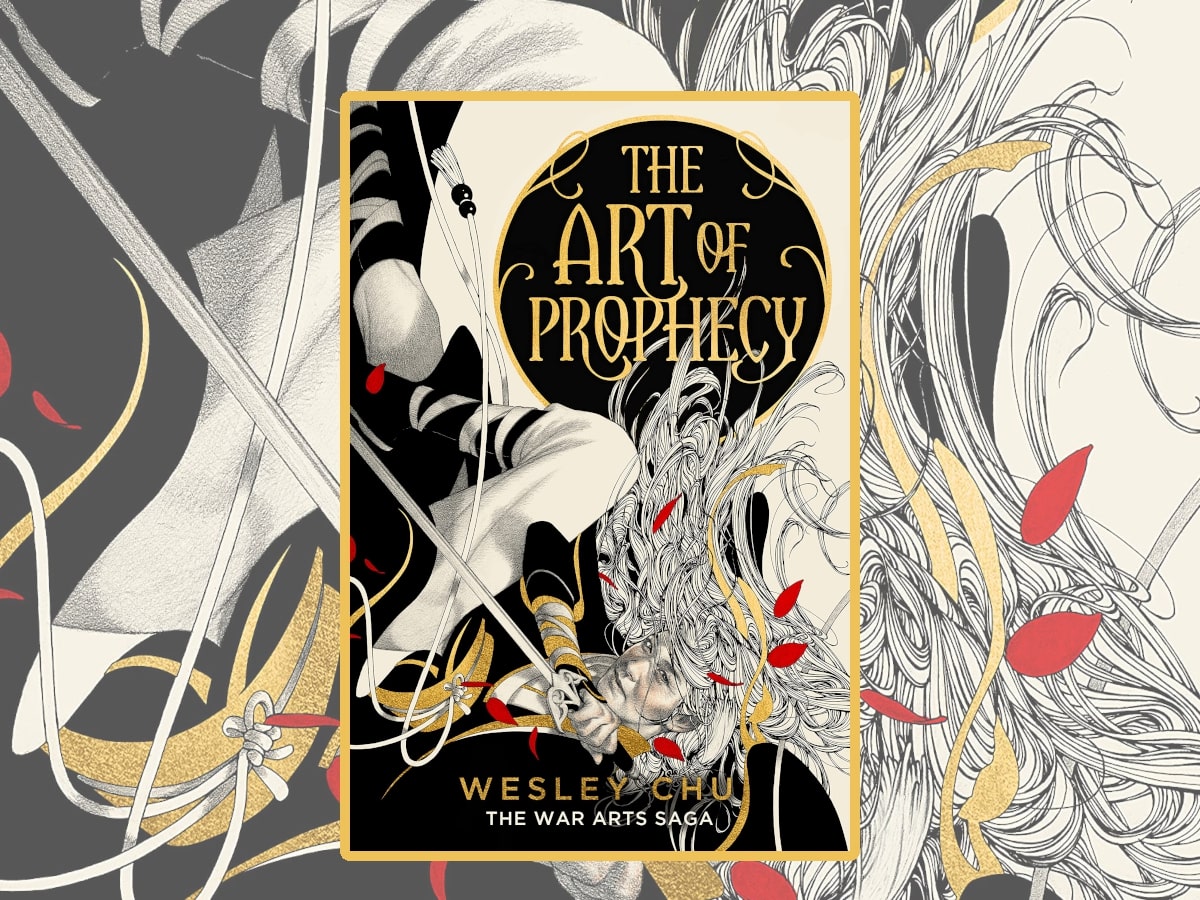
The fantasy genre thrives on prophecy and combat and The Art of Prophecy has both in abundance. With the first book of The War Arts Saga, Wesley Chu delivers a land riven by war, a host of great characters, and breathtaking fight scenes. It also subverts the traditional prophecy narrative, asking, “What happens when the soothsayers get it wrong?”
What Is The Art of Prophecy?
It’s an Asian fantasy inspired by Wesley Chu’s love of wuxia movies. It’s not a genre I’m overly familiar with but many parts of the novel reminded me of the wonder that is watching Crouching Tiger Hidden Dragon. The central story revolves around an ongoing conflict between two nations constantly fighting with a stalemate. The weaker of the two nations maintains the status quo thanks to its legendary warrior, the Great and Immortal Khan.
Growing up, my go-to fantasy series, after The Lord of the Rings, was David Eddings Belgariad. It’s the tale of farmboy Garion, a hero foretold in prophecy. I loved it—the rise from nothing to greatness and the unexpected reveal that he was the Chosen One. It’s all a bit hackneyed now, but 1980s me was in awe of it. With The Art of Prophecy, Wesley Chu subverts all that and offers us an interesting alternative; what if the prophecy was wrong?
Jian lives in a palace. It is foretold that he will be the one to defeat the Great and Immortal Khan and lead his nation to victory. He is pampered and protected inside an impregnable fortress. He has the best teachers of all the “war arts’ and is the living focus of an entire religion. When the Great Khan is unexpectedly killed by in a random skirmish, Jian’s life is thrown into turmoil. Spoiled, surplus to requirements, and entirely unprepared for a normal existence, Jian finds himself fleeing for his life.
Why Read The Art of Prophecy?
One reason alone to read The Art of Prophecy is the fight scenes. They are sumptuous and wear their wuxia influence loud and proud, including epic sword fights with fighters jumping through the air and flitting from shadow to shadow. Reading The Art of Prophecy is every bit as awe-inspiring as watching Crouching Tiger for the very first time. The book is filled with a variety of war arts and several great exponents of them. I loved the different schools and combat styles and the depictions of a particular art’s masters. They’re the variety of heroes that fantasy novels need to make them sing.
But a book just about fighting would be boring. You need a reason for the fights to occur and compelling characters to root for. The Art of Prophecy has it all, though author Wesley Chu is very mean. His narrative is broken into several strands, moving between each as we journey through the novel. He evokes sympathy in each, meaning that when the inevitable showdown occurs, we don’t want either side to lose.
The depiction of two warring states is well done. With the death of the Khan, the war is effectively over. What happens to a fantasy realm when its battles are finished? We rarely find out, but Chu attempts to give us that. Refugees, prisoners of war, and unemployed soldiers make for a testy powder keg. And what of Jian, the hero for whom there is no longer a vacancy?
I haven’t mentioned the best character of all: the aging Master of the Winds, Tiashi. A one-armed supremely cantankerous martial arts supremo, she steals every scene she’s in. She rescues Jian from an untimely end, putting them both at the center of a nationwide manhunt. Much of the novel is about how she keeps the two of them away from the powerful dukes, who have decided they don’t want a prophecy-proclaimed god knocking about. Jian is a political pawn without a portfolio and ripe for exploitation.
The Art of the Prophecy is filled with many great fantasy tropes, but they’re remolded into something fresh and original. Jian’s journey through the novel perhaps has a familiar destination, but the route taken there is riveting. Tiashi is a great warrior but not like any I have encountered in fiction before. There are others, but I don’t want to give any more of the novel’s secrets away.
The book is a great blend of action, coming of age story, and internecine politics. As readers, we get to see both sides of the conflict and are asked to sympathize with all who are connected to the eternal struggle. The novel culminates in a very satisfactory fashion with some interesting twists to set up what I am sure will be an equally fascinating second volume. If you love wuxia or Chinese-inspired fantasy novels, there is much to like here. If you like well-described fantasy settings, rich in intrigue, and scintillating combat, then The Art of Prophecy will not disappoint.
If you’d like to pick up a copy of The Art of Prophecy, you can do so here in the US and here in the UK. Note: The paperback edition will be available in the US from May 9th.
If you enjoyed this review, check out my other book reviews.
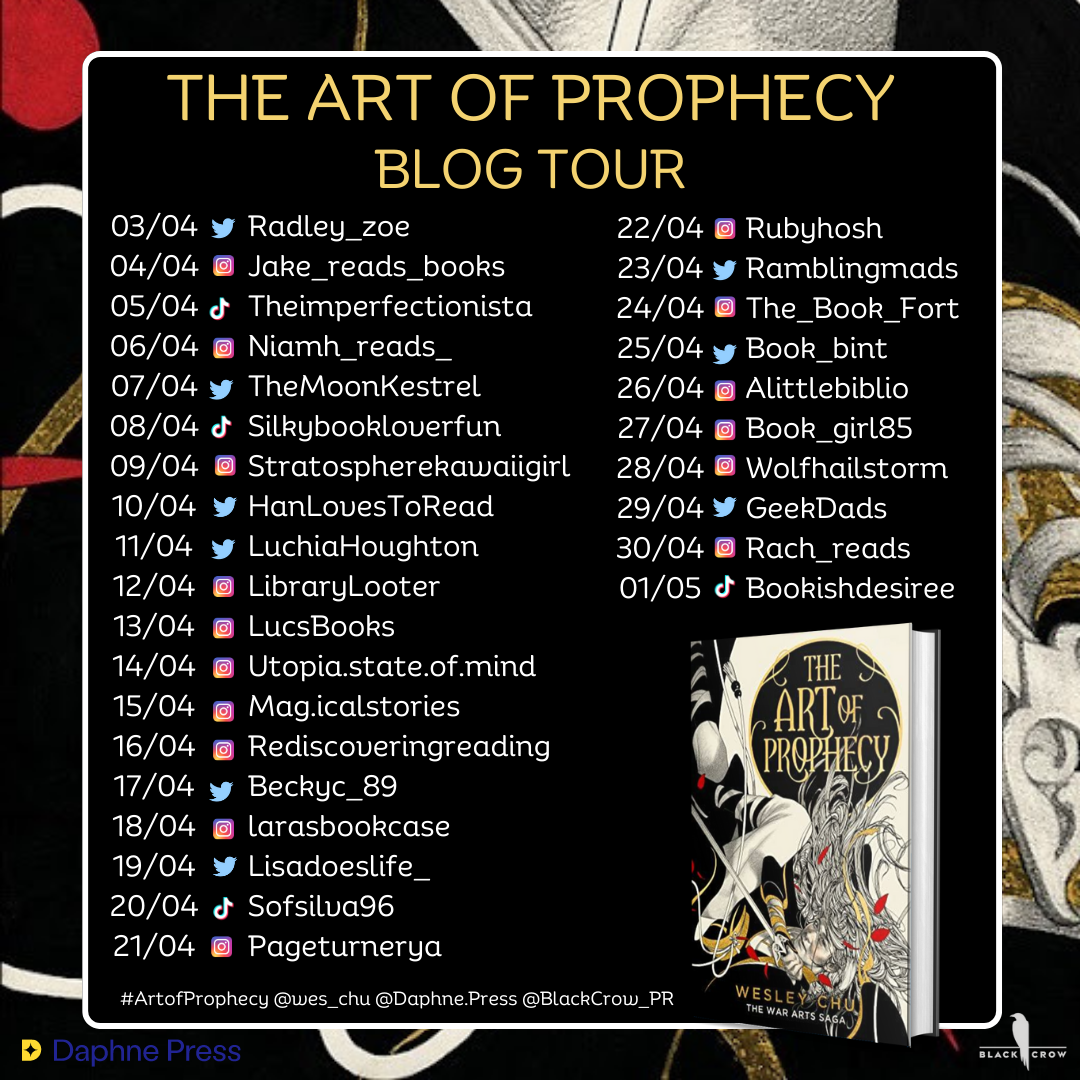
Don’t just take my word for how good this book is. This review is part of a blog tour and you can check lots of other reviews at the locations below.
Disclosure: I received a copy of this book in order to write this review.