
“Tell me, what is it you plan to do with your one wild and precious life?”
If you’ve seen or heard that line or a version of that somewhere—on a bumper sticker, or a T-shirt, or in a speech—then you’ve had a taste of the poetry of Mary Oliver (from her poem “The Summer Day”). Another often quoted poem is “Wild Geese,” particularly the lines: “You only have to let the soft animal of your body love what it loves.” Oliver’s poetry was centered on the natural world; she talked about animals and plants and sunrises. Sometimes her poems feel like they’re from an earlier time, maybe contemporary with Walt Whitman, one of her influences, because they don’t usually make explicit references to the modern world. But even though the subject matter is about nature, Oliver always connects us to it as a part of nature, not something outside of it.
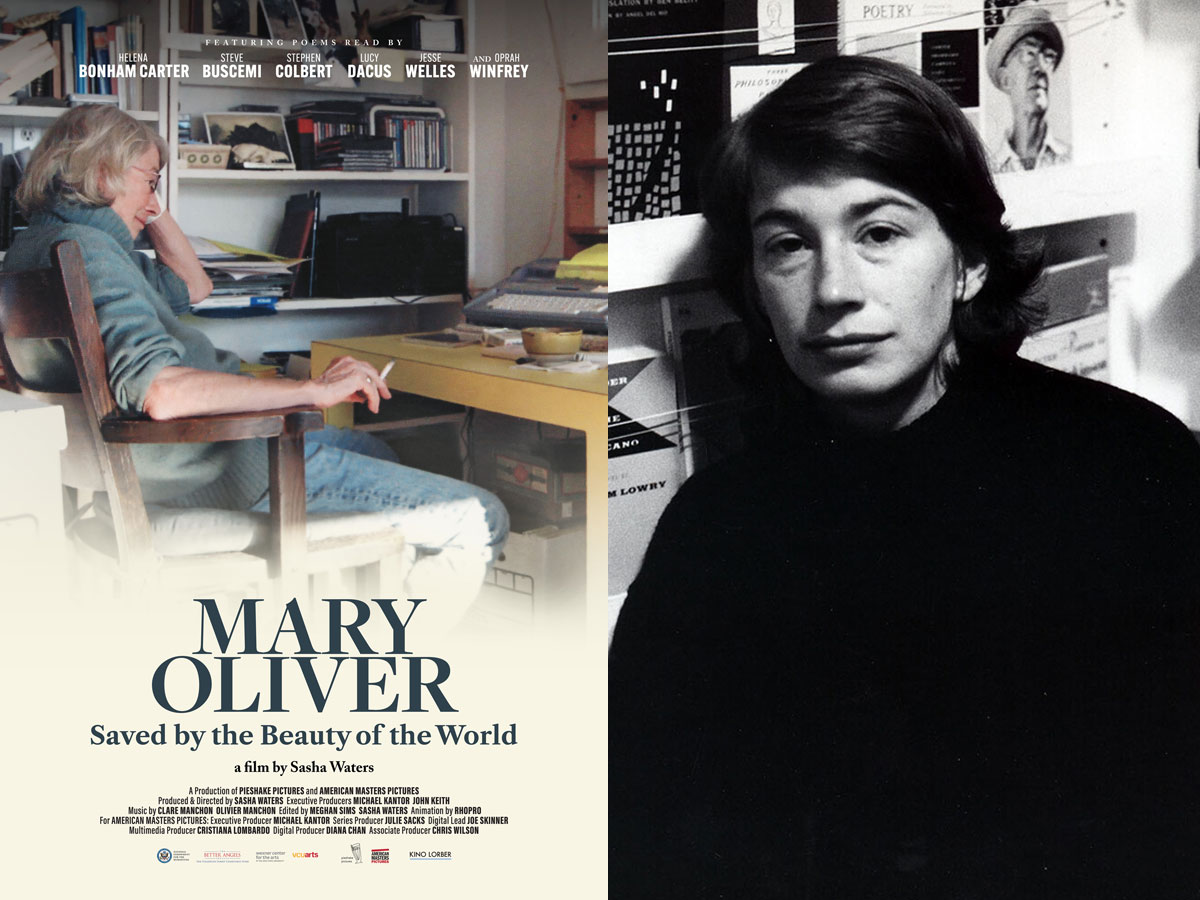
Though I’ve often been exposed to her poetry, I didn’t actually know a whole lot about the poet herself, so I was excited to watch a new documentary about her: Mary Oliver: Saved by the Beauty of the World, directed by Sasha Waters. The film has been in limited release in theaters since June of this year (there are still a few opportunities to see it between now and November), but it is also now available on DVD and it is also streaming on YouTube thanks to PBS. Kino Lorber provided me with a screening link, and my wife and I watched it recently.
The film compiles archived clips of Mary Oliver; interviews with poets, scholars, and people who knew personally; photos and correspondence. There are also clips of various people like Stephen Colbert and Oprah Winfrey reciting her poetry. While it does describe her personal life, particularly her relationship with her partner Molly Malone Cook, the film doesn’t dwell on the hardships. She was openly gay, and also a Christian, but we aren’t told whether that caused any difficulties for her in either community. There is also a brief mention of being abused as a child—something she had never told anyone until she was in her 70s—but then the film just continues past it.
Mostly, the film celebrates her writing and gives us some peeks into the person behind it, thanks to the interviews with close friends (including John Waters). One thing I did wish was that the film identified everyone on-screen: I recognized some of the unnamed appearances, but there were others that I was left wondering. Often, the narration was paired with related visuals: archival film clips or photography of Oliver and her family, scenes of nature, and sometimes video clips that helped establish the atmosphere but it wasn’t clear if they were specific to Oliver or just extra footage collected from somewhere.
Overall, though, the film introduces you to the person behind the poems, and I came away feeling like I knew her a little better, and could have a deeper appreciation for her poetry, whether I seek out a book of hers to read or simply encounter it in the wild—which always feels like an appropriate, serendipitous way to meet Mary Oliver’s poetry.
Visit the Kino Lorber website for more information or to watch the trailer.
Jonathan H. Liu

Jonathan H. Liu is a stay-at-home dad in Portland, Oregon, who loves to read, is always up for a board game, and has a bit of a Kickstarter habit. I can be reached at jonathan at geekdad dot com.


