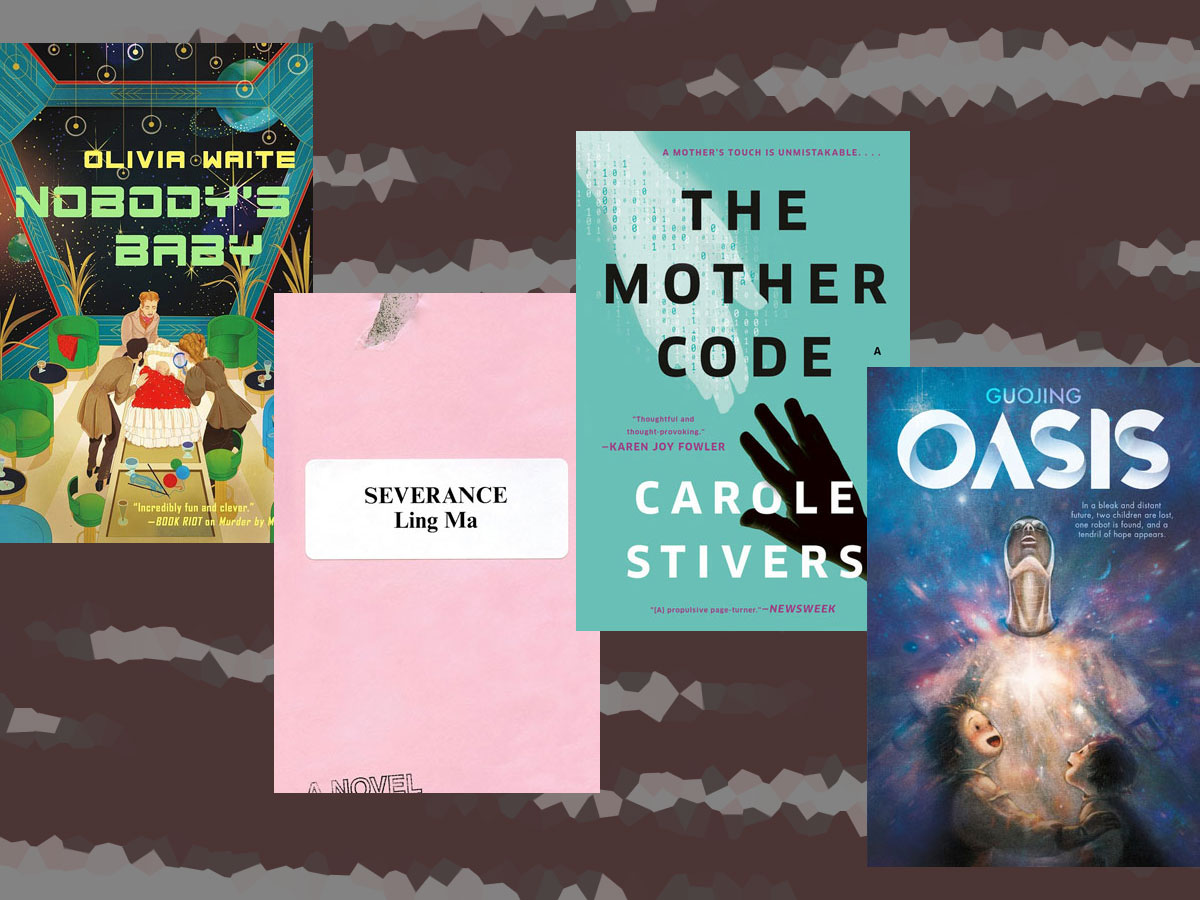
I’ve got a few books today that have some odd threads that connect some of them, though there isn’t a single topic that encompasses them all. Two of them involve pandemics, and some involve parenthood—in particular, a couple have to do with artificial parents.

Nobody’s Baby by Olivia Waite
I really loved the first book in this series, Murder by Memory, which made it into my recent stack about AI. I was a little late to reading that one, but the follow-up was just published this month, and when it arrived I knew it was one I wanted to dive into right away. Both books are slim novellas and make for a quick, fun read.
Dorothy Gentleman is a detective on the Fairweather, an interstellar ship that has some interesting features, among which is that the people on board are effectively immortal (barring the complex murder plot in the first book): they get their memories backed up regularly, and then are decanted into new, adult bodies when their current bodies age or fail. That, and the fact that the lab-grown bodies are unable to reproduce, keeps the population steady until they eventually make planetfall, at which point they will be able to procreate but will also die naturally.
But, mysteriously, a baby has turned up on the ship, and Dorothy has her hands full trying to figure out who the parents are, how it was even possible, and why the baby was left on her nephew’s doorstep in a basket. The ship’s AI does not feature quite as heavily in this one, but we do get some other interesting future-tech in the form of flickers: people are able to project memories using a special helmet gizmo, and this has turned into a form of entertainment as some have perfected the techniques of making up their own stories to project like movies.
I enjoyed this one, both for the unexpected paths that the story takes while Dorothy chases down the baby’s origin, and for the different ways that various characters react to the first baby they’ve encountered in 300 years. (I certainly don’t miss the days of diapers and bottles and screaming fits!)
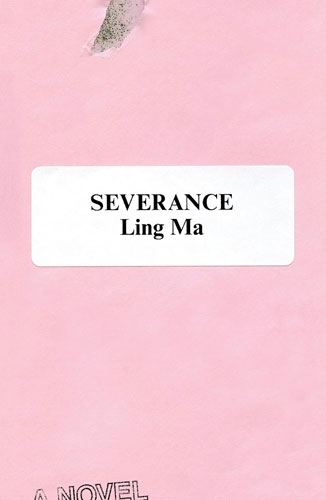
Severance by Ling Ma
I’ll start by saying that this book has nothing to do with the Severance TV show, though there are parts of the book that deal with the everyday drudgery of an office job. I’d seen this at the bookstore and the title caught my attention because I’m a fan of the show, but then I was really curious about the “end of the world” plot, so I bought a copy.
Much of the story takes place in New York City, where Candace Chen works for a company that coordinates printing and manufacturing in China for book publishers; she’s in the Bible division, but she would really love to be an Art Girl, the always-stylish women in charge of the fancy art books. Then comes the news that there’s a strange virus originating in China, and things start to shift. It starts with N95 masks in the office, but then eventually things are mostly remote, with a skeleton crew (including Candace) continuing to work in person, in part to keep up appearances at the office. As the virus spreads, New York City becomes a ghost town—those who didn’t succumb to the virus left the city—but Candace persists, returning to the office day after day long after everyone else has abandoned it.
There were so many parts of this book that really took me back to 2020, the way our world was transformed by COVID and particularly in the early days when everything was unknown. What caused it? How did it spread? How do you keep yourself safe? And then there’s the way that Candace keeps going about her daily routines even as everything falls apart around her, trying to pretend that things are normal when they clearly aren’t.
What’s especially striking, then, is finding out that this book was published in 2018, well before any of us had heard of COVID. In the book, the pandemic hits in 2011, and it incorporates events like the Occupy Wall Street protests, as well as the tenth anniversary of 9/11.
Eventually, though, Candace has to leave the city, and the other sections of the book are about the small band of survivors that she falls in with. They appear to be immune to the disease, and they’re traveling to Chicago, where the group’s default leader says he has a Facility where they’ll be able to live safely. But although he seems to have some decent plans for how to survive in this changed world, he’s also a bit cult-like, with weird semi-religious philosophies. Candace stays with the group for survival, but gradually starts to realize she needs to find a way out.
There are some shades of Station Eleven here—another pandemic that wipes out most of the world’s population, a small group of survivors, a cult leader figure. The chapters about the post-collapse world are interwoven with chapters about Candace’s life in the before-times and during the slow disintegration of the city, making for a jarring juxtaposition between the mundane and the surreal.
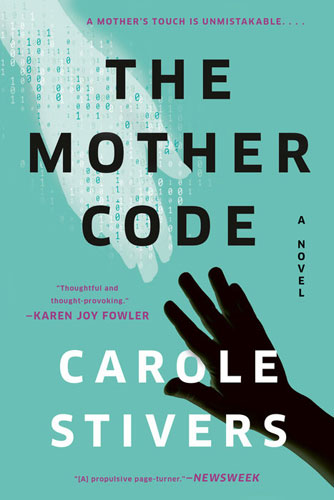
The Mother Code by Carole Stivers
I don’t often cover the books that I’m deciding not to read, but this one really fit some of the categories, while also failing on other points. The story takes place in the 2050s and 2060s, jumping back and forth between a pandemic that apparently wipes out most of the world’s population. I was particularly interested in this one because it’s about a pandemic but was published in 2020, which means the book was written prior to the COVID-19 pandemic. In this case, it’s the result of a bioweapon gone wrong: the US military unleashed a genetically engineered nanostructure that was supposed to kill some entrenched insurgents and then dissipate. Instead, it found a way to reproduce and spread.
It’s also about AI and robots, because there’s a team tasked with building robots that can incubate and raise the modified humans who can survive the pandemic. The scenes in the 2060s show these young kids, each raised on their own by a robot, as they try to find each other and figure out what has happened to the world. The blurb on the back says that there are some people who survived and this sets up a conflict when they decide the mother robots must be destroyed.
I am somewhat curious where the plot is going, but I just kept running into things that bothered me: the descriptions of some of the non-white characters just veer into stereotypes. Of course the scientist with the slight Mexican accent reminds this other guy of farmhands. Of course the very appearance of this Pakistani makes the army guy think of insurgents that he fought who smell of “cumin mixed with sweat.” I just rolled my eyes through that, but then I could see the story was setting up a romance between a military officer and his subordinate, which seemed like a red flag. And then we had another guy who regretted that he didn’t start dating this woman when she was still his student, and I’d had enough.
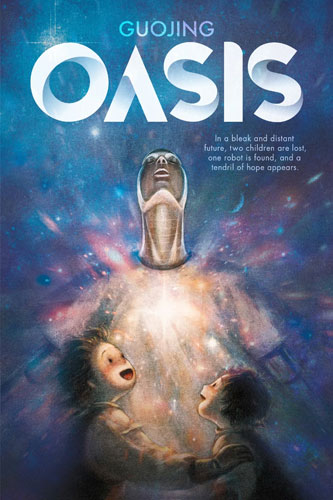
Oasis by Guojing
Guojing had previously illustrated a wordless book called The Only Child inspired by China’s one-child policy. This graphic novel is inspired by the “left-behind children” who live in rural areas while their parents look for work in the cities. Two siblings, known only as JieJie (older sister) and DiDi (younger brother) live in a desert, making the long trek to a phone booth for brief, scheduled conversations with their mother, who works in a factory assembly line making robots.
When the kids find a broken, discarded robot in the dump, they take it home and JieJie is able to get it started up. Didi makes a wish for a mom, and the robot turns on its “mother mode” and starts to care for them. When their mother makes a rare trip home and discovers this robot with her kids, it leads to conflict and hurt feelings that they must figure out as a family.
This isn’t the first time I’ve read a story about robotic parents—there’s Muthr in the WondLa series, or more recently there was Roger in Operation Bounce House. Muthr was designed to be a mom, but we’re also seeing a lot of repurposed bots like Roger. In The Mother Code, the robots were originally for more industrial purposes like exploration and mining, and I got the sense that that’s the case here in Oasis as well, though at least the bot did have a “mother mode” programmed into it.
Like The Only Child, the illustrations are in black and white with only occasional touches of color, and they really convey the loneliness of the barren land that the kids inhabit. There is a little bit of “AI can solve your problems” magic that I didn’t feel was entirely convincing, but I still enjoyed the story nonetheless.
Bookshop.org Discount!
I’ve been using Bookshop.org for my book links for a while now as an alternative to Amazon. Purchases are fulfilled by independent booksellers, and I get a small percentage of sales through these links as well, so if you want to support non-billionaires, this is one place to get your books!
Bookshop.org had a little promotional deal recently, and I have a 15% off coupon code for the books in this themed list: Love and Time Travel. These are all books I’ve covered in the past year or so about time travel with some romance thrown in (or vice versa!). Use code BSO15 at checkout—the code is valid until April 1, 2026. (It excludes eBooks.) Thanks for reading!
Disclosure: I received review copies of the titles in today’s column except Severance, which I purchased myself.
Jonathan H. Liu

Jonathan H. Liu is a stay-at-home dad in Portland, Oregon, who loves to read, is always up for a board game, and has a bit of a Kickstarter habit. I can be reached at jonathan at geekdad dot com.