October has been crazy busy. I’ve been trying to find time to review the excellent Seven Small Inventions That Changed the World for the best part of a fortnight. Ironically, a never-ending list of small things has distracted me, but, finally, here is my review of a great children’s book that charts the evolution of seven everyday objects that we take for granted.
What Is Seven Small Inventions That Changed the World?
In the opening to Seven Small Inventions That Changed the World Roma Agrawal describes how she had always been fascinated by what things are made of and how she used to take things apart and look at what was inside. She began to find that many things consist of the same fundamental parts. So many huge and complicated inventions rely on just seven much smaller, often overlooked inventions. Inventions that we take for granted, but once were hard to make or used for a different purpose. Inventions that now underpin almost everything are used by everyone, every day, everywhere.
The seven inventions in question are the nail, the wheel, the spring, the magnet, the lens, the string, and the pump.
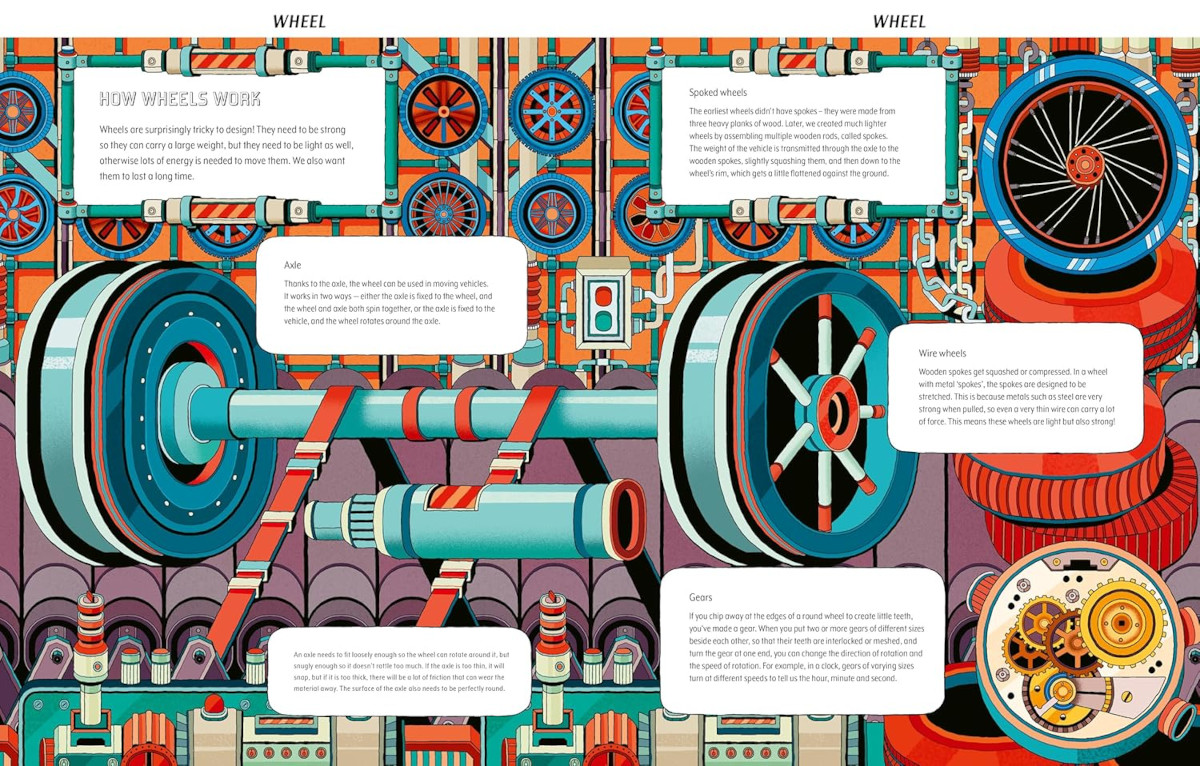
Each invention is given 8 pages to shine in the book and each entry follows the same pattern.
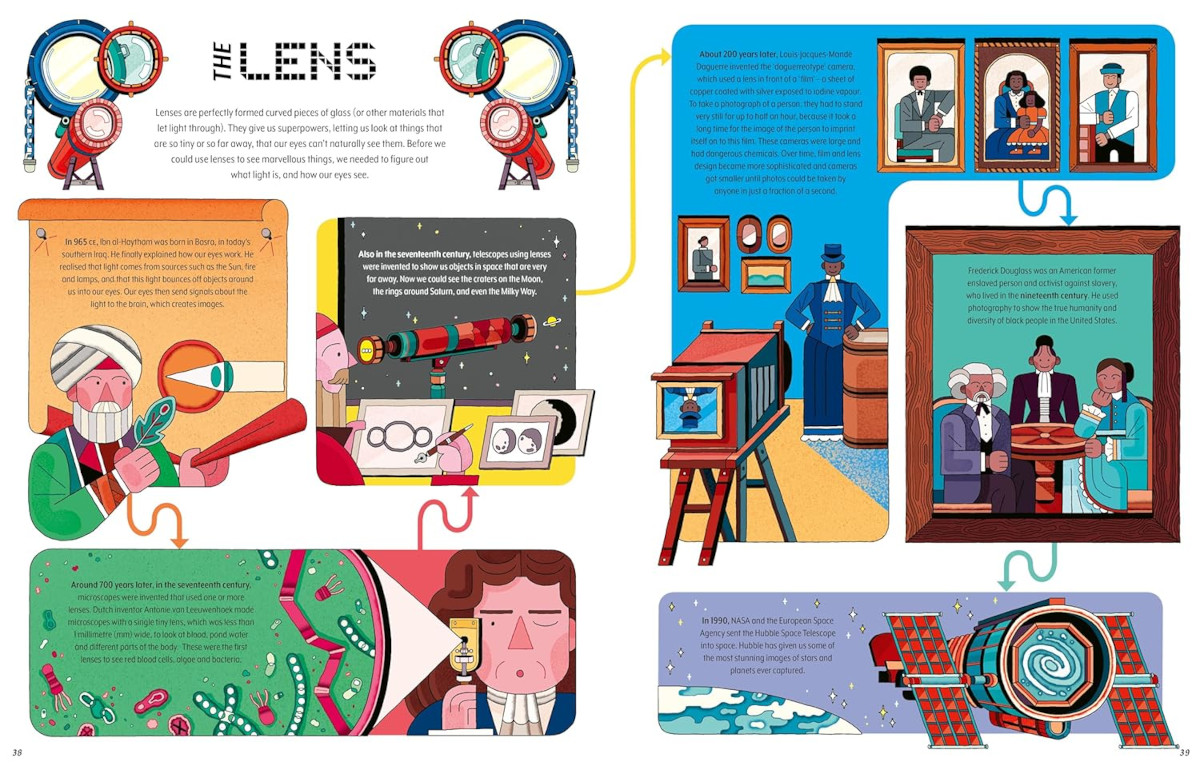
First, we get a history of the invention in question. When it was invented, how it evolved, and how we use and understand it today. Then a description of how an object works. Considering how much we take these objects for granted, this isn’t always as obvious as you might think. Next, we see which modern inventions the small invention is used in, and, finally, each section describes a big project where the small invention is used. For the nail we learn about the HMS Victory, for the magnet, we get the Large Hadron Collider. The other big projects described are similarly varied.
The book closes with a couple of pages with the aim of inspiring future engineers to think about how the things around them work and what they might like to invent. Hopefully, it won’t inspire them to investigate exactly which of the small inventions are included in things like your television!

Why Read Seven Small Inventions That Changed the World?
Roma Argrawal’s descriptions of each of her small inventions are wonderful. What makes them shine even further are the illustrations of Jisu Choi. They’re vibrant and engaging and complement Argrwal’s text perfectly. Publisher, Laurence King, often produces books that work as art pieces too, and Seven Small Inventions That Changed the World is no exception. It’s a great way to inspire younger readers to think about the world around them.
We take all the objects described in the book for granted, but Argrawal not only tells us how these small objects became so integral to our lives, but she also prompts us to imagine a time without them—to understand how and why they were invented. The book also shows us that it’s not always large things that change the planet. Small inventions can have a massive impact. Inventions and endeavors are made are made of smaller components working together. Everything new follows what has gone before it.
Seven Small Inventions That Changed the World is a quality book that will educate and inspire in equal measure. It will encourage its readers to think more deeply about the objects around them and to appreciate the simple objects that are used to make complex things.
If you would like to pick up a copy of Seven Small Inventions That Changed the World, you can do so here in the US and here in the UK. (Affiliate Links)
If you enjoyed this review, check out my other book reviews.
I received a copy of this book in order to write this review.