

It’s hard to imagine that, when the Nintendo DS was released in 2004, smartphones were anything but ubiquitous. In fact, years before Steve Jobs unveiled the first iPhone, Nintendo had already been exploring the possibilities of touchscreen gaming on this unlikely chimera. This innovation meant that point-and-click-style narrative adventure games—which, with a few notable exceptions, had long been relegated to the PC—could now be enjoyed on the go.
While the Phoenix Wright and Professor Layton series have endured (and the spectacular Ghost Trick: Phantom Detective was recently… um… resurrected), many others have been largely ignored, particularly here in the West. It is in the space between these two extremes that we find Another Code—originally released as Trace Memory here in North America.
Another Code: Two Memories arrived on the DS in 2005, with a single sequel, Another Code: R – A Journey Into Lost Memories, coming to the Wii in 2009 in only the Japanese and European regions. This week, Another Code: Recollection arrives on the Nintendo Switch, bringing us fully realized remakes of both games.
Along with some minor story tweaks and the obvious increase in audiovisual fidelity, the most notable change is that Another Code: Recollection packages both games as a single, almost seamless narrative. You’ll guide our 13-year-old protagonist Ashley Mizuki Robbins through the mysteries of Blood Edward Island (the Two Memories experience), and then you’ll quickly be greeted by 16-year-old Ashley as she is drawn into even more intrigue around Lake Juliet (Journey Into Lost Memories).
While far from photorealistic, Recollection employs a rather minimalist but beautifully consistent art style. Its characters and their environs are distinct, and at times truly striking, taking advantage of the hardware upgrade while simultaneously paying homage to the gauzy look of the series originals.
Much the same can be said for the soundtrack, which pairs scenes from banal to nerve-racking with recurring musical motifs that never manage to become distracting. (Well, at least until you reach the Journey Into Lost Memories content, which has a teenage garage band plot point accompanied by the obligatory cheese-rock power ballad.) As a bonus, Recollection has full voice-acting throughout, still a rare treat for a Nintendo Switch release.
While the controls tend to be a little clunky at first—the default camera speed is positively sluggish and Ashley’s walk pace is ironically lackadaisical for a girl who constantly finds herself and her family in mortal danger—a few minor adjustments bring things easily up to pace. Personally, I bumped the vertical and horizontal camera speeds from 20 to 60, and when not actively perusing a scene for clues, I typically just held down ZR to make Ashley sprint from place to place.
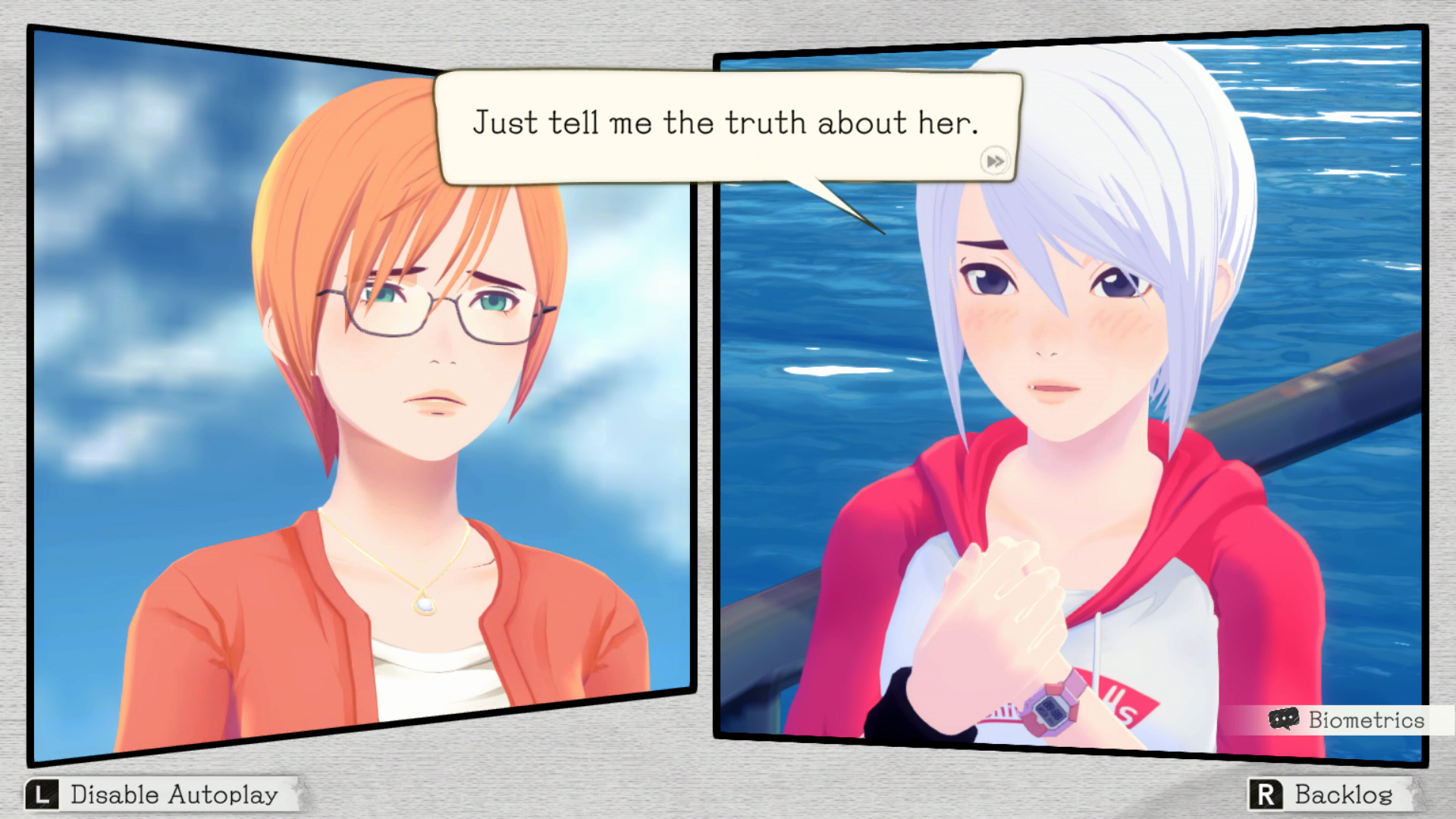
Core gameplay follows all the familiar adventure tropes. Typically, Ashley enters a scene with any number of interactable people or objects. Simply approach and press the A button to observe, converse with, or otherwise interact. Much of the game’s plot is advanced (and ultimately resolved) through conversation, with these generally presented via two split-screen talking heads. On occasion, Ashley will have a choice between one or more dialog choices, but the primary driver of the game’s mysteries are particular swatches of other characters’ dialog. These are highlighted throughout the conversation and then listed for Ashley to use as the basis for follow-up questions.
The other main element of gameplay is puzzle-solving, often resolved by examining Ashley’s surroundings for clues and then adding helpful items to her inventory. Press the Y button to get a closer look at her items, which can be investigated (rotated to search for further clues or marks of significance) and in some cases even combined with other items to solve a given problem.
The big difference between Another Code: Recollection and other similar narrative point-and-clicks is the implementation of the DAS (Dual ANOTHER System). Without getting too spoiler-y, the DAS is a gift from Ashely’s parents, a multipurpose electronic device that only she can use. It can be employed to take photographs of important objects, scan hidden origami swans to unlock additional “lost memories,” and even catalog the characters Ashley meets and how they relate to each other.
The DAS is upgradeable… as the plot demands… and this ably serves the story—at least in the game’s first half when Ashley and a ghost boy named D explore Washington’s Blood Edward Island in an attempt to recover and understand memories of their respective personal tragedies. In this case, the individual DAS upgrade modules slowly peel away the superficial, revealing the long-concealed truth.
Despite heaping helpings of melodrama—I mean, there’s a lonely ghost boy and a mysterious island and family dysfunction aplenty, people—the DAS stands out as a novel and effective way to meter out the plot. Unfortunately, when Ashley arrives at the campground of Lake Juliet a couple of years older and wiser (and with the DAS in hand), things take a weird turn.
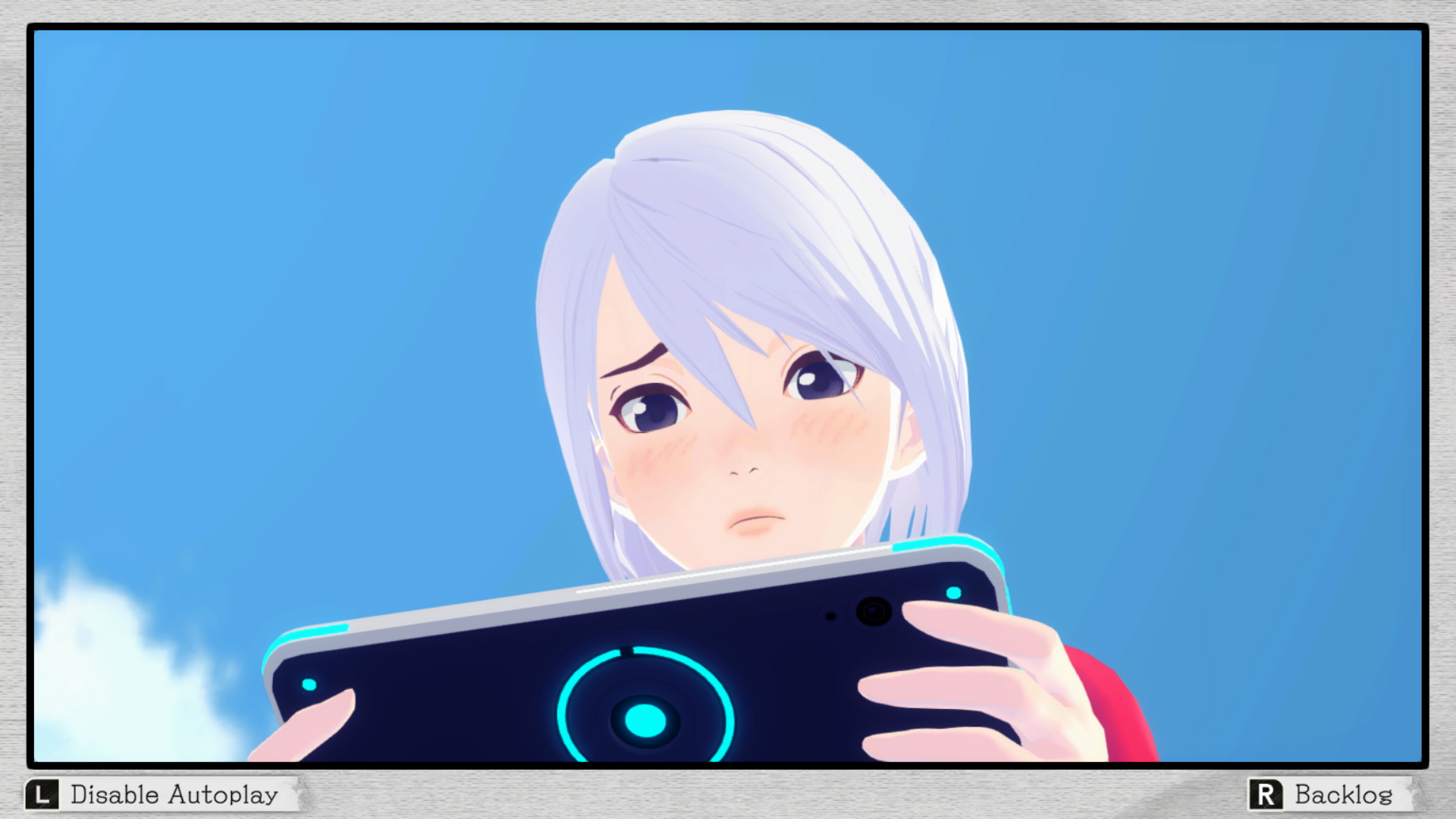
Here, after having the rest of her possessions nicked by the wayward Matthew—who eventually replaces D as Ashley’s second banana in this adventure—she’s quickly gifted another device, the TAS, which early on mostly serves as a one-stop hacking solution for all the electronic locks around the lakeside community. Shortly after that, the DAS itself, the nature of which we’ve just spent an entire game learning relates directly to interfacing with human memory… suddenly unlocks the ability to analyze water for contaminants?!
Suffice it to say that really taxed my suspension of disbelief, but perhaps that’s just me being a little too pedantic in a game world that already allows for helpful ghost boys and portable memory machines.
That said, even though I enjoyed the Two Memories portion of the game more than the Journey Into Lost Memories follow-up, I still genuinely appreciate how Another Code: Recollection acknowledged them as the two halves of a proper whole. Perhaps more importantly, Recollection also takes steps to assure that adventure game novices (and those of us with shorter attention spans) can still get the most out of the experience.
Point-and-click games are notorious for stretching pit gameplay by cheap obfuscation. If you miss this one clue or don’t backtrack to this very specific point, you’ll find yourself unable to proceed. While the DAS-as-camera aspect already addressed this (by making it easy to capture images that might potentially help in your puzzle-solving), this remake includes two additional options to further smooth out that learning curve.
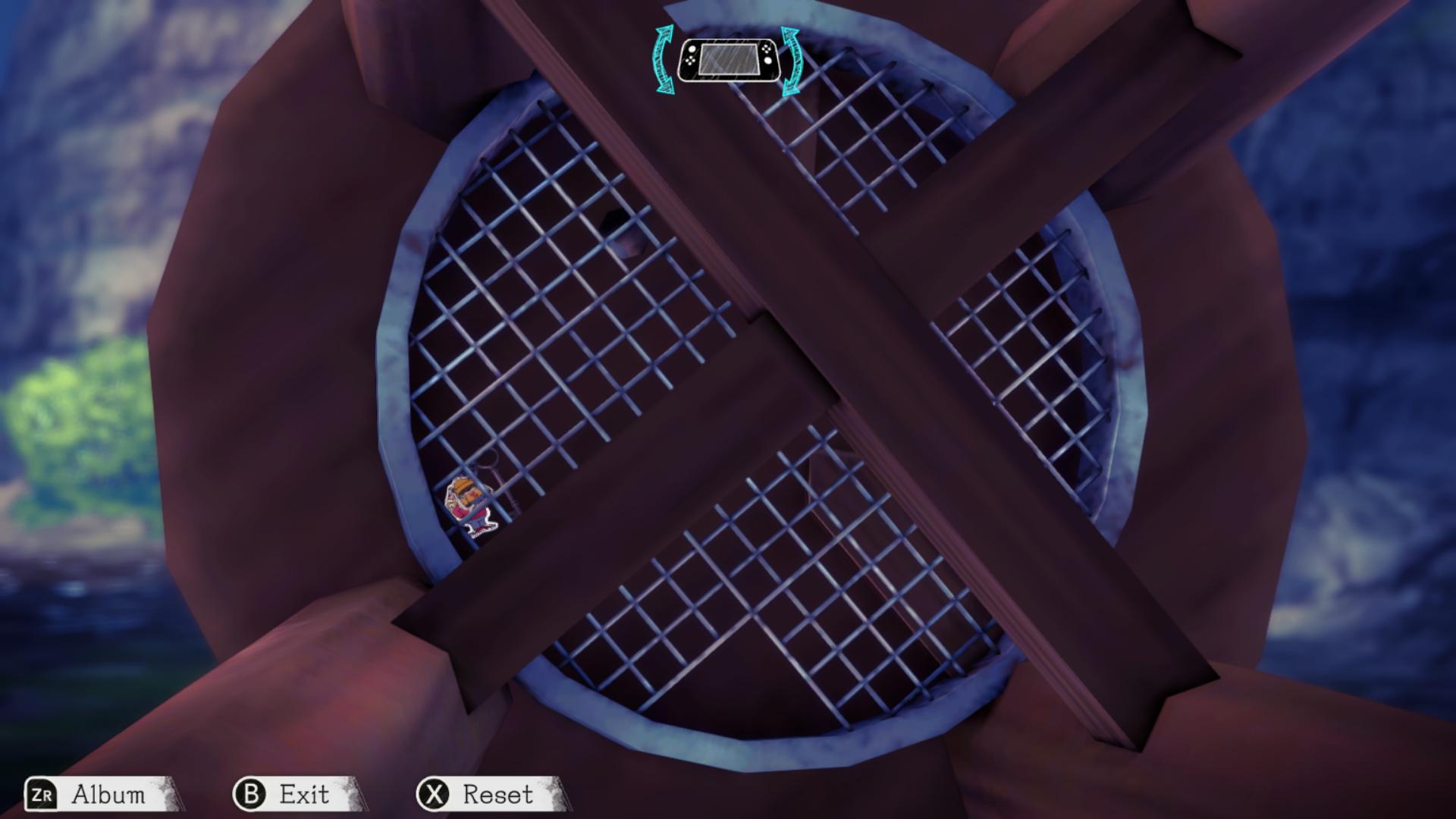
Navigation assist places a chalk outline around Ashley that always points you in the direction of the next goal—whether that’s a hidden door, a single item on a crowded shelf, or even a room you’ve previously explored. If that’s not enough, the game can offer hints for individual environmental puzzles. These start as a few broad suggestions before eventually outright telling you the solution. But, like the nav assist, this is purely optional and can safely be ignored by those who want a more old-school challenge.
In the end, though, no matter how you play, Another Code: Recollection has some interesting things to say about the nature of memory, the power of truth, and the weight of history. Not to mention the importance of proper parenting.
Seriously, y’all, if Ashley’s folks had ever bothered to give her suitable guidance or, you know, any real information at all about their lives as groundbreaking scientists, both these games would be, like, 20 minutes long. And don’t even get me started on the various shady characters they practically invited into this poor teen’s life! But I digress.
While not an unqualified recommendation, those with a love for mystery, narrative games, and a little far-fetched sci-fi storytelling will find a lot to love in Another Code: Recollection. If you’re not sure which, if any, of those camps you fall into, you can download the free demo from the Nintendo eShop to try this madcap meditation on memory on for size.
Review materials provided by Nintendo of America. This post contains affiliate links. As always, I blame the parents!


