
The Earth’s climates are changing as temperatures are rising. Whether this is a result of actions taken by mankind or a natural cycle is not the issue for some scientists. Instead, they are studying and exploring how the changes are affecting flora and fauna around the world and especially the effects on the oceans. It is important to understand that all the oceans are connected by underwater currents that form a global conveyor belt that carry heat from place to place. As a result, the melting of the Antarctic glaciers have affects on areas thousands of miles away. And as ice is melting in the artic, new places have become accessible for scientific study for the first time. National Geographic delves into this topic in its latest one-hour special, Expedition: Saving Our Seas.
What Is Expedition: Saving Our Seas?
Expedition: Saving Our Seas follows the team behind the National Geographic and Rolex Perpetual Planet Ocean Expeditions, a multi-year, trailblazing exploration of our global Ocean. From the icy depths of the Antarctic to the tropical waters off the Seychelles these scientists and National Geographic Explorers set sail across all five ocean basins deploying new technology and partnering with local communities to find solutions to some of the biggest challenges facing our Ocean today. Narrated by Ocean conservationist Auliʻi Cravalho (Moana), the one-hour special is presented by the National Geographic Society in partnership with Rolex and produced by Offspring Films. Let’s take a look at some of the experiences featured:
Observing the Ocean’s depths nearly 13,000 feet below the surface through the remotely operated vehicle SuBastian aboard the Schmidt Ocean Institute’s research vessel Falkor, a cohort of Explorers in the Southern Ocean, including oceanographer Dr. Andrew Thurber, biological oceanographer Dr. Kim Bernard and microbial oceanographer Dr. Allison Fong, surveys the basin’s depths and its icy surface. The team surfaces three first-time discoveries: the most southerly deep-sea hydrothermal vent known on the planet, swarms of egg-carrying Antarctic krill at a depth of 3,000 feet, and the first-known live sighting of a giant Antarctic gonate squid.
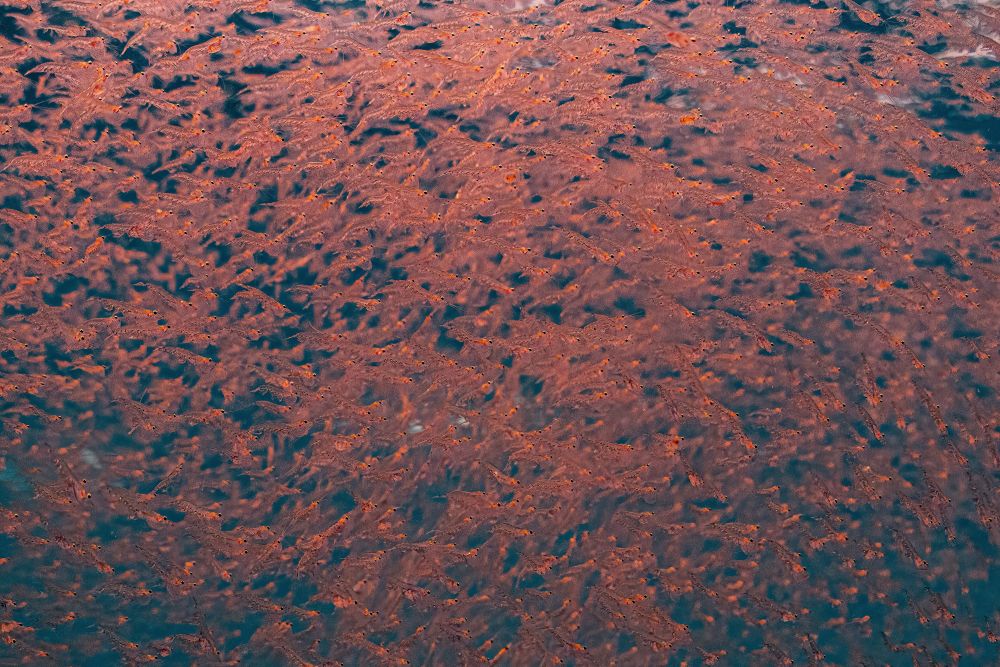
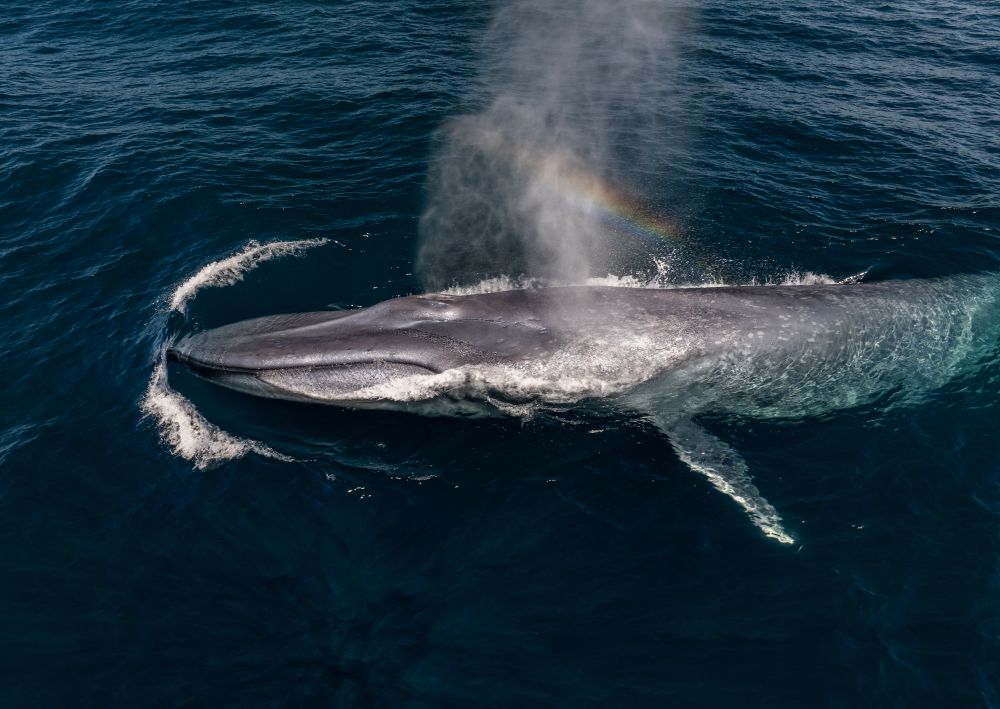
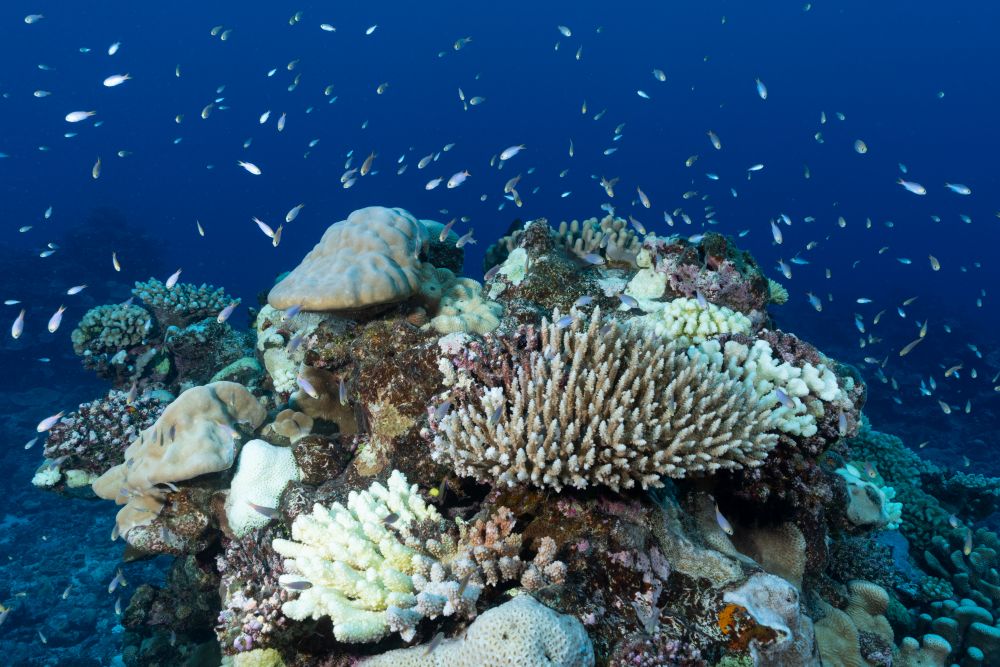
Tracking blue whales and their krill prey, Dr. Bernard returns alongside Explorer and marine ecologist Dr. Leigh Torres and the local Māori community to canvas New Zealand’s South Taranaki Bight, while fellow Explorer Dr. Anya Brown stress-tests coral for heat tolerance in the Cook Islands. Both teams are racing to understand how rising temperatures are reshaping Pacific Ocean ecosystems. “If we lose them, we’re going to care a lot,” says Brown. “So, we need to care now.”
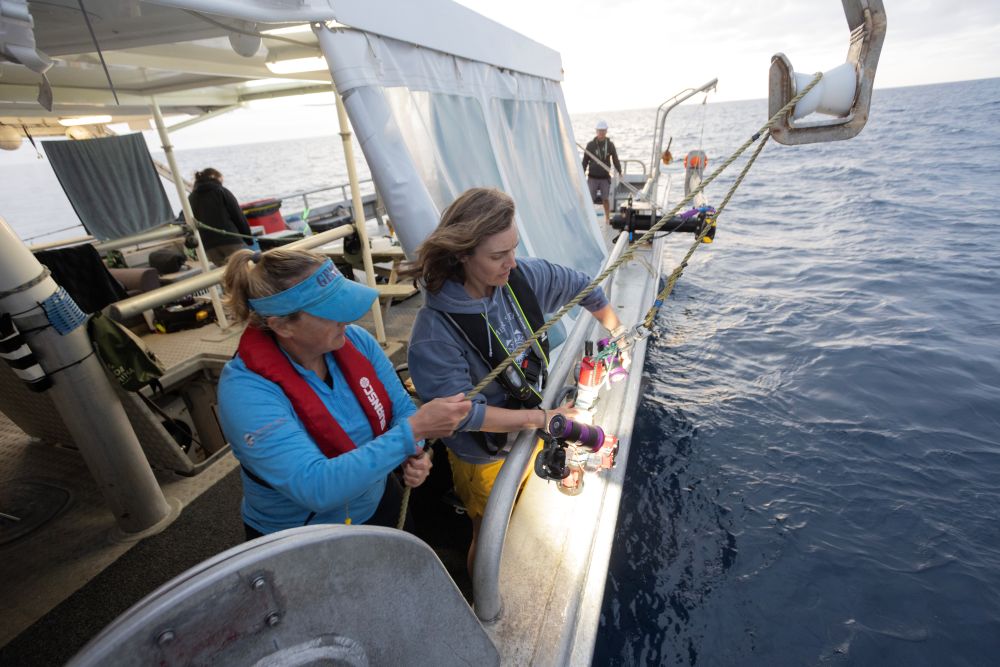
More than 10,000 feet below the Indian Ocean’s surface, the first deep-sea scientist from the Seychelles, Explorer Sheena Talma, and her Seychellois team train on deep-ocean camera lander systems off the coast of South Africa. They will deploy similar landers in the Seychelles to gather data to support fisheries and marine protected area management and strengthen Seychellois capacity to monitor the country’s deep-ocean habitats.
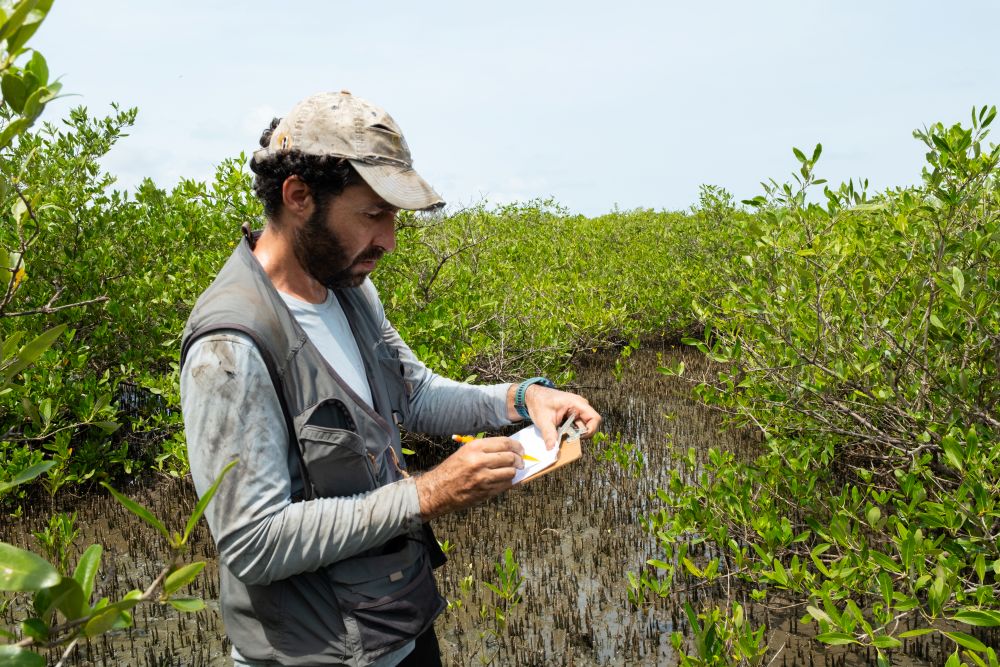
Nearly half a million people live along a stretch of the Gambian coastline threatened by the rising seas of the Atlantic Ocean. Leading coastal researcher, marine ecologist and Explorer Maiyai Taal Hocheimy trains local students to measure Ocean depth and currents and works with Explorer Dr. Angelo Bernardino to map and assess the mangrove forests standing between the capital, Banjul, and the encroaching water.
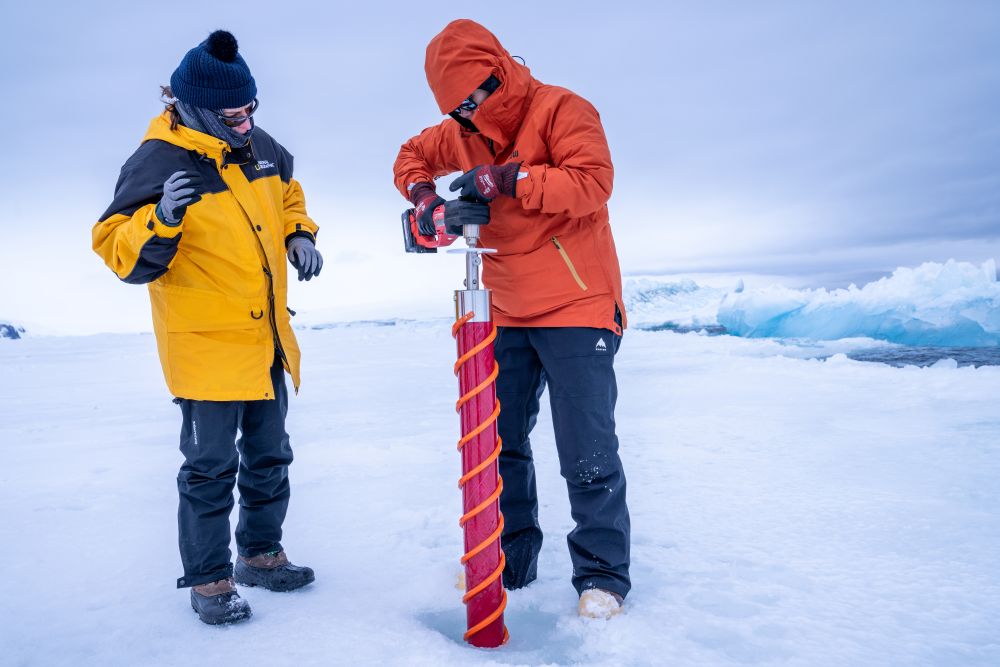
In the Arctic Ocean, warming at four times the rate as the rest of the planet, marine biogeochemist Dr. Kristina Brown is invited by the Inuit community of Gjoa Haven, Nunavut, to conduct the first-known scientific study of a secluded marine bay called the Sherman Basin, working in partnership with Inuk elder Saul Aksalook Qirqniq and community members to chart a seafloor no one has ever seen.
Tying the expeditions together, deep-ocean scientist Dr. Katy Croff Bell, founder of the Ocean Discovery League, is developing a Deep Ocean Research and Imaging System (DORIS), a lightweight, low-cost device designed to open up deep-sea exploration to communities that have not previously had access to their deep-ocean waters. “We’ve only seen about 0.001% of the deep Ocean, which covers about two-thirds of our planet,” says Bell. “Just imagine what we’re going to find in the other 99.999%.”
Expedition: Saving Our Seas premieres Friday, November 13 at 9:00 p.m. EDT/PDT on National Geographic and begins streaming the following day on Disney+ and Hulu.
Why You Should See Expedition: Saving Our Seas
Expedition: Saving Our Seas is a fascinating special. It covers a wide range of topics as it takes viewers around the world. As with most National Geographic productions, the cinematography is beautiful and incredible. While it is narrated by Auliʻi Cravalho, you also hear from the scientists and National Geographic explorers who are making some incredible discoveries. From the deep cold Southern Ocean around Antarctica to the warm tropical waters of the Pacific and Atlantic, viewers are treated to images of creatures rarely seen.
I really enjoyed watching Expedition: Saving Our Seas and was so impressed with the how the special ties together several different parts of the world’s oceans and how they affect not only the wildlife but people as well. As a high school science teacher I find the topics covered fascinating and educational. However, National Geographic uses their skills and experience in communicating with the public to make this hour also entertaining. Whether you are a person who normally watches nature documentaries or not, I recommend viewing Expedition: Saving Our Seas. Not only will you enjoy the experience, but also see how the wildlife and people around the world are connected by the oceans as well as why they need to be protected.
Be sure to watch Expedition: Saving Our Seas when it premieres Friday, November 13 at 9:00 p.m. EDT/PDT on National Geographic and begins streaming the following day on Disney+ and Hulu. Here is a trailer for the series.

Michael Knight

Michael teaches high school classes in Science, History, and Computer Science including Game Design. He is the father of six as well as a proud grandfather of three. Michael is the author of over one hundred published video game strategy guides and when not playing board games, enjoys reading and spending time with his family.


