When one thinks of bees, they usually think of two things: they make honey and they can sting you. However, there is so much more to these insects than most people know. Producer James Cameron has teamed up with National Geographic and several scientists to continue his Secrets of… series with the latest addition: Secrets of the Bees.
What Is Secrets of the Bees ?
Secrets of the Bees is a two-episode nature documentary series where National Geographic Explorer Bertie Gregory explores the extraordinary lives of bees, which are among the planet’s most important animals. Over three years, special cameras opened a rare window into a single hive, revealing its hidden world. With more than 20,000 bee species pollinating one-third of the world’s food, this series uncovers their astonishing architecture and intelligence, unlocking their secrets.
“For its fifth anniversary, ‘Secrets of’ turns its lens to one of Earth’s smallest yet most vital heroes: bees,” says executive producer James Cameron. “Far more than pollinators, bees are socially complex, fast-thinking individuals and the most important insects on our planet. Their impact on the natural world and humanity is immeasurable, and we’re only just beginning to see how extraordinary they truly are.”
Secrets of the Bees is produced by Silverback Films for National Geographic. Emmy Award-winners James Cameron and Maria Wilhelm for Lightstorm Earth are executive producers. For Silverback Films, Alastair Fothergill and Huw Cordey serve as series producers, and Nadége Laici serves as producer and director. Pam Caragol is executive producer for National Geographic.

Let’s take a look at the two episodes:
The Hive
Bertie Gregory reveals the hidden world of bees and the extraordinary secrets behind their success. From the broomstick bee’s ingenious architecture to the meat-eating bee of the Amazon rainforest, their remarkable talents are uncovered alongside new insights into bee intelligence. Through the life of one honeybee, follow her bustling hive as her sisters race to survive the winter.

The Pollinators
Gregory returns to the honeybee sisterhood as they race to rebuild before winter. Across the planet, other bees face challenges of their own, from Dawson’s bees battling for mates to honeybees facing the global spread of varroa mites. With Explorer Dr. Sammy Ramsey, Bertie explores the mounting pressures on bees and the bold solutions to secure their future.

Interview with Producer James Cameron and Dr. Samuel Ramsey
I had the opportunity to speak with both James Cameron and Dr. Samuel Ramsey as part of a virtual roundtable. I asked them what do they want viewers to take away from the series. Ramsey responded:
“I want people to take away from this series that bees are working really hard in the background doing things that keep our entire ecosystem healthy. They don’t get enough attention. Uh, they certainly don’t get protected nearly enough. Oftentimes when we say ‘Save the bees,’ we mean ‘Save the bee.’ We’re thinking about the one bee species that we keep inside of a box because that’s the one that’s the most precious to us and it’s the one that we know the best. But they are the canary in the coalmine for the other 20,000 species of bees out there that we don’t have as close a connection with, and we’ve been able to show in this documentary some of their secret lives that they’re living, um, underground and inside of tubes and- and kinds of ways that they’re interacting with the world. And if we weren’t able to show that to people, it would be easier for them to discount that those things are important. But now that we’re able to put that front and center in front of people’s eyes, we want them to take away from that that these organisms are important, that they’re incredible, and we want them to expand that phrase of ‘Save the bee’ back to ‘Save the bees’ to keep the rest of them safe and healthy and happy.”

James Cameron explained how they were able to get some of the up-close scenes with the bees. “Our camera team is very experienced with macro photography and have been doing it for decades. And the camera technology itself wasn’t really the leap forward. It was really, how do we configure the hive environment around, and, you know, various other environments like tunnels and things that were done with the solo bees. But how do we get it- how do we get into their world? So, you know, I’m not an expert in animal- animal photography, um, where you’re- you’re creating an environment that, you know, the- we- we’ve got the best people in the world to do that. But it’s about not interfering with their behavior, making it seem natural for them but still getting the camera in- in a manner that’s reasonably predictable, that the bee will- or the- the animal will do that behavior right in front of the lens. When you have a little, little tiny area of photography, you have a very, very shallow depth of field, uh, and this is always the- the problem with macro photography. So it’s really about the human in the loop experience team, uh, these days, less than, you know, breakthroughs in the optics per se.”
Cameron also shared what he learned while making this series. “There’s so much that I didn’t know about a bee society and, you know, learning about bee culture as well, meaning that which is passed on in direct communication between individual bees. We think, uh, I certainly was of the belief that, you know, bees were basically little Roombas that were hard- hardwired with relatively basic programming, but it turns out that while they have that as we all do that they’re also capable of learning and they’re able to learn specific tasks and have things demonstrated for them which they can then replicate. And we call that culture, right? So that’s an amazing thing, to think of bee culture. That’s just one example. I mean, there are certainly many examples that I’ve learned as a result of being, you know, a producer on the series, and that’s what attracts me to doing these Secrets of shows for National Geographic is that I always learn something. I mean, they pay me, but frankly, I’d pay them.
Why You Should See Secrets of the Bees
Prior to the interview, I had the opportunity to screen both episodes of the series. I will admit, that when I want to watch something, nature documentaries are not my first choice. However, over the years as I have covered many different series produced by National Geographic, I am always glad I watched them because I was not only entertained, but also learned things I never knew. Secrets of the Bees was of interest to me as soon as I heard about it. I have always been fascinated with bees. When one of our friends was laid off from his job as he was approaching retirement, he decided to go into bee keeping. One spring and summer, we had the opportunity to host a couple of his bee hives and I enjoyed putting on all the protective clothing and help him open the hives and inspect the honeycombs. In addition, living in Northern California, I know that the bees are so important to the state’s agriculture–especially for pollinating the many almond orchards.

Though I had some knowledge of bees before viewing the series, I learned so much by the time I got to the final credits. In one of the episodes, you can see Asian murder hornets attack a bee hive as they kill the adult bees and chew their way into the hive to get to the larvae. The bees response and defense is impressive and Dr. Ramsey shared that while filming this, scientists discovered how the bees problem solve and work together to protect their hive. Another scene I enjoyed was how bees in a lab were tested and revealed higher level processing that we do not normally associate with lower forms of life.
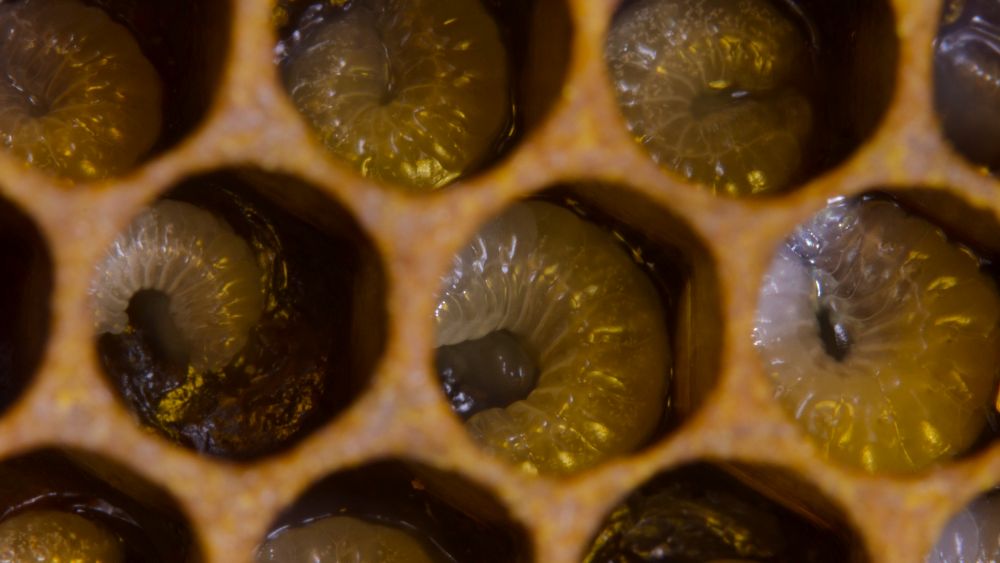
As with most National Geographic productions, the cinematography is exceptional as they take viewers down to the level of the bees so that you feel like you are sitting right in the hive with them. The narration is written so that it tells a story and not just explains what is happening which makes the show more engaging to viewers. Secrets of the Bees also shares an important message on how vital bees of all kinds are to the survival of humans and other life because of their important role as pollinators. Some wild bees are endangered and about 1 in 4 native bees are at risk. As a high school science teacher, I look forward to sharing this series with my students and beginning a conversation with them about these fascinating creatures. In the couple of weeks since I viewed this series, I have begun to notice the native bees in my yard and community and observing their behavior. Not only did I thoroughly enjoy viewing Secrets of the Bees, but I have also taken away an appreciation and understanding that expands how I view my world. Whether you are a fan of nature series or not, I highly recommend viewing Secrets of the Bees. Whether it helps you understand bees and reduces your fear of being stung or makes you rethink the types of plants you place in your yard, garden, or even window sill, this is a series that will educate, entertain, and make you think.
Be sure to watch Secrets of the Bees when it premieres Tuesday, March 31 at 8/7c on National Geographic and begins streaming the next day on Disney+ and Hulu. Here is a trailer for the series.